Skip to content
Club&Carry

Hub 03 · Golf Bags

How to Pack Golf Clubs for a Flight

Most club damage in transit comes from one mechanism, and two cheap habits defeat it. Here is the packing order that works.

By Stephen V.Updated How we pick
#ad

We earn a commission when you buy through our Amazon links, at no extra cost to you. It never affects our rankings, and we say so when the cheaper product is the better buy. How this works.

Pack a support rod above your longest club, unscrew an adjustable driver head and bury it in the middle of the bag, then fill every gap around the club heads with clothing. Those three steps defeat the way clubs actually break in transit — a crushing load from above — and together they cost less than a sleeve of premium balls. The cover you buy matters less than most people think. The packing matters more.

The one failure mode worth packing against

Clubs come off a plane damaged far less often than golfers fear, and when they do the damage is monotonously consistent: a snapped graphite shaft or a cracked driver crown, caused by the bag sitting at the bottom of a stack with other luggage pressing on the top of it. The load lands on whatever is tallest. That is your driver, every time.

Everything below follows from that single fact. You are not armoring the bag against impact. You are making sure nothing in it is the tallest thing taking a vertical load, and that anything fragile is surrounded rather than exposed.

Step 1 — a support rod, not more padding

A support rod, often sold as a stiff arm, is a telescoping pole that sits in the bag and extends above your longest club. When the stack presses down, it presses on the pole. This is the highest-value item in this guide by a distance: it is cheap, it weighs very little, and it addresses the exact mechanism that breaks clubs. Some hard-top covers include one; with a soft cover, buy one and treat it as part of the purchase price rather than an accessory.

Step 2 — take the driver head off if you can

If your driver has an adjustable hosel, unscrew the head with the wrench, wrap it in a towel and put it in the middle of the bag surrounded by soft items. You have just removed the single most expensive and most exposed object from the top of the bag. Pack the wrench in your hand luggage, not in the travel cover, so a delayed bag does not also mean a driver you cannot reassemble.

If the driver is not adjustable, keep the headcover on and make sure the rod stands proud of it. A headcover is a scuff defense, not a crush defense.

Step 3 — fill every gap with clothing

Clothing packed around the club heads is free padding, and airlines do not treat a shirt inside a golf bag differently from a shirt inside a suitcase. Pack trousers and rain gear down the length of the bag against the shafts, soft layers around the heads, and shoes low in the body where they add weight near the wheels rather than up at the top. A bag packed tight does not shift; a bag with voids lets clubs move and rattle against each other for the whole flight.

Towels are the most useful thing you can bring for this. Two bath towels will wrap a driver head, cushion a putter face and still get used at the course.

Step 4 — weigh it before you leave the house

Most airlines cap a checked bag at 50 lb. A loaded cart bag is often 30 to 35 lb on its own, and a full hard shell can take another 12 to 15 before clubs go in. Put the packed cover on a bathroom scale at home, because an overweight fee charged on both legs of every trip is a recurring cost that dwarfs the price difference between travel covers. If you are close to the line, this is the argument for flying with a lightweight carry bag instead of your heaviest cart bag.

Step 5 — small things that save a trip

  • Count the clubs before you zip it. Fourteen is the maximum the Rules of Golf allow you to play; the number you want back is the number you packed, verified at both ends.
  • Photograph the packed bag and the clubs. Two minutes of phone camera is the entire evidence base for any damage claim.
  • Put a name and number inside as well as outside. External tags come off on conveyor belts with great reliability.
  • Do not put valuables in the cover. A rangefinder or a GPS watch belongs in hand luggage, with the lithium battery rules in mind.
  • Check the airline's sports-equipment policy, not just the baggage page. Golf clubs are frequently handled under a separate line in the fee table.

What to buy, if anything

If you already own a travel cover, buy a support rod and stop. If you do not, the picks below are the covers we would put a set in, ranked for the money rather than for maximum armor — and the hard-versus-soft decision is the one to settle first, because it is driven by how often you fly rather than by how much you worry.

The short answer

Quick picks

#ProductBest forScorePrice
01
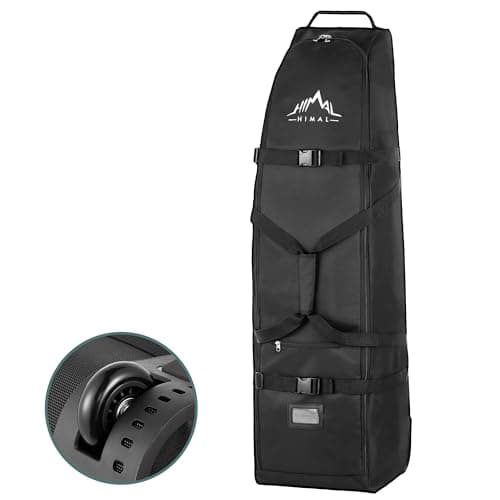
Himal Outdoors Himal Soft-Sided Golf Travel Bag
Himal Soft-Sided Golf Travel Bag

The cheapest travel cover on this page that still has wheels, padding and a zip that survives a return trip. For one or two trips a year, it is all most golfers need.

The occasional golf trip
7.2
$49.99Amazon
02
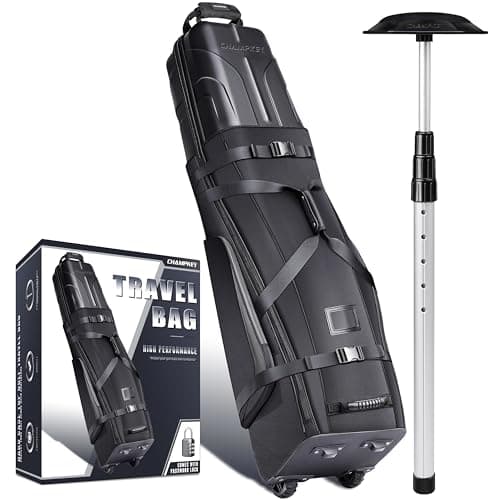
CHAMPKEY CHAMPKEY Hard-Top Golf Travel Bag
CHAMPKEY Hard-Top Golf Travel Bag

A molded hard top over 1680D fabric, plus a support rod and oversized wheels, at roughly half what the name brands charge for the same recipe.

The best real protection per dollar
8.2
$134.99Amazon
03
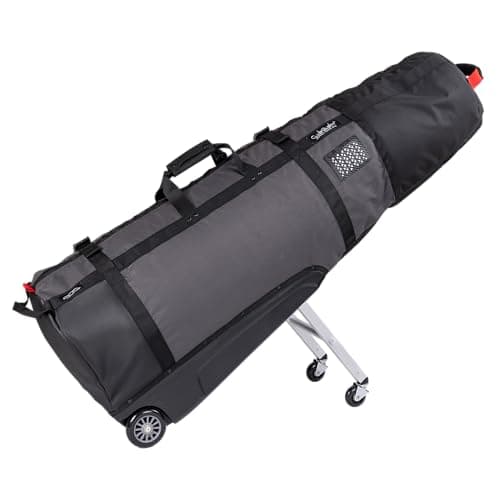
Sun Mountain Sun Mountain ClubGlider Journey
Sun Mountain ClubGlider Journey

The retractable-leg system that carries the bag's weight for you. Genuinely clever, genuinely expensive — the benchmark, not the value pick.

Golfers who travel a lot and are done wrestling luggage
8.0
$299.99Amazon

#ad · Live prices from the Amazon Product API, as of October 10, 2026. Where we have no verified live price, we show none — we would rather leave a gap than print a number that has rotted.

In detail

The picks, in full

01
Himal Outdoors Himal Soft-Sided Golf Travel Bag

The occasional golf trip

Himal Soft-Sided Golf Travel Bag

600D polyester oxfordUniversal 13 x 15 x 50 inInline wheelsPadded with carry handles
7.2/10

The cheapest travel cover on this page that still has wheels, padding and a zip that survives a return trip. For one or two trips a year, it is all most golfers need.

Protection
6
Maneuverability
6
Durability
6
Storage
8
Value
10

Pros

  • Costs a small fraction of a hard case while still giving you wheels and padding
  • Universal 50-inch length swallows a driver plus shoes and a jacket in the spare space
  • Folds flat for storage, unlike a hard case that eats a corner of the garage year-round

Cons

  • Soft-sided means baggage handlers can still crush a driver head — a stiff arm is strongly advised
  • Two wheels, not four, so you drag rather than glide it through a terminal

Don't buy this if…

…you fly with your clubs more than a couple of times a year, or you travel with expensive gear. Repeated trips are where a hard top pays for itself.

$49.99View on Amazon

Price as of October 10, 2026. Prices change — Amazon's is the one that counts.

#ad · we may earn a commission from this link to Himal Soft-Sided Golf Travel Bag

02
CHAMPKEY CHAMPKEY Hard-Top Golf Travel Bag

The best real protection per dollar

CHAMPKEY Hard-Top Golf Travel Bag

Molded hard top1680D fabric bodySupport pole includedOversized wheels + lock
8.2/10

A molded hard top over 1680D fabric, plus a support rod and oversized wheels, at roughly half what the name brands charge for the same recipe.

Protection
9
Maneuverability
8
Durability
8
Storage
7
Value
9

Pros

  • The molded top is the part that matters — it is what stops a stacked suitcase snapping a driver shaft
  • Comes with the support rod, so you are not buying a stiff arm separately
  • Oversized wheels handle curbs and carpet far better than the small casters on cheap covers

Cons

  • Heavy enough to eat into a 50 lb airline weight allowance before clubs go in
  • Hard tops do not fold down — it needs storage space at home

Don't buy this if…

…you fly once a year with a modest set. The Himal soft cover is a quarter of the price and enough for occasional trips with clubs you would not cry over.

$134.99View on Amazon

Price as of October 10, 2026. Prices change — Amazon's is the one that counts.

#ad · we may earn a commission from this link to CHAMPKEY Hard-Top Golf Travel Bag

03
Sun Mountain Sun Mountain ClubGlider Journey

Golfers who travel a lot and are done wrestling luggage

Sun Mountain ClubGlider Journey

Patented retractable legs4-wheel rolling systemBallistic-style nylonHeavy dense-foam padding
8.0/10

The retractable-leg system that carries the bag's weight for you. Genuinely clever, genuinely expensive — the benchmark, not the value pick.

Protection
8
Maneuverability
10
Durability
9
Storage
7
Value
6

Pros

  • The extendable legs take 100% of the bag's weight, so you steer it instead of holding it up
  • Four wheels with swiveling fronts make a loaded bag manageable one-handed through a terminal
  • Ballistic-style nylon and dense foam padding built for repeat airline handling, not one holiday

Cons

  • By far the most expensive option here
  • Soft-sided — the protection comes from padding and cinch straps, not a shell

Don't buy this if…

…you fly with clubs occasionally. The leg system solves a problem frequent travelers have; twice a year it is a lot of money for convenience.

$299.99View on Amazon

Price as of October 10, 2026. Prices change — Amazon's is the one that counts.

#ad · we may earn a commission from this link to Sun Mountain ClubGlider Journey

Why the soft cover leads a packing guide

Because the packing is doing most of the work. A padded soft cover, a support rod and a bag packed tight with clothing covers the realistic failure for the one or two trips a year most golfers take, at a fraction of the price of a shell. The CHAMPKEY is the upgrade that makes sense once you fly often enough that the dice get rolled three or four times a year, and it ships with the rod. The Sun Mountain is the frequent-flyer answer to weight and maneuverability rather than to protection — it is soft-sided too.

None of these numbers are ours. We have not crush-tested a travel cover and we are not going to imply otherwise; what we have done is read the published specifications against the way clubs actually arrive broken, and against the airline weight limit that quietly decides how much a cover costs you per year.
How we picked

We do not run a testing lab

We compiled the published specifications, did the cost-per-round and value math, and read the independent robot and launch-monitor data — then scored each product against a published rubric. The scores are judgments from documented research — they are not measurements we took, because we do not have a lab and we are not going to pretend we do. Where a number came from someone else's lab, we name them and link them in Sources.

Questions

Frequently asked

How do I pack golf clubs so they survive a plane?
Put a support rod in the bag so it stands above your longest club, remove an adjustable driver head and wrap it in a towel in the middle of the bag, then pack clothing into every gap around the heads. Stacked luggage then loads the rod instead of a graphite shaft.
Should I take my driver head off to fly?
If the hosel is adjustable, yes — it removes the most expensive and most exposed part from the top of the bag. Keep the wrench in your hand luggage so a delayed bag does not leave you unable to reassemble it.
Can I pack clothes in my golf travel bag?
Yes, and you should. Clothing around the club heads is free padding and airlines do not treat it differently from a suitcase. Just weigh the packed bag — the 50 lb cap is the real constraint.
How much does a packed golf travel bag weigh?
A loaded cart bag alone is commonly 30 to 35 lb, and a full hard shell adds 12 to 15 lb before clubs go in. That is why most airlines' 50 lb limit, not the cover's price, decides what you should fly with.
Is a hard case necessary to fly with golf clubs?
No. For occasional trips a padded soft cover packed properly with a support rod is proportionate. Hard tops earn their place once you fly three or more times a year — see our hard vs soft comparison.

Keep reading

Receipts

Sources

We do not run a testing lab, and we do not pretend to. Where a measured number came from someone else's lab or robot, we name them and link them. Where we could not verify something, we say so on the page rather than quietly leaving it out. Read our full method.