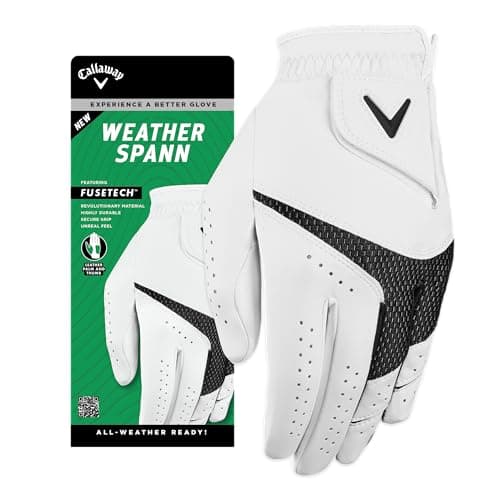
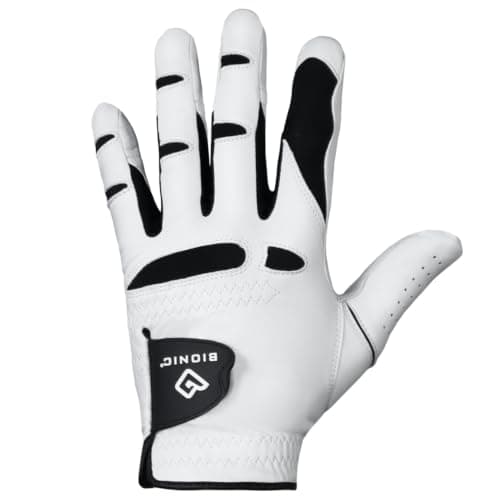
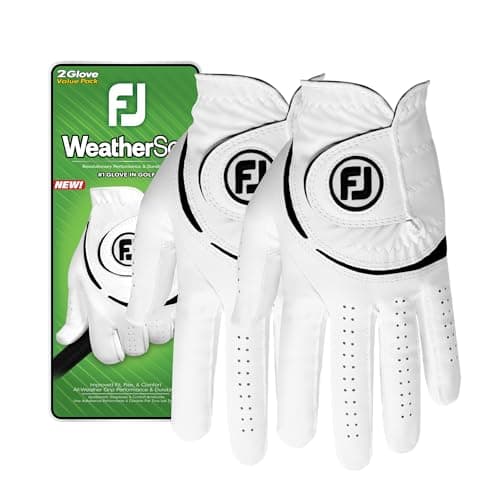
Buy the FootJoy WeatherSof in the 2-pack. It is a synthetic-blend glove that holds up in heat and light rain far better than cabretta leather, and the 2-pack is what makes the real fix affordable — rotating two gloves instead of wearing one wet. If you want a softer, more leather-like feel in the same conditions, the Callaway Weather Spann is the one. If the problem is grip security rather than moisture, the Bionic StableGrip is a different answer to a related complaint.
The mechanism: why your glove dies in summer
A premium golf glove is thin cabretta leather, and leather is a skin. Soak it in sweat, let it dry stiff, soak it again, and the fibers break down fast — the palm goes shiny, then slick, then it tears at the thumb. That is not a quality problem. It is what leather does when it gets wet repeatedly, and it is why a glove that feels luxurious in April is a consumable by July.
Synthetic and synthetic-blend gloves do not have that failure mode. They give up a little of the connected, second-skin feel that better players notice, and in exchange they keep their grip when damp and they last through a hot season. For a golfer whose hands sweat, that trade is not close: you are swapping a feel difference you may not be able to use for a durability difference you will notice every round.
What "all-weather" actually means on a glove box
It is a material claim, not a waterproofing claim. An all-weather glove is built from a synthetic or blended fabric chosen to stay grippy when wet, rather than from leather that goes slick. Nothing about it keeps your hand dry. If your complaint is that the club turns in your hands on the back nine in August, an all-weather synthetic is the correct product and it is also usually the cheaper one.
What it does not fix is a glove that has gone soggy and stayed on. Which brings us to the habit that matters more than the purchase.
The two-glove rotation, which is the actual fix
Carry two gloves and swap them at the turn. The wet one goes somewhere airy to dry — clipped to the outside of the bag rather than crushed in a pocket — and you play the back nine in a dry glove. This is why we rank a 2-pack first: the rotation is the fix, and a 2-pack is the cheapest way to own it.
Three more things that help, all free. Dry the glove flat and open rather than balled up, because a glove dried in a fist shape stays a fist shape. Keep a towel on the bag and dry your hands before each shot — most of the slip is on your hand, not the glove. And loosen your grip: a tight grip sweats more and grips worse, which is the same reason a padded ergonomic glove can help a golfer who squeezes the club.
Should you just stop wearing a glove?
Some players do, and in heat it is a defensible choice — a bare hand with a dry towel and a tacky grip can hold on better than a soaked glove. The reason most golfers keep the glove is blisters and the slightly looser grip pressure it allows. If you are going gloveless in summer, put the money into fresh grips instead; a worn, hard grip is the other half of the slipping problem and new ones cost a fraction of a lesson.
Fit matters more when it is wet
A loose glove moves against your hand, and a wet loose glove moves a lot. Golf gloves should be snug with no loose fabric in the palm and almost no excess at the fingertips — if you can pinch material at the end of a finger, it is too big. Cadet sizes exist for shorter fingers with a wider palm, which is a very common hand shape and a very commonly missed fitting. Our glove sizing guide walks through measuring it properly.
Where we would spend, and where we would not
Spend on quantity before quality here. Two synthetic gloves rotated will outlast and out-grip one premium leather glove in hot weather, for less money. Spend up only if you have tried a synthetic and genuinely miss the feel — in which case buy the leather glove as the dry-weather glove and keep a synthetic for heat, which is what most people who own both end up doing anyway.
The four gloves on the specs that matter here
| Glove | Material | Sold as | Why it is on this page |
|---|
| FootJoy WeatherSof | Synthetic blend | 2-pack | Holds up in heat and light rain; 2-pack enables the rotation |
| Callaway Weather Spann | Premium synthetic | Single | Closest synthetic to a leather feel, same wet-grip logic |
| Bionic StableGrip 2.0 | Cabretta leather, ergonomic pads | Single | Pad system lets you hold on with less squeeze |
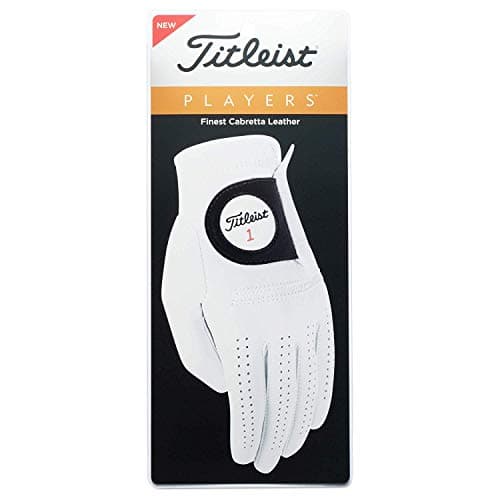
| Titleist Players Glove | Cabretta leather | Single | The feel benchmark — and the one heat punishes hardest |
Those are material and packaging facts from the listings, not wear-test results. We have not run a glove-durability trial and we are not going to imply one; the ranking is the published material logic applied to the conditions, scored against our published rubric.
Why a leather glove is still on the list
Because honesty is more useful than consistency. The Titleist Players Glove is the best-feeling glove here by a clear margin, and if your hands sweat only occasionally it is a legitimate buy — you are simply accepting that it is a consumable in heat. What we will not do is recommend it as the answer to the question in the title, because it is not.