Skip to content
Club&Carry

Hub 05 · Tech & Gadgets

The Best Budget Home Golf Simulators

A full simulator build costs more than a car repair. Here is what each part of it actually buys you — and which part you should buy first.

By Stephen V.Updated Published How we pick
#ad

We earn a commission when you buy through our Amazon links, at no extra cost to you. It never affects our rankings, and we say so when the cheaper product is the better buy. How this works.

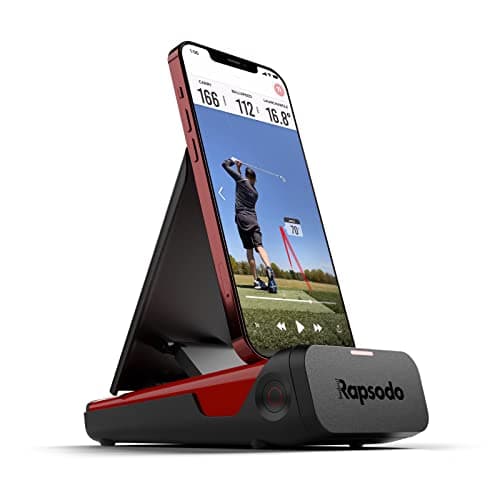
The Rapsodo Mobile Launch Monitor is the best value here — real ball and club numbers for a fraction of what launch monitors cost a few years ago. Pair it with the GoSports net and you have a home practice setup that genuinely improves your game for a small fraction of a simulator build.

What "home golf simulator" actually means

The word covers four very different products, and conflating them is how people spend serious money on something that does not do what they wanted.

  • A hitting net lets you hit real balls at home. No data, no screen, no software — just repetition. Cheapest by an order of magnitude and, for a lot of golfers, the one that changes the most.
  • A launch monitor measures what the ball and club did: speed, launch angle, carry distance, shot shape. This is the feedback layer, and it is where the improvement actually comes from.
  • Simulation software takes launch monitor data and draws a golf course around it. This is the fun layer, and it is almost always a subscription.
  • A full enclosure — screen, projector, mat, bay — is the expensive layer that makes it feel like a golf shop. It adds no accuracy whatsoever.

A commercial-grade build stacks all four and runs into five figures. The value question is which layers you actually need, and the honest answer for most golfers is the first two.

The order to buy in

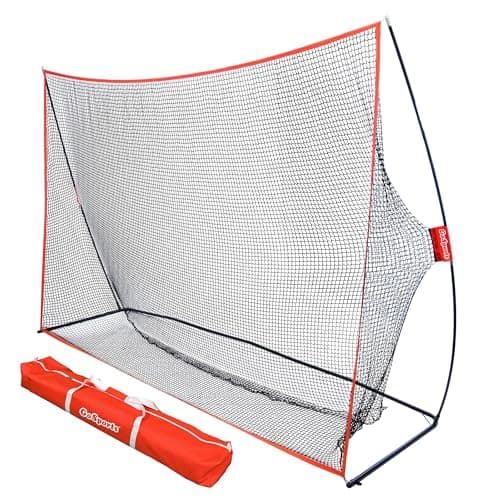
Start with the net. If the barrier to practicing is that you cannot hit balls without driving to a range, a net removes that barrier for less than the price of a wedge. Repetition on a weekday evening beats a monthly range trip, and the GoSports ball-return feature is what makes it a practice session rather than a ball-collecting exercise. Buy a mat as well — hitting off concrete or a hard floor will hurt your wrists and elbows.

Then add data. Swinging into a net teaches your body a motion but tells you nothing about the result, and that is where the Rapsodo earns its place. Knowing what your 7-iron actually carries — not what you tell people it carries — is one of the highest-return pieces of information an amateur can own, because it fixes club selection on every approach shot for the rest of your golfing life.

Only then think about courses. Playing Pebble Beach in your garage is genuinely fun, and fun keeps you practicing through winter. But it is entertainment, and it should be bought as entertainment rather than as improvement.

Radar, camera, or motion sensor?

The three technologies behind these products behave very differently indoors, and the difference matters more than the brand.

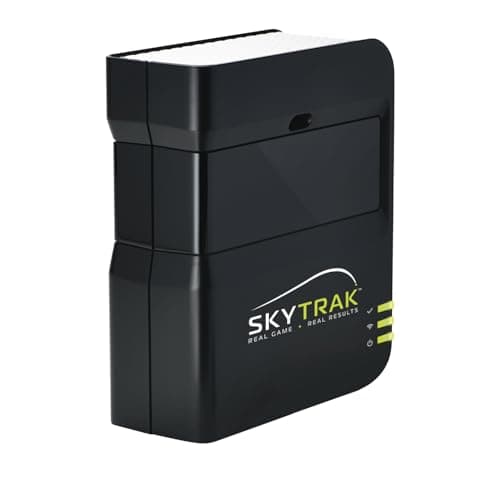
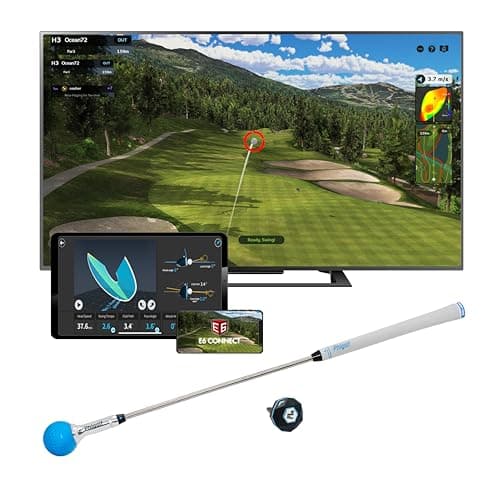
Radar units track the ball in flight, which means they need space behind and in front of the hitting area to see enough of the flight to extrapolate from. Outdoors they are excellent; in a garage they are working with far less data. Photometric camera systems like the SkyTrak photograph the ball immediately after impact and measure spin directly, which is why camera-based units are generally preferred for indoor use — a short indoor space is not a handicap for them. Motion sensors like the PhiGolf attach to the club and track the swing, then model the ball flight from it. That is an approximation rather than a measurement, and it is why the PhiGolf is a brilliant way to play a course indoors and a poor way to learn your yardages.

The costs nobody quotes you

  • Ceiling height. You need roughly 9 to 10 feet to swing a driver indoors without hitting the ceiling. Measure before you buy anything. This is the constraint that most often ends a home simulator plan.
  • Subscriptions. Simulator courses and advanced game modes on almost every product here sit behind an annual fee. Budget for it as an ongoing cost, not a one-off.
  • A mat. Sold separately with nearly every net, and non-optional unless you have a lawn you are prepared to destroy.
  • Platform lock-in. The Rapsodo MLM pairs with iPhone and iPad only. That is a hard blocker for an Android household — check before you buy, not after.

Where we would stop

For a golfer who wants to get better, the net plus the Rapsodo is the setup we would buy and the point at which we would stop. For a golfer who wants a winter hobby and has the room, the SkyTrak plus a proper enclosure is a genuinely good product — but it is a project with a budget, not a purchase. And for someone in a small flat who just wants to play golf on a screen when it is dark at five, the PhiGolf does that better than anything else at the price, as long as you understand it is not measuring your ball.
The short answer

Quick picks

#ProductBest forScorePrice
01
Rapsodo Rapsodo Mobile Launch Monitor (MLM)
Rapsodo Mobile Launch Monitor (MLM)

Real ball and club numbers for a fraction of what a launch monitor used to cost. The single highest-value piece of home practice tech here.

Learning your actual carry distances
8.4
$199.98Amazon
02
GoSports GoSports Golf Practice Hitting Net
GoSports Golf Practice Hitting Net

The cheapest thing on this page and the one that changes your practice most. A net in the garden beats a simulator you never set up.

Actually hitting balls at home
6.6
$89.99Amazon
03
PhiGolf PhiGolf Home Golf Simulator
PhiGolf Home Golf Simulator

The only genuine play-a-course-at-home option here that fits in a living room, because it tracks the swing rather than the ball.

Playing real courses in a small room
8.4
$279.65Amazon
04
SkyTrak SkyTrak Launch Monitor
SkyTrak Launch Monitor

Photometric camera measurement and real simulator software — the point where a home setup stops approximating and starts measuring. Priced accordingly.

A serious home simulator build
6.6
$529.00Amazon

#ad · Live prices from the Amazon Product API, as of Aug 26, 2026. Where we have no verified live price, we show none — we would rather leave a gap than print a number that has rotted.

In detail

The picks, in full

01
Rapsodo Rapsodo Mobile Launch Monitor (MLM)

Learning your actual carry distances

Rapsodo Mobile Launch Monitor (MLM)

Ball + club speed, launch angle, carryVideo replay with shot traceriOS only (iPhone/iPad)Range or net use
8.4/10

Real ball and club numbers for a fraction of what a launch monitor used to cost. The single highest-value piece of home practice tech here.

Data quality
8
Setup ease
8
Space needed
8
Fun factor
8
Value
10

Pros

  • Gives carry distance, ball speed, club speed, launch angle and shot shape — the numbers that actually change club selection
  • Video replay with an on-screen tracer makes a fault visible instead of theoretical
  • Works at the range, in the garden or into a net, so it is not tied to one setup

Cons

  • iOS only — it pairs with an iPhone or iPad and nothing else
  • Simulator courses and game modes sit behind a premium subscription

Don't buy this if…

you are an Android household. That is a hard blocker, not a preference — check before you buy.

$199.98View on Amazon

Price as of Aug 26, 2026. Prices change — Amazon's is the one that counts.

#ad · we may earn a commission from this link to Rapsodo Mobile Launch Monitor (MLM)

02
GoSports GoSports Golf Practice Hitting Net

Actually hitting balls at home

GoSports Golf Practice Hitting Net

10ft x 7ft or 7ft x 7ftBall-return featureReinforced nylonFolds into carry case
6.6/10

The cheapest thing on this page and the one that changes your practice most. A net in the garden beats a simulator you never set up.

Data quality
1
Setup ease
9
Space needed
7
Fun factor
6
Value
10

Pros

  • The ball return means you hit shot after shot instead of collecting balls every ten swings
  • Sets up and breaks down fast enough to use on a weekday evening, which is the whole point
  • Packs into its own case, so it does not permanently occupy the garage

Cons

  • No data at all — this is repetition, not feedback
  • Mat is sold separately, and hitting off a hard floor will hurt your wrists

Don't buy this if…

your problem is not knowing your yardages. Swinging more into a net will not tell you how far you carry a 7-iron — that is what the Rapsodo is for.

$89.99View on Amazon

Price as of Aug 26, 2026. Prices change — Amazon's is the one that counts.

#ad · we may earn a commission from this link to GoSports Golf Practice Hitting Net

03
PhiGolf PhiGolf Home Golf Simulator

Playing real courses in a small room

PhiGolf Home Golf Simulator

9-axis motion sensor38,000+ courses via appWorks on iOS and AndroidSwing stick included
8.4/10

The only genuine play-a-course-at-home option here that fits in a living room, because it tracks the swing rather than the ball.

Data quality
5
Setup ease
9
Space needed
10
Fun factor
10
Value
8

Pros

  • Plays real-world courses through the PhiGolf app and E6 Connect — the closest thing to a simulator round at this price
  • The included swing stick means you can play indoors without a net, a mat or ceiling height
  • Sensor can be moved onto a real club for outdoor practice

Cons

  • Motion-sensor tracking is an approximation of ball flight, not a measurement of it
  • Course play beyond the basics depends on app subscriptions

Don't buy this if…

you want trustworthy yardage data. This is entertainment and repetition that feels like golf; the Rapsodo measures what the ball actually did.

$279.65View on Amazon

$329.0015% off

Price as of Aug 26, 2026. Prices change — Amazon's is the one that counts.

#ad · we may earn a commission from this link to PhiGolf Home Golf Simulator

04
SkyTrak SkyTrak Launch Monitor

A serious home simulator build

SkyTrak Launch Monitor

Photometric camera systemBall speed, launch, spin, shot shapeWireless, rechargeable3D ball-flight visuals
6.6/10

Photometric camera measurement and real simulator software — the point where a home setup stops approximating and starts measuring. Priced accordingly.

Data quality
10
Setup ease
5
Space needed
3
Fun factor
9
Value
6

Pros

  • Camera-based measurement of spin and launch is a step change over radar approximation indoors
  • Real-time 3D ball flight and shot data that stands up as practice feedback, not just a game
  • Anchors a proper simulator build with the major sim software packages

Cons

  • Needs a net or enclosure, a mat and real hitting space before it does anything
  • Full simulator features require an ongoing software subscription on top of the hardware

Don't buy this if…

you do not already have the space and the net. The hardware is the cheap part of a SkyTrak build — budget for the whole room, or buy the Rapsodo and a net instead.

$529.00View on Amazon

$599.0012% off

Price as of Aug 26, 2026. Prices change — Amazon's is the one that counts.

#ad · we may earn a commission from this link to SkyTrak Launch Monitor

How we picked

We do not run a testing lab

We compiled the published specifications, did the cost-per-round and value math, and read the independent robot and launch-monitor data — then scored each product against a published rubric. The scores are judgments from documented research — they are notmeasurements we took, because we do not have a lab and we are not going to pretend we do. Where a number came from someone else's lab, we name them and link them in Sources.

Questions

Frequently asked

What is the best budget golf simulator for home?
The Rapsodo Mobile Launch Monitor paired with a hitting net is the best value setup — real carry and ball-speed data plus somewhere to hit, for a small fraction of a full simulator build. The PhiGolf is the cheapest way to play virtual courses.
How much ceiling height do I need for a golf simulator?
Roughly 9 to 10 feet to swing a driver comfortably indoors. Measure before buying anything — this is the constraint that ends most home simulator plans.
Are cheap golf launch monitors accurate?
For carry distance and ball speed, entry-level units are reliable enough to fix your club selection. Spin numbers are where cheap radar units are weakest indoors; camera-based systems measure spin more directly.
Do I need a simulator or just a net?
If the barrier is practice volume, a net is the cheaper and better answer. Add a launch monitor when you want to know what the ball actually did. Simulation software is the entertainment layer, not the improvement layer.
What is the difference between radar and camera launch monitors?
Radar tracks ball flight and needs space to work well, so it suits outdoor use. Photometric cameras photograph the ball right after impact and measure spin directly, which is why they perform better in a short indoor space.

Keep reading

Receipts

Sources

We do not run a testing lab, and we do not pretend to. Where a measured number came from someone else's lab or robot, we name them and link them. Where we could not verify something, we say so on the page rather than quietly leaving it out. Read our full method.