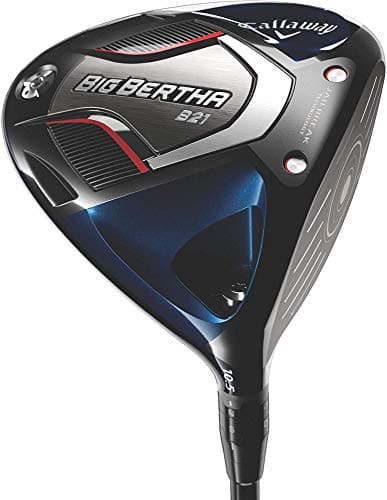
The Callaway Big Bertha B21 is one of the most forgiving, anti-slice drivers Callaway has ever built, and now that it is last-gen you can buy that flagship technology for a fraction of its launch price. If your miss is a slice and you want a big brand behind the club, this is a superb value driver.
When Callaway launched the B21, it was the forgiveness flagship in the Big Bertha line — a driver engineered above all to help the everyday golfer stop losing the ball to the right. The Big Bertha name is one of the most recognizable in golf, and the B21 wears it for the game-improvement crowd rather than the low-handicap tinkerer. Newer models have since replaced it, and that is exactly why it belongs on this site: the technology did not stop working when the calendar turned, but the price dropped sharply. It is the anti-slice pick on our best budget drivers ranking.
Who the Big Bertha B21 is for
The B21 is built for a specific and very common golfer: the one whose bad drive leaks or slices to the right, usually with a moderate rather than blazing swing speed. If that is you, almost everything about this club is designed to help. It is draw-biased, so weight is positioned to help the face square up through impact and turn a slice into something straighter. It has a very high MOI, meaning the head resists twisting on off-center hits, so your mishits fly straighter and lose less distance. And it launches easily and high, which flatters a moderate swing that struggles to get the ball up and carrying. It is also a natural fit for a slower, slice-prone senior swing — we place it in a full senior setup in our best clubs for seniors guide.
The standout: anti-slice forgiveness
The reason to buy the B21 is right there in its purpose: it is one of the easiest drivers to hit straight that Callaway has made. Most amateurs fight a slice, and most of the money in a modern flagship goes toward speed and low spin that a slice-prone, moderate-speed player cannot actually cash in. The B21 spends its engineering budget somewhere far more useful for that golfer — on forgiveness and on straightening ball flight. The high-MOI head and draw bias will not literally cure a swing fault, and we would never claim they do, but they meaningfully reduce how far the ball curves and how much a mishit costs you. That is the whole thesis of value golf in one club: pay for the help you can use, not the speed you cannot. For the target player, more fairways is worth far more than a couple of theoretical yards.
Flagship tech at a last-gen price
Here is the value argument that runs through everything we recommend. Golf's manufacturers release a new flagship roughly every year, and the moment they do, last year's glowingly-reviewed club drops in price even though nothing about its performance changed. The B21 was a Callaway flagship; today it is prior-generation, and it sells for a fraction of what it commanded at launch. Year-over-year driver gains are typically single-digit yards under robot testing, and the human holding the club gives most of that back on any given swing — so buying the forgiving, anti-slice driver that was a flagship not long ago is one of the cleanest saves in the game.
Who should look elsewhere
Be honest about your miss before you buy, because the B21's greatest strength is also its limit. That draw bias is built to fight a slice — which makes it the wrong club if you already draw or hook the ball. Put a draw-biased head in the hands of a player who turns the ball over too much and you will exaggerate the very miss you are trying to escape. If your natural shape is right-to-left, or you simply want a neutral, workable head you can move in either direction, look elsewhere. The other honest caveat is stock: because it is a prior-generation model, the exact loft and flex you want can be limited, so check that the listing offers your spec before you commit. For a more neutral value driver, our Cleveland vs Wilson budget-driver comparison covers two more options — one neutral, one even more slice-focused.
How it stacks up against the other value drivers
On our budget-driver list the B21 sits between two other strong picks, and the comparison clarifies who it is for. The Cleveland Launcher XL is the more neutral, maximum-stability choice, with a large high-MOI head and some stock adjustable loft — the better fit if you do not slice and just want the most forgiving all-round head. The Wilson Launch Pad is lighter and even more single-mindedly anti-slice. The B21's position is the middle path many players want: serious anti-slice help from a Callaway flagship, with the brand name and build quality to match.
The value verdict
For the golfer it is built for — a moderate-speed player who fights a slice and wants a trusted name — the Callaway Big Bertha B21 is close to unbeatable value. You get genuine flagship forgiveness, aimed at the exact miss most amateurs make, at a last-gen price the newest models will never touch. It is not a tuning platform and it is not for a player who works the ball, but it was never meant to be. There is a reason it keeps turning up in recommendations for slicers years after its release: it does the single most useful job in amateur golf, and it now does it cheaply. If it fits your miss, it is a lot of driver for the money — spend where it matters, and let the depreciation work in your favor.