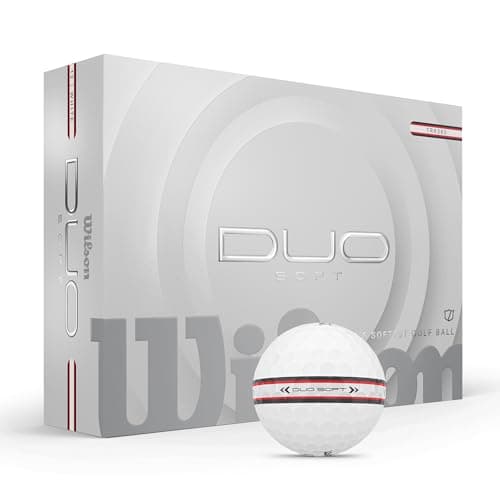
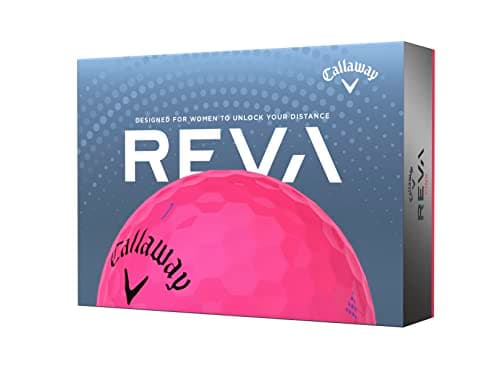
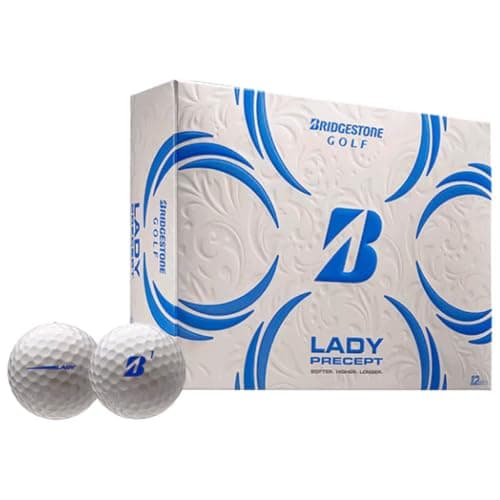
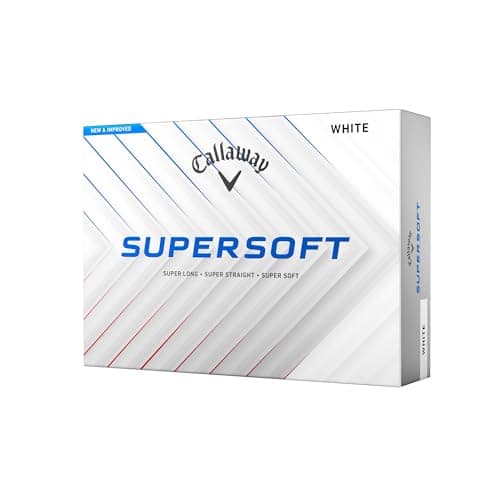
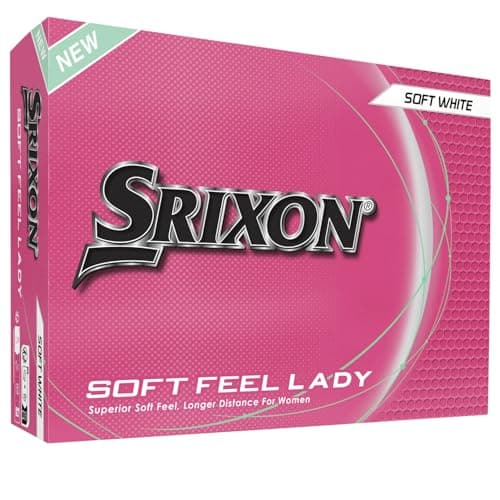
The Srixon Soft Feel Lady 9 is the women's ball to buy, because it is one of the few where the "lady" version is a different core spec rather than a different box. But the ball that fits the most women is not marketed to them at all: the Wilson Duo Soft runs a compression of 37, lower than any women's-specific ball on this page, and it usually costs less. The Callaway REVA earns its place for a third reason — it is built oversized, inside the rules, which is the one genuine design idea in the category.
Is there really such a thing as a women's golf ball?
Partly. No rule anywhere makes a ball a women's ball, and the USGA conforming-ball list has no such category — a ball is legal or it is not, for everybody. What exists instead is a design target: build the ball around a slower clubhead speed so it compresses properly, launches higher, and loses less carry than a ball designed for a tour player. That target is real, it matters more than almost anything else you can buy for your game, and some manufacturers hit it honestly.
The complication is that the same target is also hit by balls with no gender on the box at all. Every soft, low-compression value ball in golf — the Duo Soft, the Supersoft, the standard Soft Feel — is engineered for exactly the swing speeds most women play at. So the category splits three ways: balls genuinely retuned for a slower swing, balls that are a mainstream model in a pink sleeve at the same price, and mainstream soft balls that quietly outperform both. This page ranks across all three, because the real question is "which ball should I play", not "which ball has a woman on the packaging".
Swing speed is the whole spec
Here is the number that decides your ball. Estimates compiled by Golfing Focus from Trackman, Arccos, Titleist and club designer Tom Wishon put the average woman amateur's driver swing speed at about 70 mph, and break it down by handicap: roughly 90 mph for a scratch player, 83 mph at a 10 handicap, 75 mph at a 20 handicap, and 60 to 65 mph above a 30. A Par4Success study of more than 200 women golfers using launch monitors found 73 mph for the 50-to-60 age group and 72 mph over 60, against 93 mph for 17-to-29-year-olds. The LPGA Tour average is around 96 mph.
Those are not small gaps, and they are why a single "best ball for women" answer is dishonest. A 20 handicap swinging 75 mph and a county player swinging 90 mph want opposite balls: one needs every bit of help compressing a soft core, the other is already fast enough to make a mainstream ball work and would lose ball speed and control on an ultra-soft one. Our compression guide sets out the mechanism in full, and best golf balls for slow swing speeds is the page to read if your speed sits at the bottom of that range, whoever you are.
The rule we use across this site: below roughly 85 mph of driver speed, a low-compression ball is the right call and a premium tour ball is money you cannot use. Above it, the softest balls start costing you ball speed and greenside control, and the main value roundup is the better page. If you genuinely swing over 90 mph, our fast swing speed page is written for you and nothing on this one is.
How we picked
Six criteria, applied in this order. We do not run a lab and we did not measure any of these balls: every construction, core and dimple claim below is the manufacturer's published specification or a named third-party review, quoted as such, and where a maker publishes nothing we say so in that pick's cons.
- A compression that suits 65 to 85 mph. Either a published low compression figure, or a stated design intent of higher launch at a slower speed. This is the only spec on the page that changes shots, so it ranked first and it broke every tie.
- Engineering, not paint. A ball earns the women's label here by having something the unisex model does not — a retuned core, an oversized build, a different cover. A mainstream ball in a pink sleeve at the same price is ranked on its merits as a mainstream ball, which is how the Supersoft and the Volvik got on.
- Price per dozen, not price per box. Value balls ship as dozens, 14-packs and 15-packs, and pack size is where the real cost hides. Every pick below flags it in the cons when its pack is smaller than its shelf-neighbor's.
- Honest about the short game. Every ball on this page has an ionomer or Surlyn cover, and none of them will check a full wedge the way urethane does. Any page that tells you otherwise is selling. We say it once here and again in each pick's cons.
- Verified in stock, at a live price. Each pick was checked against the Amazon catalog on the day this page was written: a title that matches brand and model, a real product image, and an in-stock offer. The number on each card is today's, pulled live — never a figure we typed.
- No premium tour balls. There is a women's-marketed tier above this page that costs three times as much. At the swing speeds above it is the clearest example in golf of paying for performance you cannot access, and our are expensive golf balls worth it page does the arithmetic.
What the real women's engineering actually changes
Three of the picks here are doing something specific, and it is worth knowing what, because it is the difference between a category and a marketing exercise.
Srixon retunes the core. The Soft Feel Lady 9 carries the same FastLayer core construction and 338 Speed Dimple pattern as the standard Soft Feel — a core built soft at the center and progressively firmer toward the cover, so it feels soft without bleeding ball speed. What Srixon states it changed for the Lady is the launch: the core is tuned to a woman's swing to launch higher for more carry. That is a different ball, not a different sticker, and it sits at the same shelf price.
Callaway changes the size. REVA is built with what Callaway calls an oversized construction that still conforms to the Rules of Golf — a ball at the large end of what is legal, on the theory that it sits up bigger at address and gets airborne more easily. National Club Golfer's reviewer noted the difference is hard to see by eye, which is fair, but the confidence effect over the ball is real for plenty of players and the low-spin ionomer cover does reduce curve. Golf Monthly's review is equally clear about the limit: faster swings get no carry benefit from it at all.
Bridgestone grades the core. The Lady Precept uses Bridgestone's gradational compression core — soft at the center, firmer at the perimeter — under a 330-seamless dimple ionomer cover aimed at a higher flight. It is the cheapest genuine women's ball from a major manufacturer, and Today's Golfer is direct about the trade: it is not the strongest performer around the greens.
And what the label does not change
The rest of it is packaging, and none of it is worth a premium.
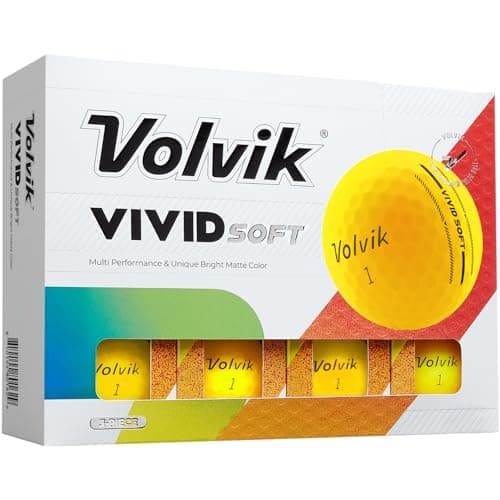
- Color. Pink, pearl and matte finishes are genuinely easier to track in rough and against a grey sky, which is the whole reason the Volvik Vivid Soft is on this page. But color is a preference, not performance, and if a colored dozen costs more than the white dozen of the same ball, you are paying for paint. Buy the color you can find, in the model you chose for its core.
- "Lady" on a premium ball. A women's-marketed urethane tour ball is still a tour ball, built around spin control a 70 mph swing cannot generate. The label does not change the physics, and the price difference over a season of lost balls buys a lesson.
- The box, versus what is in it. Several mainstream balls sell a pink version at a small premium over the white one. That is the same ball. If you want pink and the pink costs more, decide whether the color is worth the difference — it sometimes is, for finding your ball in the rough, and it is never worth it for performance.
- Buying a dozen at a time. If you lose balls, the cheapest route to the same ball is a case. Our bulk value roundup covers the multi-packs, and how long golf balls last explains why stocking up costs you nothing in performance.
The short-game trade, stated plainly
Every ball on this page has a firm ionomer or Surlyn cover, and that is the one real compromise you are making. A urethane cover grips wedge grooves and lets a full wedge shot check on the green; an ionomer cover does not, so the same shot lands and releases. If your short game is the strong part of your golf and you want that bite, the honest answer is not a women's ball at all — it is a value urethane ball from our best for the money roundup, or a recycled urethane pack, which puts a tour cover in your bag at value-ball prices.
For most readers of this page it is the right trade anyway. At 70 mph the ball is not carrying enough spin to stop quickly on a firm green whatever its cover, and the strokes are lost long before the green: in carry off the tee, in a ball that will not get airborne from a fairway lie, in a slice the ball made worse. Those are the things a low-compression, low-spin ball genuinely helps with, and our balls for a slice page covers the last of them.
What we would actually buy
A woman swinging in the 70s who wants one recommendation and no reading: the Srixon Soft Feel Lady 9. It is the only ball here with a stated retune behind the label, it costs the same as the mainstream soft balls, and the standard Soft Feel it is built on is one of the best-regarded value balls in golf.
The best value on the page, and it is not close: the Wilson Duo Soft, at a compression of 37 on National Club Golfer's review — softer than any women's-specific ball here, usually cheaper, with an alignment stripe thrown in. It is not marketed to women, and that is the entire point. Under about 75 mph, this is the ball on this page that compresses most easily.
A newer player who finds the ball small and the tee shot frightening: the Callaway REVA, in the previous-generation version, which is discounted well under the current one for the same construction. A reader buying on price alone: the Bridgestone Lady Precept, with the short-game caveat above understood. Someone who loses balls in the rough: the Volvik Vivid Soft, whose matte high-visibility finish is the only reason it is here and a good enough one. And a player at the top of this page's speed range, 80 to 90 mph: the Callaway Supersoft, the least specialized ball here and the most forgiving of a faster swing.
One last thing, worth more than any ball choice on this page. If you are playing men's clubs cut down, or a set that was never fitted to you, the ball is the smaller of your two problems — our women's golf club sets roundup and our shaft flex guide are where the bigger strokes are hiding.