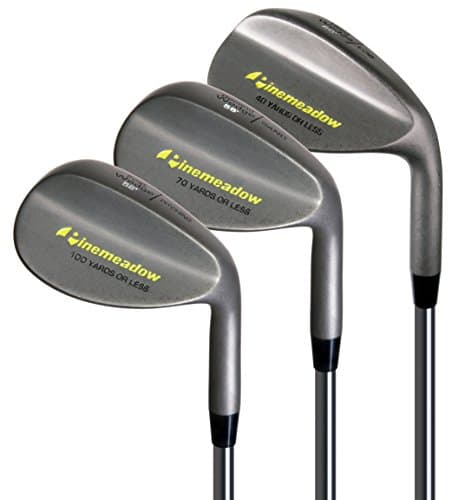
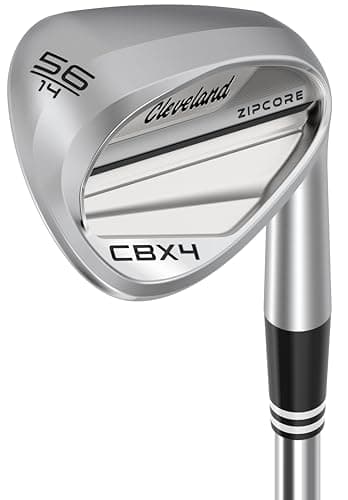
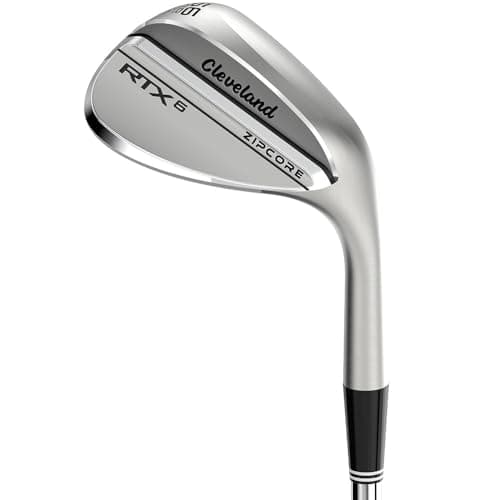
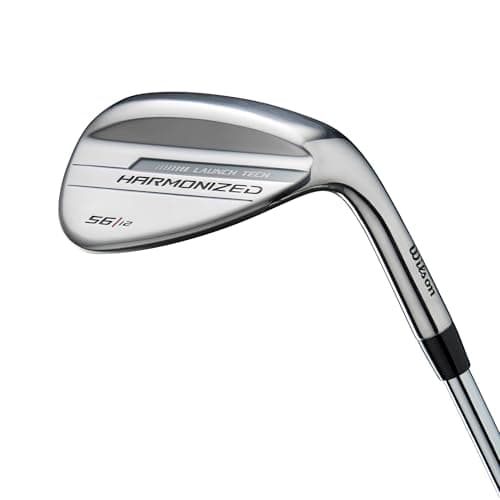
The Wilson Harmonized is the best wedge for the money — a real steel-shafted wedge in the three lofts that matter, at a price that makes gapping your bag affordable. The Cleveland CBX4 ZipCore is the upgrade that actually helps a mid-handicapper, and the Pinemeadow three-wedge set is the fastest way to fill 52, 56 and 60 at once.
A note on the prices below. Complete-set and club prices on Amazon swing widely with third-party sellers — the live number on each card is today's, stamped with the date we checked it. If a set looks overpriced, it usually is, and it tends to come back down; it's also often cheaper in-store or direct. Treat the live price as a starting point and shop it around before you buy.
The uncomfortable truth about wedge spending
Wedges are marketed on spin, and spin is real — but it is also the single most strike-dependent thing in golf. A tour wedge produces its spin numbers when a clean groove meets a clean ball with a descending blow and no grass in between. Change any one of those and the difference between a value wedge and a tour wedge collapses. Out of wet rough, the two are effectively identical, because neither can grip the cover through a layer of moisture.
That is why this list is deliberately spread from a budget wedge to a current tour wedge rather than being five near-identical picks. The right answer genuinely depends on how you strike your wedges, and we would rather tell you where the line is than sell you the top of the range.
Grooves wear out, and that matters more than the model
Here is the thing almost nobody tells a value buyer: wedge grooves are a consumable. The sharp edges that generate friction round off with use, and a heavily played 56-degree wedge loses meaningful spin over a couple of seasons — faster if you practice a lot off mats, which are far more abrasive than turf. A brand-new budget wedge will out-spin a worn premium wedge comfortably.
The practical consequence for spending: if you play a lot, buying an inexpensive wedge and replacing it every two or three seasons beats buying an expensive one and keeping it for eight. If you play rarely, a premium wedge will hold its grooves for years and the extra spend is more defensible. That is the opposite of the usual advice, and it follows directly from how grooves actually fail.
How to gap your wedges without buying four clubs
The standard modern set-up runs about four to six degrees between wedges. Most game-improvement iron sets now come with a strong pitching wedge around 43 or 44 degrees, which means the classic pitching-wedge-and-sand-wedge bag has a gaping hole between roughly 44 and 56 degrees — the exact yardage band where most approach shots inside 110 yards live.
- Check your pitching wedge loft first. It is stamped on the club or listed in the set spec. Everything else follows from that number.
- Add a gap wedge around 50 to 52 degrees if the jump from your pitching wedge to your sand wedge is more than six degrees. This is the single most useful wedge purchase most amateurs never make.
- Keep the 56 as the workhorse. If you only own one specialist wedge, a 56 is the one — it plays bunkers, standard chips and full shots.
- Only add a 60 if you actually use it. A lob wedge in the hands of someone who does not open the face is a club that produces chunks and thins. Be honest.
If that math says you need three wedges, the Pinemeadow set answers it in one purchase for less than a single premium wedge — which is exactly the kind of trade this site exists to point out. If it says you need one, buy the Wilson Harmonized and spend the difference on a lesson or a fitting.
Bounce and grind, in plain English
Bounce is the angle between the leading edge and the lowest point of the sole. High bounce (10 degrees and up) stops the club digging, which suits soft turf, fluffy sand and steep swings. Low bounce (about 4 to 8) suits firm turf, tight lies and shallow swings. Grind is material removed from the sole to let you open the face without lifting the leading edge — it only matters if you actually open the face.
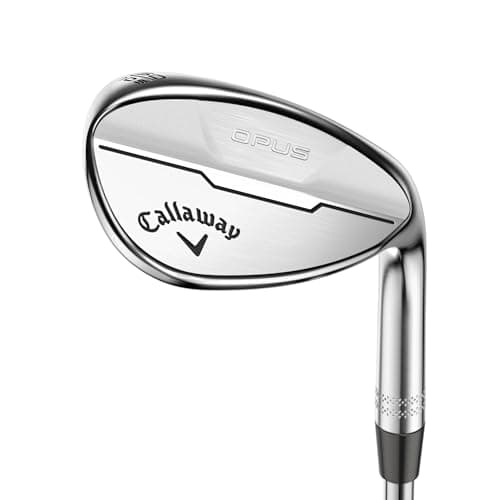
For the overwhelming majority of value buyers the right answer is mid bounce, standard grind, and no further thought. That is what the Wilson and the Pinemeadow give you by default. Cleveland pairs a loft-appropriate grind with each CBX4 automatically, which is a genuinely useful bit of engineering for someone who does not want to learn the chart. Only the Callaway Opus asks you to choose, and that is the honest test of whether you should be buying it.
What we would actually buy
A mid-handicapper with one wedge and a gap in the bag: the Wilson Harmonized in the missing loft, replaced every few seasons. A mid-handicapper who thins wedges and wants help: the Cleveland CBX4 ZipCore, because the cavity back genuinely rescues the strikes you actually make. A good player buying last year's tour club: the RTX 6 ZipCore, at a price that keeps drifting down as newer models land — the same last-gen logic we apply to budget drivers.