A ten-dollar pair of alignment sticks is the best training aid in golf, and nothing else is close. The Impact Ball fixes one specific fault properly, the SKLZ Gold Flex trains tempo and doubles as the best warm-up tool available, and a putting mat is where the strokes actually are.
Why most training aids do not work
The category is enormous and most of it fails for one of three reasons, and it is worth being able to spot them yourself.
- It constrains you instead of teaching you. Devices that strap your arms to your body or your wrists to a brace produce a good-looking swing while attached and nothing afterwards, because your body never learned to do it unassisted.
- It fixes a fault you do not have. Most aids target one specific error. Buying an over-the-top corrector when your problem is a weak grip is spending money on the wrong diagnosis.
- It requires a habit you will not form. The best aid in the world does nothing in a cupboard. Anything that takes ten minutes to set up gets used twice.
The four picks here survive all three tests: they give feedback rather than constraint, they address faults most amateurs genuinely have, and they take seconds to deploy.
Alignment sticks: the one everybody should own
Aim is the most common uncorrected fault in amateur golf, and it is invisible from the inside. Standing over the ball, you cannot see where you are aimed. Almost every golfer who slices gradually aims further left to compensate, which steepens the path and makes the slice worse — a self-reinforcing loop that a stick on the ground breaks in one session.
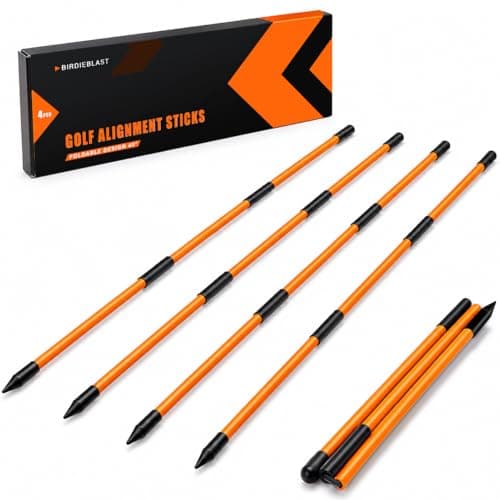
Three drills cover most of the value. One stick on the ground pointing at the target, parallel to your feet, tells you where you are actually aimed. A second stick perpendicular to it controls ball position. And a stick in the ground just outside the ball, angled away, gives instant feedback on an over-the-top path.
Ten dollars, fits in a stand bag, and every teaching professional uses them. If you buy one thing from this page, buy these.
The Impact Ball: a targeted fix, correctly targeted
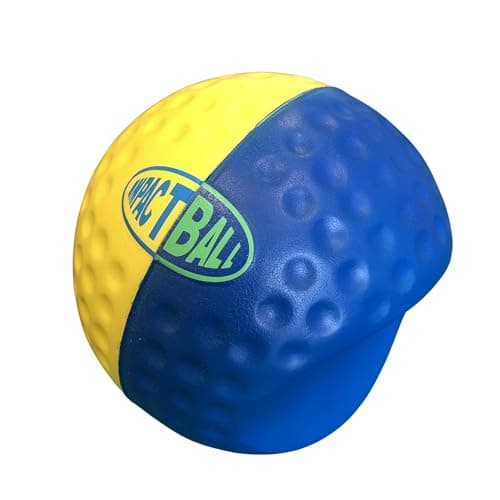
An inflatable ball held between the forearms that prevents your arms separating through the swing. It addresses the chicken wing — the lead elbow folding out through impact — which is one of the most common causes of thin, weak contact among mid and high handicappers.
It works because you cannot cheat it. Most feedback aids can be ignored; this one physically drops on the ground if you do the wrong thing. Buy it only if arm separation is actually your miss, though. A targeted aid for a fault you do not have is exactly the spending this site exists to prevent.
The Gold Flex: tempo, and the warm-up nobody does
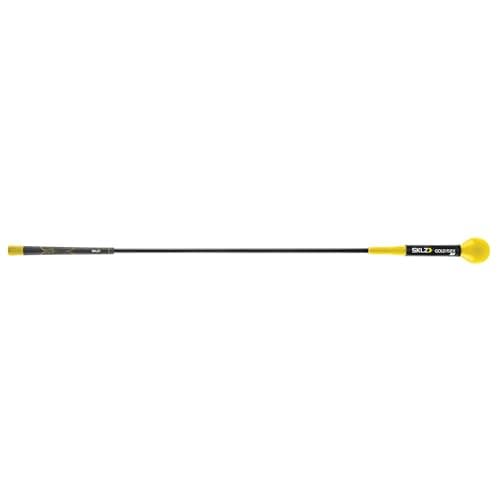
A weighted head on a very flexible shaft. Swing it and the head lags, then whips through — you cannot force it, so it teaches you to let the club release rather than hitting at the ball. Tempo is a genuine scoring skill and this is the cheapest reliable way to train it.
Its second job may be more valuable. Most amateurs arrive at the first tee cold, having done nothing, and either injure themselves or spend three holes warming up. Twenty swings with a Gold Flex before you tee off is a proper dynamic warm-up, and it is legal to do on the tee.
The putting mat: where the strokes actually are
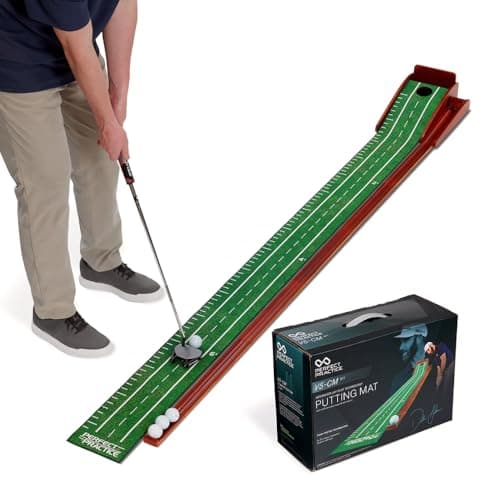
Roughly 40 percent of your strokes are putts, and the majority of amateur putting loss is speed control rather than line. Speed control is trained by repetition on a consistent surface, which is precisely what a mat provides and what a carpet does not.
It also has the highest completion rate of anything here, because it needs no swing space and no setup. A mat that lives unrolled in a hallway gets used on weeknights, which is more than can be said for any range membership. The putter to roll on it is on our budget putter roundup, and if the Compact mat here is not the right size or price, we rank five more — plus the ramp that trains pace — on our best putting mats page.
Where the money actually goes furthest
We would be dishonest if we did not say this: a single lesson from a competent professional costs about what the Gold Flex does and will diagnose in twenty minutes what you might spend two seasons guessing at. The right sequence is a lesson first, then the aid that addresses what they found.
Buying aids without a diagnosis is how people end up with a drawer full of them. Buying one after a diagnosis is how people improve.
What we would actually buy
Everyone: the alignment sticks, today. Anyone who thins iron shots and has been told they chicken-wing: the Impact Ball. Anyone who arrives cold at the first tee or fights their tempo: the Gold Flex. And anyone with a hallway and an interest in scoring lower: the putting mat, which is the only item here that reliably converts practice into strokes saved.