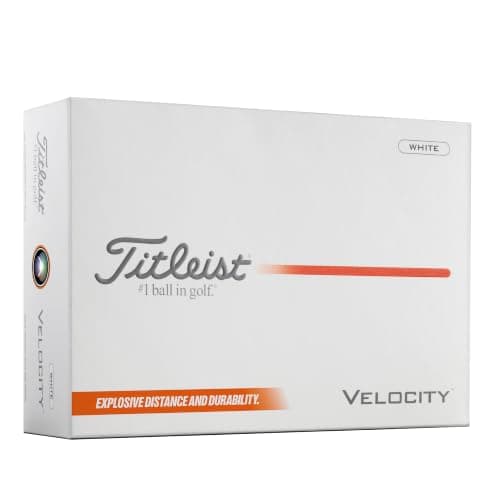
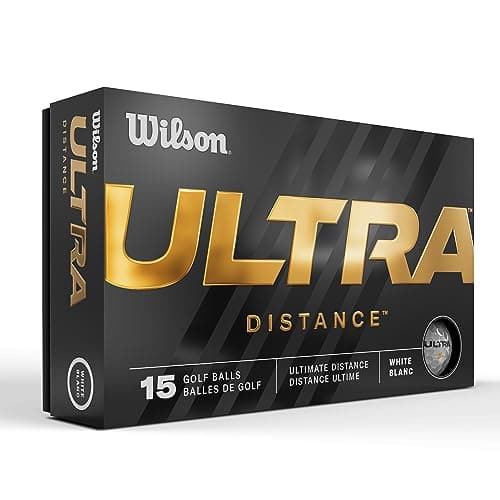
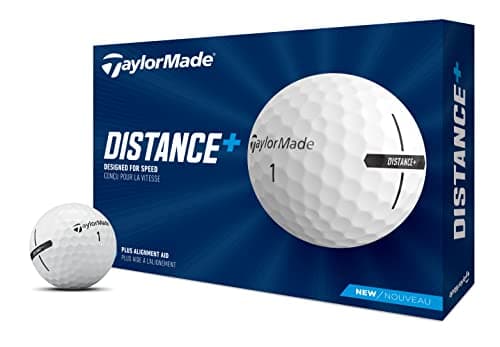
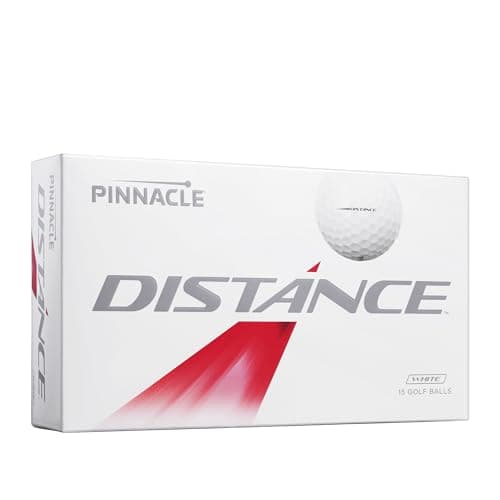
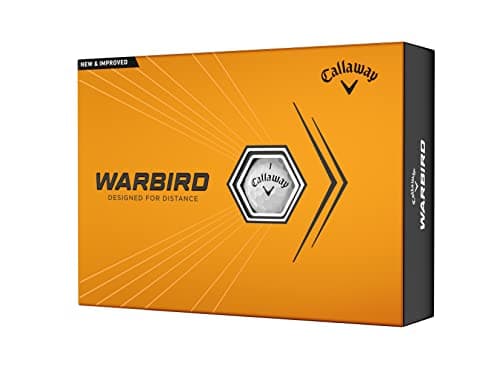
The Callaway Warbird is the best value ball for a slicer — a firm, low-spin two-piece that curves noticeably less than a soft urethane ball, for a fraction of the price. Before you buy anything, understand the ceiling: a ball can take a portion off your slice. It cannot take the slice away.
Why a ball curves in the first place
A ball curves because of sidespin, and sidespin comes from the relationship between your club face and your swing path at impact. If the face is open relative to the path, the ball spins around a tilted axis and curves right for a right-hander. Nothing about the ball creates that tilt — your club does.
What the ball controls is how much total spin is applied. A high-spin ball spins more around whatever axis your club gives it, so a tilted axis produces a bigger curve. A low-spin ball spins less around the same tilted axis, so the same swing produces a smaller curve. That is the whole mechanism, and it is genuinely real — but it is a percentage reduction of your slice, not a cure.
What actually makes a ball low-spin
- A firm ionomer cover. Ionomer (often branded Surlyn) is harder and slicker than urethane, so the club face grips it less and imparts less spin. Every ball on this page has one.
- Two-piece construction. A large solid core under a single cover layer, with no soft mantle to add spin. Simple, cheap and low-spin by design.
- Higher compression relative to your speed. A ball that you do not fully compress launches with less spin off the driver.
The convenient part for a value buyer: every one of those characteristics is what makes a ball cheap to manufacture. Anti-slice balls are, almost by definition, budget balls. You are not paying extra for the help.
How much straighter, honestly
Independent robot testing of high-spin against low-spin balls hit with an identical open-face delivery consistently shows the low-spin ball finishing meaningfully closer to the target line — a useful reduction, not a transformation. The size of the effect scales with how bad the slice is: a small fade barely changes, while a big slice tightens noticeably because there is more curve for the reduced spin to take away.
The other half of the trade is what you give up. A low-spin ionomer ball checks less on approach shots and releases further on chips. If you already hold greens, you will notice. If your slice is putting you in the trees off every tee, you have bigger problems than a wedge that runs out three feet.
The three things that beat any ball choice
We would be doing you a disservice if we let you leave this page thinking a ball is the answer. In rough order of return:
- Grip. A weak grip — hands rotated too far towards the target — leaves the face open at impact and is the single most common cause of a slice. It is free to change and it feels awful for about two weeks.
- An offset or draw-biased driver. Real, measurable face-closing help built into the club. Our budget driver roundup flags which heads are draw-biased.
- Alignment. Slicers routinely aim further and further left, which steepens the out-to-in path and makes the slice worse. A pair of alignment sticks costs ten dollars and breaks that loop.
What we would actually buy
If you slice and you are losing balls: the Callaway Warbird, bought by the multi-pack, with the savings going towards a lesson on your grip. If you slice but keep the ball in play: the Titleist Velocity, which is the most refined low-spin ball here and still costs well under a premium ball. And if you have been slicing for years and have decided to play it rather than fix it — that is a legitimate choice, and a firm two-piece ball is the right ball for it.