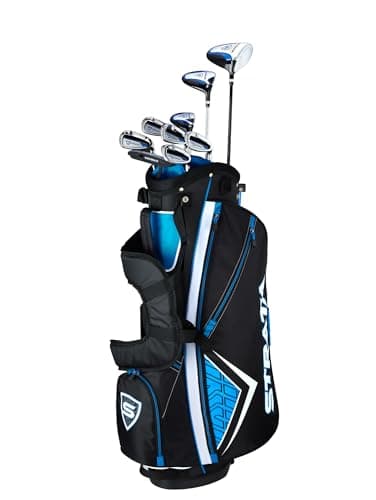
If you play left-handed, your problem is not performance — it is inventory. The clubs below are the left-hand builds we could verify as live and buyable, ranked the same way we rank everything: by what you get for the money, with the compromises stated. The Callaway Strata 12-piece is the set to buy if you want one box and no research, because Callaway sells the left-hand version at the same price as the right-hand one.
Industry estimates commonly put left-handed golfers at roughly 5 to 7 percent of players against something like 10 to 12 percent of the general population — no primary survey is published behind those figures, so treat them as the trade's working estimate rather than a measurement. What is not in doubt is the consequence, and you have lived it: a wall of clubs in a pro shop with one lonely left-hand rack at the end, a used-club market that is overwhelmingly right-handed, and smaller brands that simply do not tool a left-hand mold because the volume is not there.
That is the gap this page is built around. Everything here was checked for a live left-handed listing before it was ranked. Where a model exists left-handed in only one flex or one length, we say so, because a left-hander comparing two sets needs to know which one they can actually be fitted into — not which one has the better marketing.
How we picked
Four criteria, in this order. They are deliberately boring, and they are the reason this list is short.
- Verified left-hand stock. The listing has to say left-hand and has to be buyable now. A model that is nominally offered left-handed but perpetually unavailable is not a recommendation, it is a tease.
- No lefty tax. Where a set costs materially more left-handed than right-handed for the same contents, it drops. Some manufacturers price the two identically; those get the credit.
- Completeness per dollar. A left-hander cannot easily fill gaps from the used rack later, so a complete bag is worth more to a lefty than to a right-hander. Clubs you can add afterward are ranked below sets for exactly that reason.
- Fit options that exist. Length and flex decide whether a starter set works. A set available left-handed in one flex only is still a fine buy — if that flex is yours. We flag which one it is.
What we did not do is rate left-hand clubs against some separate left-handed standard. A left-hand 7-iron is a mirror image of the right-hand one, and the physics are identical. Anyone who tells you lefty clubs perform differently is selling something.
The sets, in order
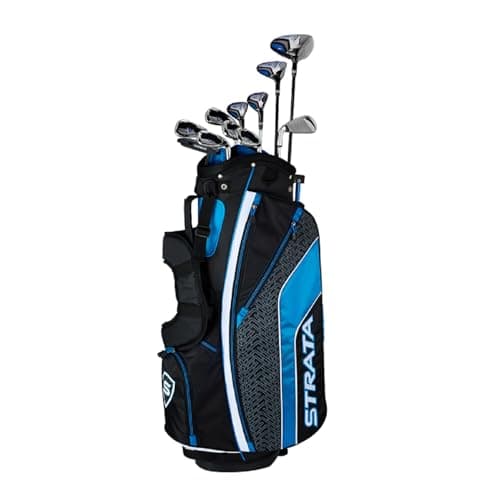
Start with the Callaway Strata 12-piece. It is the mainstream package set that is genuinely stocked left-handed at the same list price as the right-hand box — a 460cc driver, a 3-wood, a 5-hybrid, 6-iron through pitching wedge, a putter and a stand bag. For a new left-handed golfer who wants to stop researching and start playing, this is the answer, and it is the same answer we would give a right-hander on our best beginner sets page.
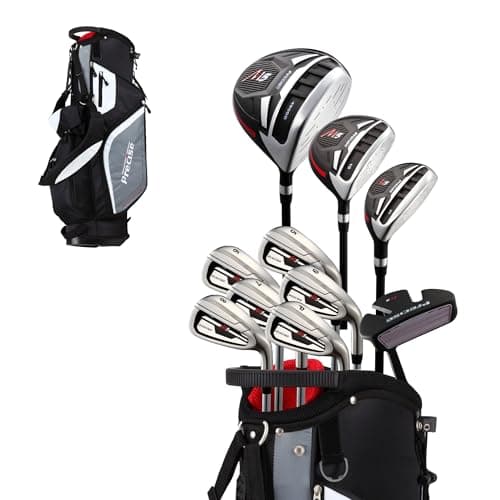
The Precise M5 is the price floor. It carries more clubs than the Strata 12 for less money — driver, 3-wood, a 21 degree hybrid, 5-iron through pitching wedge, putter, stand bag and three headcovers, per the retailer listings — and it is the only set here sold in a tall +1-inch left-hand build. If you are around 6 foot 1 or taller, that single option matters more than any head design on this page, because length is what decides where the club meets the ground. The trade is transparency: Precise publishes no loft chart, and the listings disagree about the piece count, so count the clubs in the specific listing you buy.
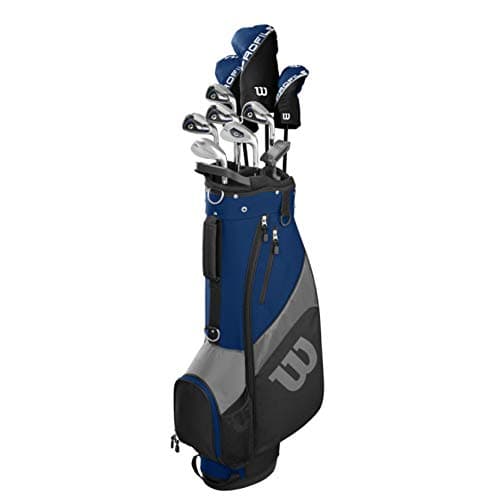
The Wilson Profile SGI is the fitted option, with a catch.Wilson builds the Profile SGI in multiple length and flex configurations, which is why it is the set we usually point slower swings toward. Left-handed, the configuration that is reliably stocked is senior (A) flex. That is excellent news if your driver speed is under about 85 mph and irrelevant to you if it is not — which is a far better problem than "sold out in every build", and an honest reason this set sits third rather than first. If you do not know your flex, our guide to what shaft flex you need sorts it out in two minutes.
The Strata Ultimate 16-piece is the complete option. More long clubs, a wider iron run, and the same set this site recommends by default to right-handed beginners. The left-hand stock is 2019-dated production, which is worth knowing and not worth fearing in a starter set — but it is more money for clubs a first-year golfer may not touch. Read how much to spend on a first set before you jump to it.
Then the three pieces worth adding
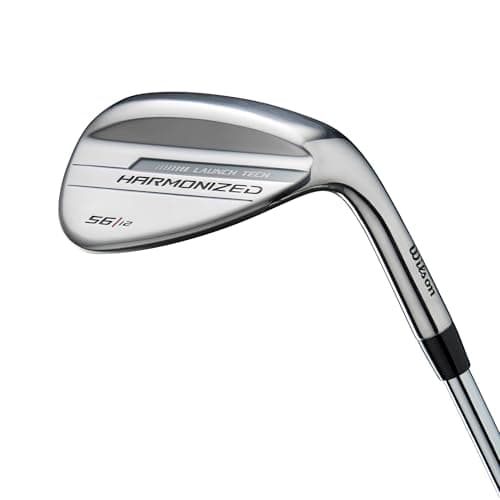
Every package set on this page stops at the pitching wedge, which leaves a hole between about 60 and 100 yards that no amount of forgiveness in the irons can fill. That is why the Wilson Harmonized 56 degree wedge is on this list above the driver and the putter: it is the cheapest shot you will ever buy back, it is built left-handed, and 56 degrees is the single loft to own if you only own one. Our wedge roundup covers the right-hand field in full.
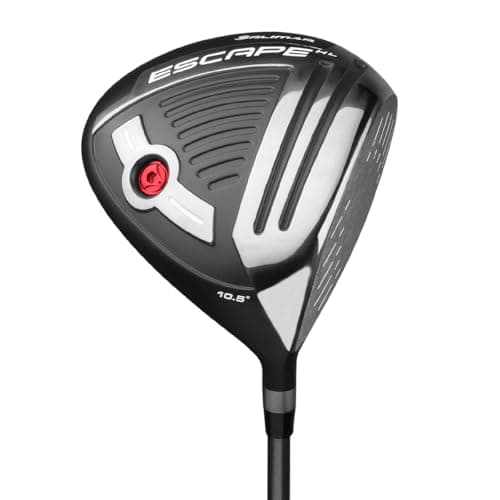
The Orlimar Escape HL draw-bias driveris the next upgrade, because the driver is the weakest club in every package set. The draw bias is the correct bias for a left-hander: a lefty's slice curves left, and a heel-weighted head is built to fight precisely that miss. If you fight a hook instead, skip it — the bias works against you. Our beginner driver roundup explains the anti-slice mechanism in more detail.
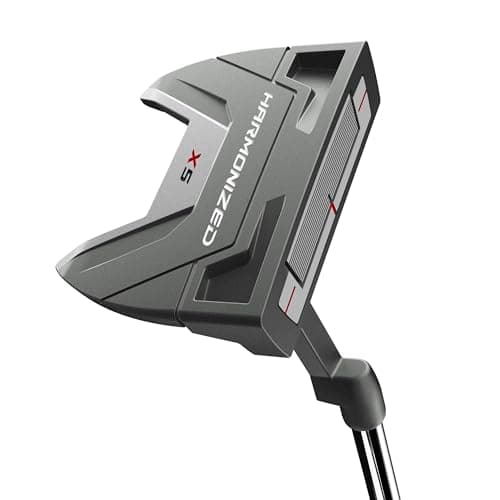
The Wilson Harmonized X5 putter rounds it out. Putters are where left-hand stock dies first, and a mid-mallet with the oversize grip already fitted, from a brand with a century of club-making behind it, is a lot of putter for the money. Only the 34-inch length is offered left-handed, so a tall left-hander is buying a shaft to cut down — annoying, and still the best left-hand option at this price. The full field is on our budget putter roundup.
Where the left-hand shelf actually runs out
It is worth being specific, because "hard to find left-handed" is too vague to shop with. In the categories this site covers, here is the pattern we see when we check live stock:
- Complete sets: good. The major package sets are built left-handed and are usually priced the same. This is the easiest left-hand purchase in golf.
- Drivers and fairway woods: fine at the value end. There are left-hand titanium drivers under a hundred dollars and left-hand builds from the value brands. Loft and flex choice is narrower, not absent.
- Wedges: adequate in 56 degrees, thin either side of it. A left-hand 56 is easy. Gapping a full 52/56/60 set left-handed takes patience and repeat visits.
- Putters: thin. Fewer models, fewer lengths, and the cheap end is mostly unbranded. Buying a known brand matters more here than anywhere else on this list.
- Used clubs: thinnest of all. The secondhand market is overwhelmingly right-handed, which is the one place a left-hander genuinely pays a penalty — our guide to buying used is still worth reading, but expect to search longer and compromise more on spec.
The honest summary
A left-handed golfer in 2026 is not short of good clubs; they are short of choice. The way to play that is to buy complete rather than piecemeal, to take the fit option that exists rather than waiting for the one that does not, and to put the money you did not spend chasing a specific model into a lesson or a fitting — which pays a left-hander exactly as much as it pays anyone else.
One more thing, for the parents reading this. If a left-handed child wants to play, buy them left-handed clubs. The old pro-shop habit of handing a lefty kid a right-hand set because that is what was in the barrel is the most commonly cited reason there are so few left-handed golfers at all, and it is a decision made for the shop's convenience rather than the child's game. Our junior set roundup covers how to size a child's clubs.
Buying left-handed: the four decisions that matter
1. Length before everything.If a club is too long you will stand too far from the ball and strike the inside of the face; too short and you will hit it thin. Standard builds suit roughly 5 foot 7 to 6 foot tall; above about 6 foot 1, look for the tall build — which is why the Precise M5's +1-inch left-hand option counts for more than its spec sheet suggests.
2. Flex, honestly assessed. Senior (A) flex is right for driver speeds under about 85 mph, regular for roughly 85 to 95, stiff above that. The left-hand market forces this decision earlier than the right-hand one does, because a given set may exist left-handed in a single flex. Match the flex to your swing and then pick among the sets that offer it, not the other way around.
3. Completeness, because you cannot top up easily. A right-hander can fill a gap from the used rack for forty dollars. A left-hander often cannot. That shifts the math toward buying the more complete box up front, and it is why a 56 degree wedge is the first thing we would add to any set here.
4. Ignore handedness marketing.There is no left-handed performance technology. The head is mirrored, the shaft is the same shaft, and the ball does not know. Any price premium you are asked to pay for "left-hand engineering" is a premium for lower production volume, and the sets on this list that charge nothing extra are the proof that it does not have to be charged at all.
What a left-hander should not buy
Do not buy a right-handed set because it is cheaper or because it is what the shop has. Learning the game on the wrong-handed clubs will cost you years of progress and all of the money you saved. Do not buy an unbranded left-hand "tour" set from a brand with no service history; left-hand stock problems are bad enough without a warranty you cannot claim. And do not pay up for premium left-hand irons as a beginner — the advice on our beginner irons page applies identically whichever way round you swing.