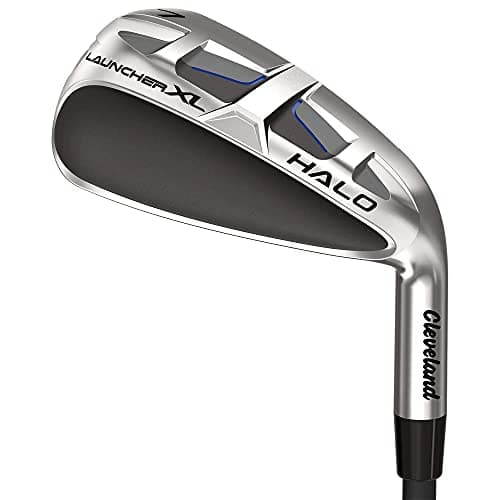
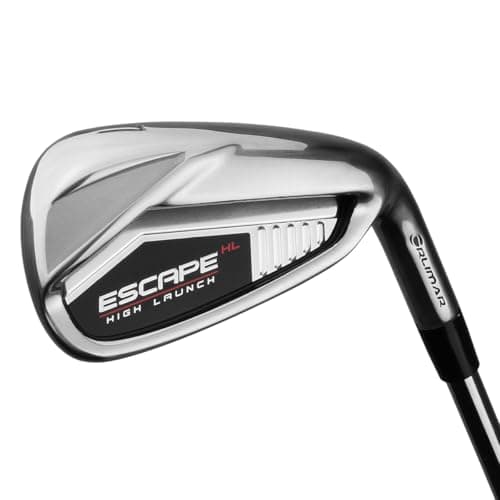
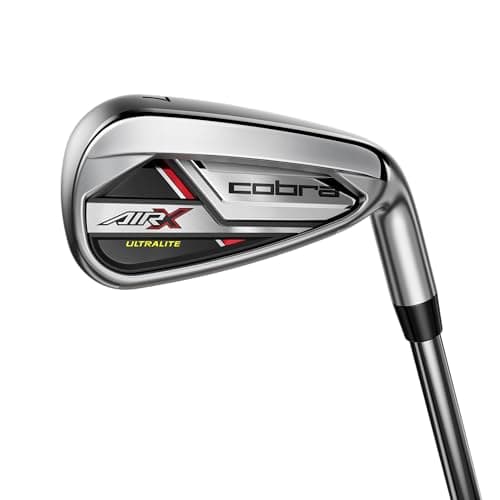
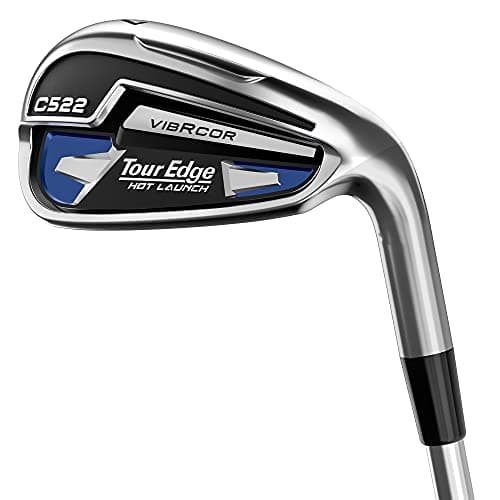
The Tour Edge Hot Launch C522 is the beginner pick — a wide-soled, cup-faced game-improvement set that gets the ball airborne on the strike you actually make, from a brand that does not charge you for the badge. The Cleveland Launcher XL Halo is the step up if your budget stretches, and the Orlimar Escape HL is the cheapest way to buy the same kind of help — a deep cavity back with published offset.
A note on the prices below. Complete-set and club prices on Amazon swing widely with third-party sellers — the live number on each card is today's, stamped with the date we checked it. If a set looks overpriced, it usually is, and it tends to come back down; it's also often cheaper in-store or direct. Treat the live price as a starting point and shop it around before you buy.
Beginner irons solve one problem: launch
Ask a new golfer what goes wrong and they will say "I top it" or "it never gets off the ground." That is not a skill problem you fix by trying harder — it is largely a design problem. A traditional iron has a thin sole, a small face and its mass distributed high behind the ball, which demands a descending strike and a compressed ball to launch properly. A beginner iron inverts all of it: wide sole to stop it digging, mass pushed low and to the perimeter, and a hollow or cavity body that raises launch angle and forgives off-center hits.
That is what "game improvement" and "super game improvement" actually mean, and it is why a beginner set is not just a cheaper version of a good player's set. We break the categories down in what are game-improvement irons.
Do not buy long irons you cannot hit
The most common beginner mistake is buying a 3-PW set because that is what a set means. A 3-iron and a 4-iron require clubhead speed and a precise strike that a beginner has not developed, and they will sit in the bag unused for years. Every set on this page either starts at a 5-iron or replaces the long irons with hybrids, which is the correct modern build.
If you are choosing between two sets and one includes hybrids in place of the 4- and 5-irons, take that one. A hybrid is dramatically easier to launch than the iron it replaces, and it is the single most useful club category invented in the last thirty years for exactly the golfer this page is for.
Offset, and why it looks strange but works
Several sets here are offset — the leading edge sits slightly behind the hosel. It looks odd if you have seen tour irons, and it does two useful things for a beginner: it gives the hands a fraction more time to square the face (which fights a slice) and it moves mass back, which raises launch. Good players dislike offset because it makes the club harder to work left-to-right on demand. That is a trade a beginner should take happily.
Graphite or steel?
Most beginner sets now ship with graphite shafts, and for a new golfer that is usually right. Graphite is lighter, which means more clubhead speed for the same effort, and it damps vibration on the mishits a beginner produces regularly. Steel is heavier, cheaper and gives more feedback, which matters more once your strike is consistent. Our steel vs graphite guide goes through the trade in full.
What a beginner should actually spend
Honestly? Less than these sets cost, at first. If you have played fewer than ten rounds, a complete package set with a bag, driver, putter and irons in one box is a better first purchase than a dedicated iron set — you get everything you need and you have not committed serious money to a game you may not stick with. Our best beginner sets roundup covers that route, and how much to spend on your first set puts numbers on it.
The irons on this page are the right buy at the next stage: you have played a season, you know you are staying, and the package-set irons are now the weakest thing in your bag. That is the moment a proper forgiving iron set earns its money, and it is why we rank them on how much help they give rather than on how good they look at address.