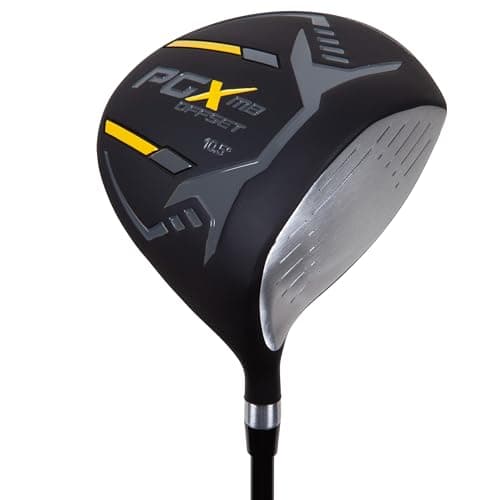
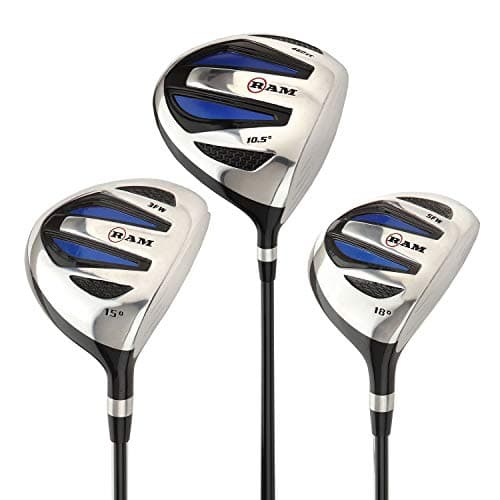
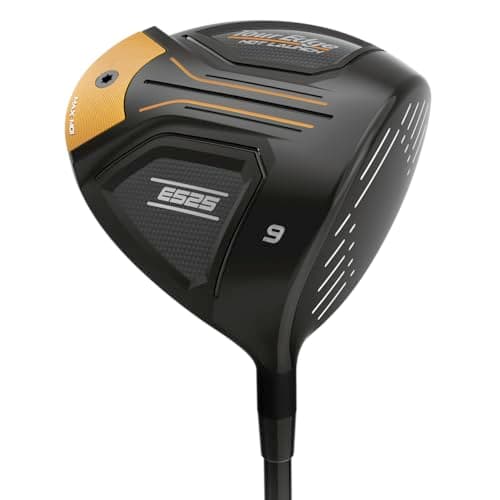
The Tour Edge Hot Launch E525 is the best driver for a beginner — a high-launch head with a published moment of inertia above 5,000 g-cm², sold in senior flex and in a 12-degree loft, at roughly half what a current flagship costs. If the budget is tighter than that, the Pinemeadow PGX MB Offset is the cheapest driver here with real anti-slice geometry built into the head. And if you own no fairway woods either, the Ram EZ3 set covers the whole top of the bag for about the price of a single mid-range driver.
A note on the prices below. Complete-set and club prices on Amazon swing widely with third-party sellers — the live number on each card is today's, stamped with the date we checked it. If a set looks overpriced, it usually is, and it tends to come back down; it's also often cheaper in-store or direct. Treat the live price as a starting point and shop it around before you buy.
Before you buy one: do you actually need a driver?
If you do not own clubs at all, a driver is the wrong first purchase. Every complete beginner package set we rank on best golf sets for beginners already includes one, plus the irons, the wedge, the putter and the bag, for less than two of the drivers on this page cost separately. Buying a standalone driver first means paying twice for the same club.
This page is for the golfer who is one step past that: you have a set, the driver in it is the club you cannot hit, and you want to know what to replace it with without spending flagship money on a swing that is still changing. It is also for the golfer who was handed a bag of twenty-year-old hand-me-downs and needs exactly one modern club at the top of it.
The honest third option is to skip the driver and tee off with a fairway wood or hybrid for a season. A 3-wood is shorter, easier to control and lands in play more often, and a beginner who hits a 3-wood 190 yards down the middle scores better than one who hits a driver 220 yards into the trees. Our guide to what clubs a beginner actually needs makes the same argument for the rest of the bag.
How we picked
Six criteria, applied in this order. We do not run a testing lab, so everything below comes from published manufacturer specification, independent robot and launch-monitor data we name, and the live retail listing — never from testing we did not do.
- Loft, and whether you can get more of it. A beginner delivers less clubhead speed and usually a downward or level strike, both of which need loft to keep the ball in the air. A driver line that only exists in 9 and 10.5 degrees is a line that cannot serve this reader.
- Directional help built into the head. Offset, draw bias and a closed face angle are the three ways a manufacturer can engineer slice correction into a club rather than sell it to you as a feeling. Every pick here has at least one, except the deliberately neutral Cleveland.
- Total weight and shaft flex. Lighter is faster for a swing that is not yet strong or repeatable, and a shaft that is too stiff will not load at all. A driver sold in only one flex fits a narrow band of golfers.
- Head size and stability. Everything here is a full-size 460cc head, because forgiveness on a mishit comes mostly from how far the weight sits from the center of the face — and a beginner mishits a lot.
- Price against the rest of the bag.A driver that costs more than the set it goes into fails this site's test, however good it is. The whole page is built between roughly the price of two dozen premium balls and the price of a package set.
- Availability today. Every club on this page was checked as live and purchasable before it went up, and every price on a card is pulled from the retailer and stamped with the date we checked it, rather than typed in by us.
Loft is the spec beginners get wrong most often
Walk into any golf shop and the drivers on display are 9 and 10.5 degrees, because that is what sells and what tour players use. Tour players also swing a driver at speeds a club golfer never approaches — the PGA Tour average sits near 116 mph, which is what turns a low-launching, low-spinning drive into 300 yards instead of a worm-burner. That ball speed is the reason a low-lofted head works for them, and its absence is the reason it will not work for you.
Loft does two jobs at once. It launches the ball higher, which matters because a slower swing cannot keep a low-launching ball in the air long enough to carry. And it adds backspin, which both holds the ball up and — this is the part nobody mentions — reduces sidespin as a proportion of the total spin. A ball spinning hard backwards curves less sideways than the same ball struck with a low-loft face. More loft is, quite literally, a straighter ball flight for the golfer who slices.
The practical rule: if your driver swing speed is under about 90 mph, 10.5 degrees is your minimum and 12 is often better. Both the Tour Edge and the Cleveland lines are sold in higher-loft options, which is a large part of why they rank where they do. If you do not know your number, most ranges with a launch monitor will give it to you in ten minutes for nothing, and it is the most valuable ten minutes in this entire process.
Offset and draw bias: what they do, and what they cost
Most amateur golfers fight a slice, and it is caused by a clubface that is open relative to the path the club is traveling on. There is no head shape that fixes a swing. There are two head features that reduce the damage.
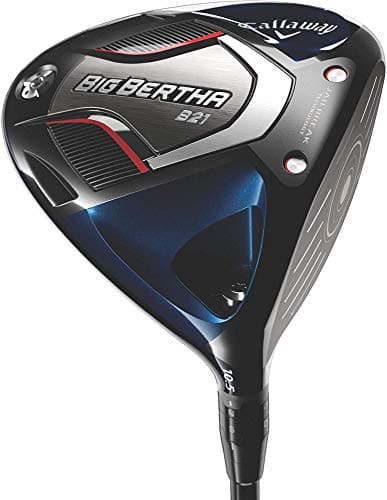
Offset sets the face slightly behind the shaft, which gives your hands a fraction more time to rotate the face closed before impact. It is the crudest and most effective anti-slice feature there is, and it is why the Pinemeadow PGX MB Offset earns a place on a page where it is otherwise the least sophisticated club. Draw bias does the same job with internal weighting instead: mass is moved toward the heel so the head naturally wants to rotate closed through impact. Callaway states that the Big Bertha B21 uses internal draw-bias weighting together with reduced face progression, and that its carbon crown frees up weight to raise the moment of inertia.
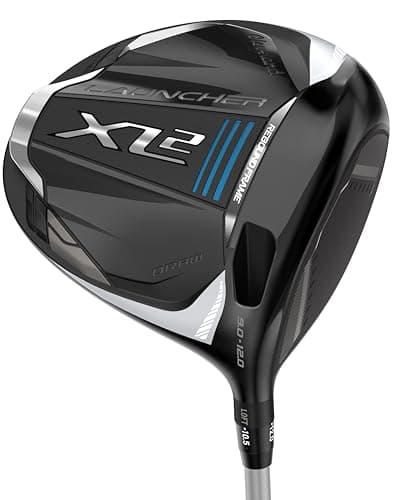
The cost is real and you should know it going in. Both features push the ball left for a right-handed golfer. If your miss is already a hook or a pull, an offset driver makes your bad shot worse, not better. That is why the neutral Cleveland Launcher XL 2 sits on this page alongside them — and why our budget driver roundup ranks the same heads in a different order for a golfer whose miss is not a slice.
The shaft is doing more work than the head
A beginner who buys the right head on the wrong shaft has wasted the purchase. Flex determines how much the shaft loads and unloads through the downswing, which drives launch angle, spin and how consistently the face arrives square. Buy one too stiff and the club simply will not work for you: the face arrives open and low, and every gain the head was supposed to deliver disappears.
Work from measured driver clubhead speed rather than pride: roughly under 75 mph wants ladies or senior flex, 75 to 85 senior, 85 to 95 regular, and 95 to 105 stiff. The letters are not standardized between manufacturers, so one brand's regular is another's stiff — our shaft flex guide walks through picking one without a fitting, and steel versus graphite covers the material half of the same decision. For a driver the material question is settled anyway: every club on this page is graphite, because nobody has built a steel-shafted driver worth buying in decades.
Total weight matters for the same reason. A lighter club is a faster club for a swing that is not yet strong or repeatable, and speed is the main input to distance. That is the entire argument behind the lightweight, senior-flex builds we rank on best drivers for seniors, and a good deal of it transfers to a beginner of any age.
Why every driver here is the same size
The USGA and R&A cap driver head volume at 460 cubic centimeters, with a 10cc measurement tolerance on top. Every conforming driver sold today sits at or near that ceiling — including the sub-$100 one on this page — because the limit is the most forgiving size the rules allow and there is no reason to build smaller.
This is genuinely good news for a beginner. The biggest single driver of forgiveness is how far a head's mass sits from the center of the face, and that is largely a function of size, which is capped, and which everybody has already maxed out. What separates the dearest driver here from the cheapest is face technology, materials, crown weight savings and adjustability — not the fundamental stability of the head. The gap is real, but it is far smaller than the price gap suggests, and it matters least to the golfer whose strike is least consistent.
What a new driver will not fix
It will not fix a slice. It will reduce one. The curve comes from the relationship between face and path at impact, and no purchase changes that; offset and draw bias shift the starting point, they do not straighten the swing. Expect a slice to become a fade you can play, not to disappear.
It will not add 30 yards. Independent robot testing consistently puts year-over-year driver gains in the single-digit yards, and a human gives most of that back on a mishit. If you are replacing a genuinely old or badly mismatched club you may gain real distance — but that gain comes from the loft and the shaft finally being right, not from the badge on the crown.
And it will not lower your score as much as the ball you play or a lesson will. On a value site this is the part we are obliged to say out loud: for most new golfers, a dozen of the right golf balls for beginners and an hour with a coach buy more strokes than any driver on this page. Buy the driver because the one you have is unusable, not because you expect it to make you longer.
What we would actually buy
A beginner replacing the driver from a package set, with a normal budget: the Tour Edge Hot Launch E525, in 12 degrees if the range monitor says your swing speed is under 90 mph. Somebody who slices everything and does not want to spend real money until it is fixed: the Pinemeadow PGX MB Offset, because the offset is the feature you are buying and it is the cheapest club on this page. Someone who expects to keep the club for years and wants the most forgiving neutral head: the Cleveland Launcher XL 2, which is also sold in a draw version if you decide you want the help after all. A brand-new golfer with no fairway woods: the Ram EZ3 three-club set, understanding that you are buying coverage rather than the best individual driver. And a slicer with a real budget who wants a major brand behind the purchase: the Callaway Big Bertha B21, still one of the easiest drivers to hit straight that Callaway has made — and now selling at a fraction of what it did as a flagship, which is the whole reason it is here.