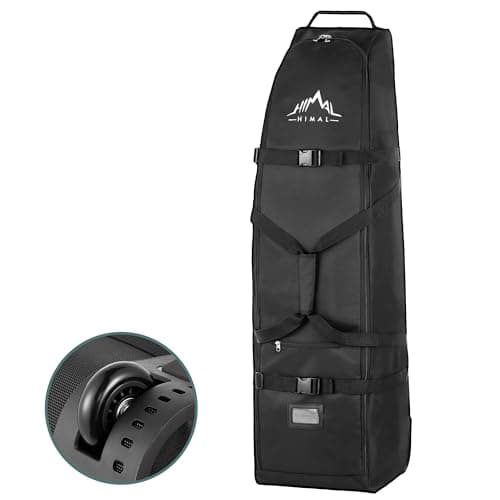
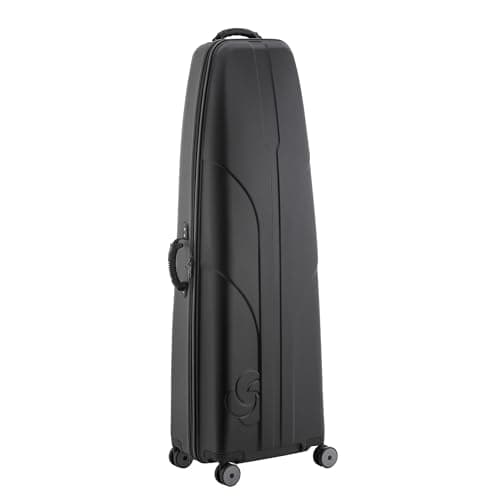
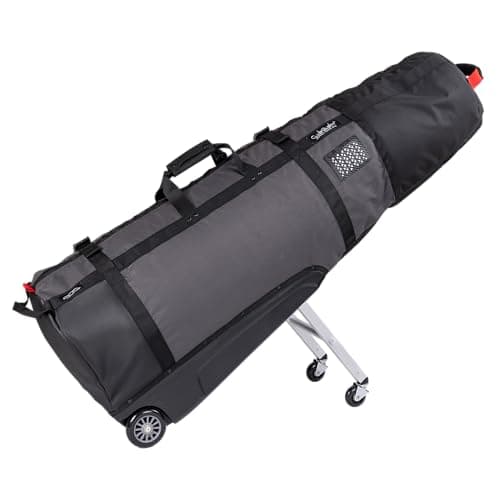
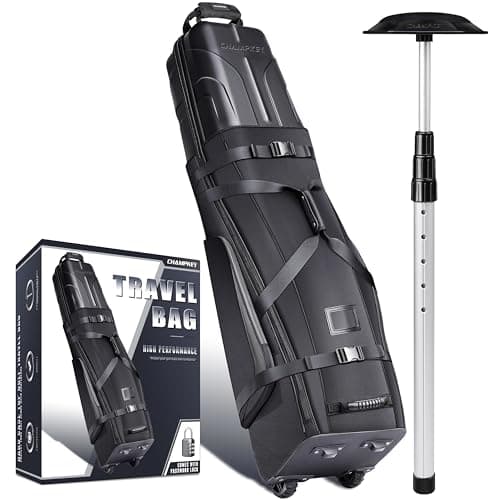
The CHAMPKEY hard-top is the pick for anyone who flies with clubs more than once a year — a molded shell over the club heads, which is the only part a soft bag cannot defend, at roughly half what the name brands charge for the same recipe. Fly once a year with a modest set and the soft Himal cover is the correct, unglamorous answer. The full hard shell and the retractable-leg Sun Mountain are for people who cross terminals several times a season.
The three things that actually separate them
Travel-cover marketing argues about materials. Buyers should argue about three numbers instead: how many flights a year you take, how much of your 50 lb checked allowance the cover eats before a club goes in, and how much space it occupies at home for the fifty weeks you are not flying. Protection is the only axis where hard wins outright. On the other two, soft wins, and it wins by a lot.
Start with the failure you are insuring against. Clubs rarely come back damaged, and when they do it is almost never the irons — it is the driver head or a graphite shaft, snapped because the bag spent an hour at the bottom of a stack with somebody else's suitcase on top of it. That is a crushing load applied to the longest club in the bag. A molded top takes that load. Padding does not.
So the real question is not which is better but how many times you are rolling these dice, and what is in the bag when you do. One trip a year with a modest set: a padded soft cover and a support rod is proportionate, and the money saved is most of a second set. Four trips a year, or clubs you would genuinely mourn, and the hard top is not anxiety spending — you have simply multiplied the number of rolls.
Hard tops versus full hard shells
Hard is two different products and the distinction is where most of the money hides. A hybrid hard top — a molded shell over the club heads attached to a fabric body — defends the part that actually breaks while staying lighter, cheaper and slightly more packable than a full case. A full hard shell is a molded clam around the whole set: the most protection available, and the most hassle you can buy. It never folds, it is heavy before you load it, and it needs a corner of a garage year-round.
For a value buyer the hybrid is the sweet spot by a wide margin. The full shell earns its place in one specific case: you fly often, you fly with expensive clubs, and you have somewhere to keep it. Samsonite's version adds four spinner wheels and a luggage service network, which is a real argument if you are putting it through airports monthly rather than annually.
The weight allowance is the hidden running cost
Most airlines cap a checked bag at 50 lb. A loaded cart bag can already be 30 to 35 lb. A full hard shell can take 12 to 15 lb of what is left before a single club goes in, which is how golfers end up paying an overweight fee on every leg of every trip. Two trips of that and the fees have erased the price difference between a hard case and a soft cover, permanently and every year after.
This is the strongest practical argument for soft, and it compounds with a second one: if you fly regularly, pairing a light cover with a lightweight carry bag rather than shipping a heavy 14-way cart bag around the world buys you several pounds of headroom for free. The cover you fly with and the bag you play with do not have to be chosen together.
The cheap rod that closes most of the gap
A support rod — sold as a stiff arm — is a telescoping pole that extends above your longest club so stacked luggage presses on the pole instead of your driver. It costs a small fraction of the price difference between soft and hard, and it addresses the exact mechanism of damage described above. Pack clothing around the club heads as well and you have most of a hard case's real-world protection for almost nothing, because airlines do not treat clothes inside a golf bag any differently from clothes inside a suitcase.
The CHAMPKEY includes a rod. With the Himal you buy one separately, and you should treat it as part of the purchase price rather than an accessory — a soft cover without a support rod is the one combination we would not fly.
What each one is like to move through an airport
A loaded travel bag weighs around 40 lb and airports are long. Two inline wheels, which is what the cheapest covers give you, means you drag it. Four spinner wheels genuinely change how the weight behaves. The Sun Mountain goes further and removes the weight from your arm entirely with retractable legs, which is a real solution to a real problem — if you have that problem several times a season. Once a year, it is a lot of money for twenty minutes of convenience.
The decision, in one line each
- One or two trips a year, mid-priced set: soft cover plus a support rod. The Himal.
- Three or more trips a year, or clubs you would replace reluctantly: hybrid hard top. The CHAMPKEY.
- Frequent flyer with garage space and premium clubs: full hard shell. The Samsonite.
- Frequent flyer who is tired of hauling weight: the retractable-leg system. The Sun Mountain.
- Small car, no storage, drive to most golf: soft, always. A hard case you trip over fifty weeks a year is a bad trade however well it protects.
The four covers side by side
| Cover | Construction | Wheels | Published detail |
|---|
| CHAMPKEY Hard-Top | Molded hard top, 1680D body | Oversized | Support pole included, lock |
| Himal Soft-Sided | 600D polyester oxford, padded | Two inline | Universal 13 x 15 x 50 in |
| Samsonite Tour Classic | Full hard shell | Four spinner | Fits 48 in clubs / 10.5 in bags |
| Sun Mountain ClubGlider Journey | Ballistic-style nylon, dense foam | Four, swiveling front | Patented retractable legs |
Every line in that table is taken from the product listings themselves, not from testing — we do not fly four covers a year to break them. What we can do is read the specifications against the failure mode and the airline weight limit, which is where the decision actually lives.
What we would not spend money on
Combination locks on a travel cover are close to decorative; checked baggage locks are openable by design. Integrated tracking pockets are a pocket. Fabric weights above roughly 1200D stop mattering for a bag that flies a handful of times a year. Spend the money on the molded top if you fly often, the support rod if you do not, and nothing else.