Skip to content
Club&Carry

The flagship · Golf Balls

Kirkland Signature vs Titleist Pro V1

The most famous value-vs-premium matchup in golf. Buy the Kirkland to save real money on a urethane ball; buy the Pro V1 only if you can genuinely use its edge.

By Stephen V.Updated How we pick
#ad

We earn a commission when you buy through our Amazon links, at no extra cost to you. It never affects our rankings, and we say so when the cheaper product is the better buy. How this works.

Buy the Kirkland Signature if you want a real urethane, tour-style ball for a fraction of the price and can live with its availability quirks. Buy the Titleist Pro V1 only if you are a skilled ball-striker who can cash in its edge in consistency and greenside control — and are happy to pay for it.

This is the comparison the whole value-ball conversation orbits, because it pits the two things people assume cannot coexist: a genuine urethane cover and a low price. The Pro V1 is the best-selling ball in golf and the reference point for tour performance. The Kirkland is a urethane-covered ball sold two dozen at a time for a small fraction of the per-ball cost. Both have the cover that produces tour-level greenside spin — which is the entire reason a premium ball costs premium money — so the honest question is not "is the Kirkland as good as a Pro V1" but "how much of the Pro V1's edge can you actually use, and is it worth the price gap?"

Where the Pro V1 genuinely pulls ahead

For a skilled player, the Pro V1's advantages are real. Titleist's quality control is the best in the business, so every ball is dimensionally identical box to box and season to season — consistency you can feel over a full round and a full year. Its greenside spin and short-game control are exceptional and finely tuned, and its flight is remarkably stable in wind. If you compress the ball, spin your wedges on command, and play firm greens where a ball needs to check and stop, the Pro V1 does things you can measure on your scorecard. That is exactly the player it is built for.

Where the Kirkland wins

The Kirkland wins on the one axis this whole site is about: value. It gives you a urethane cover — the expensive, spin-producing ingredient — for a fraction of the Pro V1's price per ball. For a player who cannot fully use the last increment of tour-level spin and consistency, the two balls are far closer in outcome than their prices suggest, and the money saved over a season is substantial, especially once you count the balls you lose. The catch is availability: the Kirkland is a Costco exclusive at retail, so stock and price move around, and version-to-version consistency has wobbled over the years. If you need one exact ball you can reorder every week, that is a point for the Titleist. Read the full Kirkland Signature review for the availability details.

Which one for you

  • Choose the Kirkland if you want tour-style urethane performance at a value price, you play a lot and lose the occasional ball, and you can grab a case when it is in stock.
  • Choose the Pro V1 if you are a low-handicap player who genuinely uses greenside spin and tour-level consistency, and the price gap is worth it to you for that edge.

For most golfers reading this, the honest answer is the Kirkland — or, more broadly, a value urethane ball over a tour ball. If you are still deciding whether a premium ball is worth it at all, our anchor guide are expensive golf balls worth it? walks through exactly where the line sits.

The short answer

Quick picks

#ProductBest forScorePrice
01
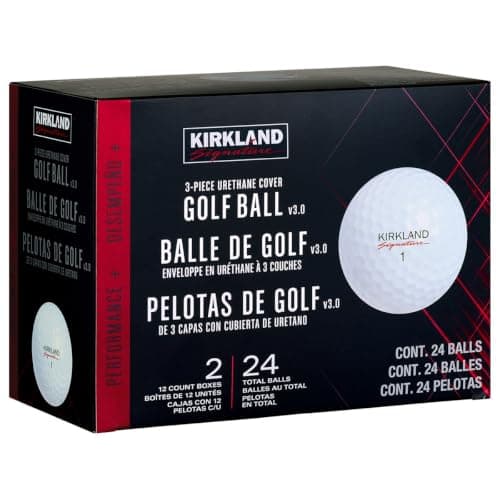
Kirkland Signature Kirkland Signature Performance+ (V3.0)
Kirkland Signature Performance+ (V3.0)

A urethane-covered tour-style ball at a price no tour ball comes close to. The value story of the whole category.

The best value in golf, full stop
8.2
$43.99Amazon
02
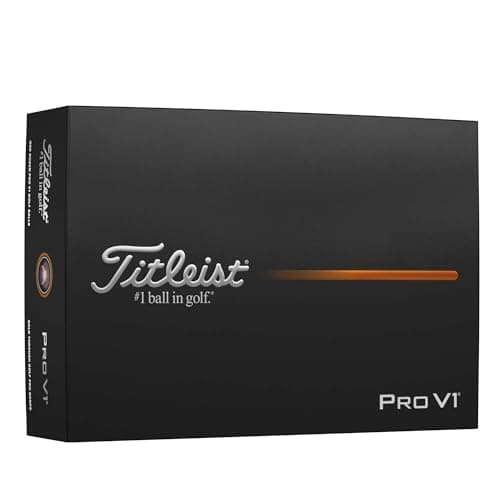
Titleist Titleist Pro V1
Titleist Pro V1

The best-selling ball in golf, and the benchmark. Worth it if — and only if — you can use what it does.

Low handicaps who genuinely use the spin
8.2
$57.97Amazon

#ad · Live prices from the Amazon Product API, as of Aug 26, 2026. Where we have no verified live price, we show none — we would rather leave a gap than print a number that has rotted.

In detail

The picks, in full

01
Kirkland Signature Kirkland Signature Performance+ (V3.0)

The best value in golf, full stop

Kirkland Signature Performance+ (V3.0)

Urethane cover3-pieceTour-style spinSold by the 2-dozen
8.2/10

A urethane-covered tour-style ball at a price no tour ball comes close to. The value story of the whole category.

Feel
8
Distance
8
Greenside spin
8
Durability
7
Value
10

Pros

  • A soft urethane cover — the construction premium balls charge three times as much for
  • Sold two dozen at a time, so the per-ball cost is a fraction of a Pro V1
  • Genuinely close to tour-ball greenside spin for players who can produce it

Cons

  • Costco-exclusive at retail; Amazon listings are third-party and stock comes and goes
  • Version-to-version consistency has wobbled across releases over the years

Don't buy this if…

you need guaranteed, year-round availability of one exact ball. Kirkland stock is famously on-and-off — if you can't buy a case when you see it, a Titleist TruFeel is the steadier value.

$43.99View on Amazon

$47.948% off

Price as of Aug 26, 2026. Prices change — Amazon's is the one that counts.

#ad · we may earn a commission from this link to Kirkland Signature Performance+ (V3.0)

02
Titleist Titleist Pro V1

Low handicaps who genuinely use the spin

Titleist Pro V1

Cast urethane cover3-pieceTour spin + controlPremium price
8.2/10

The best-selling ball in golf, and the benchmark. Worth it if — and only if — you can use what it does.

Feel
10
Distance
9
Greenside spin
10
Durability
8
Value
4

Pros

  • The greenside spin and control ceiling every value ball is measured against
  • Consistency and quality that are genuinely a cut above
  • The complete package for a player who can compress it and control spin

Cons

  • Three to four times the price per ball of the value picks on this site
  • Most of what you pay for is inert below ~95 mph and without short-game precision

Don't buy this if…

you lose more than a sleeve a round or can't yet spin a wedge on command. You're paying premium money for performance you can't cash in — that is the exact spend this whole site exists to redirect.

$57.97View on Amazon

Price as of Aug 26, 2026. Prices change — Amazon's is the one that counts.

#ad · we may earn a commission from this link to Titleist Pro V1

How we picked

We do not run a testing lab

We compiled the published specifications, did the cost-per-round and value math, and read the independent robot and launch-monitor data — then scored each product against a published rubric. The scores are judgments from documented research — they are notmeasurements we took, because we do not have a lab and we are not going to pretend we do. Where a number came from someone else's lab, we name them and link them in Sources.

Questions

Frequently asked

Is the Kirkland Signature as good as a Pro V1?
For most amateurs, close enough that the price gap is not justified — both have urethane covers. A skilled ball-striker will notice the Pro V1's edge in consistency and greenside control; the average golfer will not.
Why is the Kirkland so much cheaper than the Pro V1?
It is a Costco store-brand ball sold two dozen at a time with minimal marketing, while the Pro V1 carries Titleist's brand, tour investment and industry-leading quality control. Both, however, use a urethane cover.
Should I switch from the Pro V1 to the Kirkland to save money?
If you cannot consistently use tour-level greenside spin, yes — you will likely not notice a scoring difference and will save real money. If you are a skilled player who uses that spin, the Pro V1 may be worth keeping.
Where can I buy the Kirkland Signature?
It is a Costco exclusive at retail and appears from third-party sellers on Amazon, where stock and price fluctuate. The Pro V1 is available everywhere, every week — a real advantage if you value reliability.

Keep reading

Receipts

Sources

We do not run a testing lab, and we do not pretend to. Where a measured number came from someone else's lab or robot, we name them and link them. Where we could not verify something, we say so on the page rather than quietly leaving it out. Read our full method.