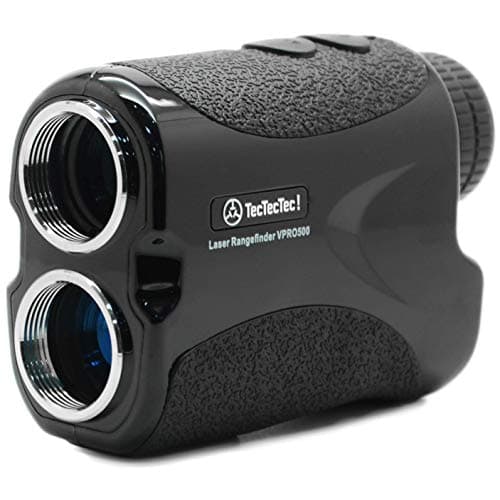
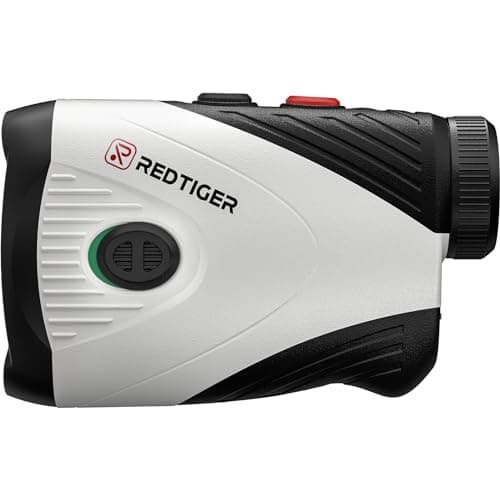
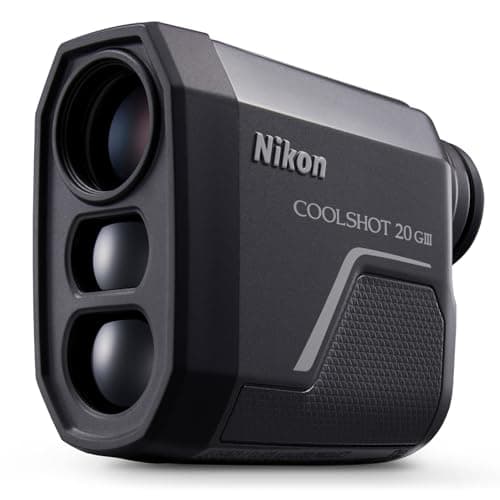
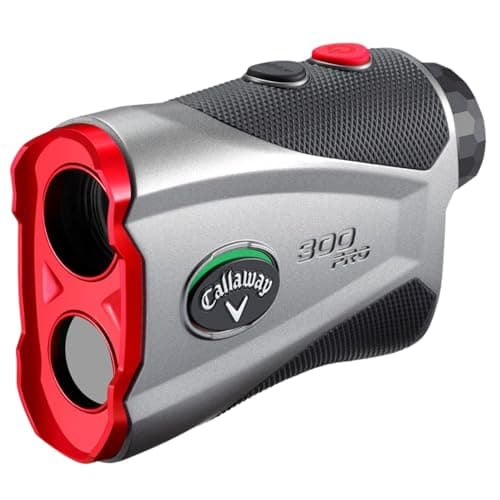
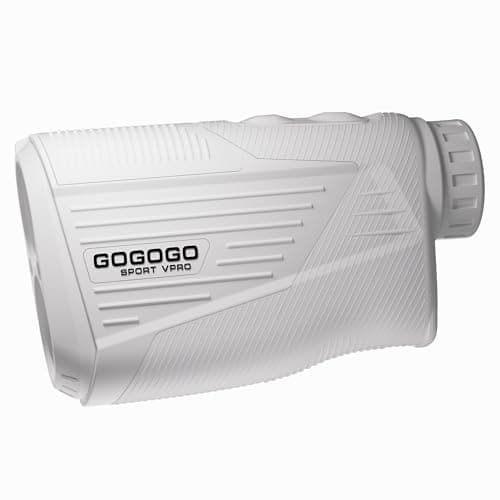
The Gogogo Sport Vpro is still the most rangefinder per dollar — slope, pin-lock vibration and a cart magnet at the bottom of the price range. The Nikon COOLSHOT 20 GIII is the pick if optics matter to you, and the Callaway 300 Pro sits right at the $200 line with the most polished build here.
Why $200 is the useful ceiling
Laser rangefinding is a mature technology. Every unit on this page measures distance to the flag to within about a yard, which is well inside the margin of error of your own swing. The accuracy argument for spending more essentially does not exist — this is not a category where the expensive one is measuring something the cheap one cannot.
What does change above $200 is the experience of getting the number: how quickly the unit locks onto a flag against a treeline, how bright and sharp the view is in dull light, and how confident you feel that the reading is the flag rather than the trees behind it. Those are real differences. They are just not measurement differences, and for most golfers they do not justify tripling the spend. Our main rangefinder roundup covers the whole range including the premium units.
What to insist on under $200
- Switchable slope. Slope adjusts for uphill and downhill and is genuinely useful; it is also non-conforming for tournament play, so it must switch off. Every unit here except the Nikon has it. See do I need slope.
- Pin-lock confirmation. A vibration or visual confirmation that the unit locked the flag rather than the background. Without it you are trusting a number you cannot verify, which is worse than no number.
- A magnetic cart mount. Sounds like a gimmick, is not. A rangefinder that sticks to the cart frame is a rangefinder you actually use on every shot rather than one that stays in the bag.
- Rechargeable or a common battery. USB-C charging beats hunting for a CR2 battery in a pro shop.
The optics trade at this price
Here is the honest split within the sub-$200 tier. The very cheap units — Gogogo, REDTIGER, TecTecTec — give you every feature and adequate glass. The Nikon gives you fewer features (no slope at all) and considerably better glass, because Nikon is an optics company and the multilayer-coated lenses show it in dull light and against a busy background.
Which matters more depends on your eyes and your courses. If you have struggled to find a flag through a cheap rangefinder on an overcast day, the Nikon is the fix. If you play hilly courses and want plays-like yardages, slope is worth more than glass and the Nikon is the wrong buy. That is a genuine either/or at this price, and anyone telling you one unit does both under $200 is not being straight with you.
What you give up against a premium unit
Against a Bushnell Tour V6 or a Precision Pro Titan you lose three things: lock speed on a distant flag, image stabilization for shaky hands, and a long service and warranty record. If your hands are unsteady — and this is common enough to matter — stabilization is the one premium feature that is genuinely transformative rather than merely nicer, and no sub-$200 unit offers it. That is the honest reason to spend more, and it is the only one on the list.
Rangefinder or GPS watch at this budget?
Under $200 you can have a very good laser or a decent GPS watch, and they answer different questions. A laser gives you an exact number to a target you can see; a watch gives you glanceable front-middle-back distances without aiming at anything, plus shot tracking. If you play the same few courses and want speed, the watch may suit you better — that comparison is laid out in rangefinder vs GPS watch, and the value watches are on best value GPS watches.