Skip to content
Club&Carry

Hub 02 · Golf Clubs

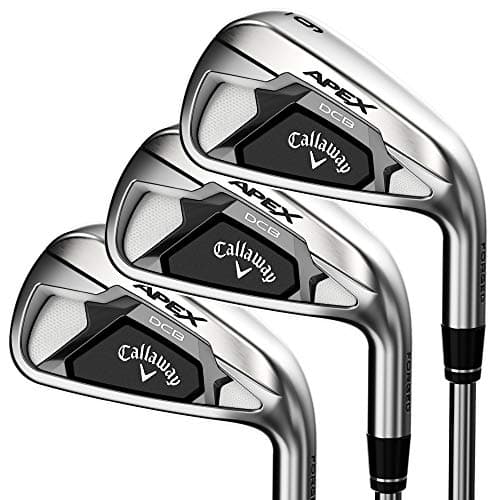
The Best Golf Irons for Mid Handicappers

You have outgrown the starter set but you are not hitting blades. This is the one place in the bag where buying last year's flagship beats buying this year's budget club.

By Stephen V.Updated How we pick
#ad

We earn a commission when you buy through our Amazon links, at no extra cost to you. It never affects our rankings, and we say so when the cheaper product is the better buy. How this works.

For most mid handicappers the best buy is a past-season flagship, and the TaylorMade SIM2 Max is the clearest example of one — a full seven-club set with a major brand's forgiveness technology, at a fraction of what the current model costs. The Tour Edge Exotics Max is the current-model set that behaves like a discounted one, and the Callaway Apex DCB is the forged option for a golfer who has earned the feel.

A note on the prices below.Complete-set and club prices on Amazon swing widely with third-party sellers — the live number on each card is today's, stamped with the date we checked it. If a set looks overpriced, it usually is, and it tends to come back down; it's also often cheaper in-store or direct. Treat the live price as a starting point and shop it around before you buy.

Who this page is for

A mid handicapper is roughly a 10 to an 18. You break 90 more often than not, you have a repeatable swing, and your bad shots are bad in a predictable direction rather than in every direction. That last part is the one that matters for irons, because it changes what forgiveness has to do for you.

A beginner needs the ball to get airborne at all, which is why the beginner iron sets we rank are built with huge soles, deep offset and heads that look like small shovels. You do not need that anymore, and paying for it costs you the ability to control trajectory. What you need instead is a head that holds ball speed on a strike half a groove low or a quarter inch toward the toe — the two misses that survive into the middle handicaps and quietly cost you a club of distance.

How we picked

Five criteria, applied in this order. We do not run a lab, so every judgment below comes from published manufacturer specification, independent robot-tested data we name, and the real current listing — never from our own testing, because we have not done any.

  • Face and body construction. A thin, supported face with a flexible sole is what preserves ball speed on a low strike. Hollow bodies, speed slots and cap-back constructions are all solving that one problem, and every set here has at least one of them.
  • Price against the current model. The strategy on this page is buying one generation back. A set only earns a place if the discount against the current equivalent is large enough to be the reason you buy it.
  • Shaft honesty.A named shaft in a named flex, stated on the listing. A set that hides its shaft behind "graphite" is a set you cannot fit yourself into.
  • Set makeup. How many clubs, and which ones. A five-club 6-PW set and a seven-club 5-PW-plus-gap-wedge set are not the same purchase, and the price per club is the only fair way to compare them.
  • Availability today. Every set here was checked as live and purchasable before it went on the page, and the price on each card is pulled from the retailer rather than typed in by us.

One generation back is the whole strategy

Iron technology moves slowly and iron pricing moves fast. A flagship game-improvement set launches at the top of the market, holds that price for a season, and then falls hard the moment its replacement is announced — not because the club got worse, but because the shelf needs clearing. The face is the same thickness it was. The tungsten is still in the toe. The only thing that changed is the year printed on the box.

That is why the top pick here is a past-season set rather than a current-season budget one. For the same money you can buy this year's entry-level iron or a recent flagship, and the flagship is a materially better club. It is the same argument we make about buying used golf clubs, one step earlier in the depreciation curve and with a warranty still attached.

The catch, and it is a real one, is configuration. Past-season stock is whatever is left, so the flex and shaft material you want may simply not exist at the discount. Check the exact listing before you fall in love with the price.

Cast or forged: what you are actually paying for

Cast irons are poured into a mold, which lets a designer put weight exactly where they want it and build the hollow and undercut shapes that make a club forgiving. Forged irons are hammered from a soft billet, which produces a denser grain and the muted, dead-solid impact that good players describe as feel.

The honest version for a mid handicapper: forging buys you feedback, not forgiveness. A forged cavity back tells you clearly where on the face you hit it, which is useful once your strike pattern is tight enough for that information to be actionable. If your misses are still spread across the whole face, that feedback is just a running commentary on shots you cannot yet fix, and you have paid a premium for it.

The Apex DCB on this page is the forged option, and Callaway publishes its target as a handicap index of 12 and above — an unusually specific bit of labeling from a manufacturer, and worth taking at face value. The other four sets are cast, which is the correct choice for most of this page's readers.

Strong lofts and the 7-iron number

Every game-improvement iron built in the last decade has stronger lofts than the set it replaced. A modern 7-iron is often loft-for-loft what a 5-iron used to be. Manufacturers do this because distance sells, and the marketing works.

It is not a scandal, but it has two consequences you should plan for. First, the number on the sole is meaningless across brands — compare lofts, not numbers, if you are matching a new set to clubs you already own. Second, strong lofts push the gap at the bottom of the bag wider, because a strong pitching wedge leaves a big hole before your sand wedge. That gap is exactly why a gap wedge exists, and why a set that includes one is worth more than the club count suggests. If yours does not, our wedges for the money page covers filling it cheaply.

The shaft outranks the head

A mid handicapper who buys the right head in the wrong flex has wasted the upgrade. Flex affects launch, spin and dispersion more than any head technology on this page, and the letters are not standardized between brands — one company's regular is another's stiff.

Work from driver clubhead speed rather than ego: roughly under 75 mph wants ladies or senior, 75 to 85 senior, 85 to 95 regular, 95 to 105 stiff. If you do not know your number, most ranges with a monitor will tell you free in ten minutes, and it is the single most valuable ten minutes in this entire process. Our shaft flex guide walks through it, and steel versus graphite covers the material side of the same decision.

What we would actually buy

A 12 to 18 handicap replacing a starter set: the TaylorMade SIM2 Max, in the flex that matches your real swing speed, with the change spent on a fitting or a gap wedge. A golfer who wants the newest head and does not care about the logo: the Tour Edge Exotics Max. A 10 to 14 who strikes it consistently and wants to feel it: the Callaway Apex DCB. Somebody equipping a bag on the smallest possible budget: the Ram FX77, understanding that it is a keeper and not a trade-in. And if you are honestly still closer to a high handicap than a mid one, the Cleveland Launcher XL Halo is the more forgiving club and the better buy — no shame in it.
The short answer

Quick picks

#ProductBest forScorePrice
01
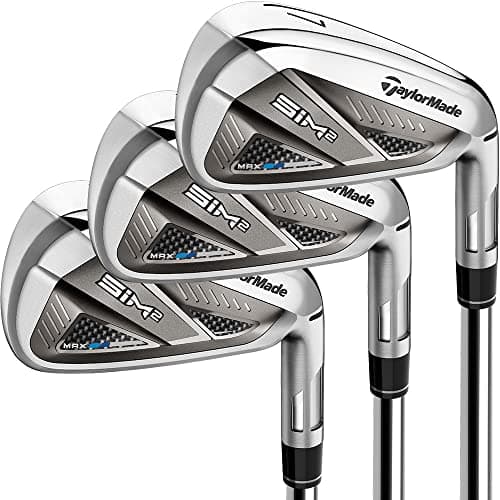
TaylorMade TaylorMade SIM2 Max Irons (5-PW, AW)
TaylorMade SIM2 Max Irons (5-PW, AW)

A past-season TaylorMade flagship for a fraction of what the current model costs. The clearest value move a mid handicapper can make in irons.

Flagship forgiveness at a past-season price
8.6
$649.99Amazon
02
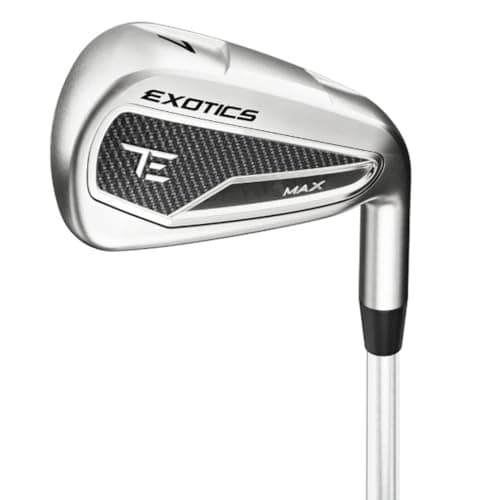
Tour Edge Tour Edge Exotics Max Irons (6-PW)
Tour Edge Exotics Max Irons (6-PW)

The current-model iron that behaves like a past-season one on price. Tour Edge does not pay for tour contracts, and the discount lands in the head.

The most current-model iron per dollar
8.4
$574.99Amazon
03
Callaway Callaway Apex DCB Irons (5-PW)
Callaway Apex DCB Irons (5-PW)

A forged players-distance iron Callaway aims at a handicap index of 12 and above. The set to buy when you want feel without giving up forgiveness.

Forged feel a mid handicapper can still hit
8.4
$799.99Amazon
04
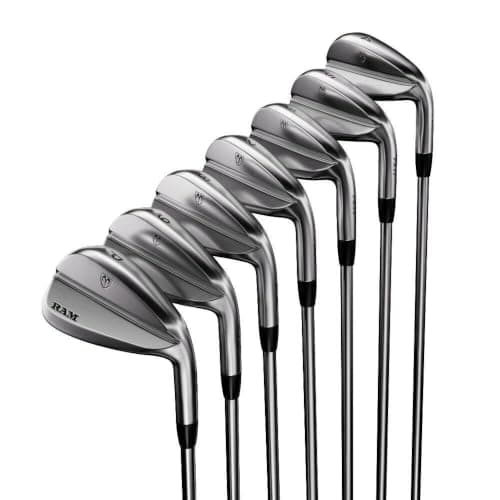
Ram Golf Ram Golf FX77 Irons (5-PW)
Ram Golf FX77 Irons (5-PW)

A hollow-head players-distance iron from a direct-selling brand, at the price the big names charge for a single club.

The cheapest honest way into a players-distance iron
8.0
$349.99Amazon
05
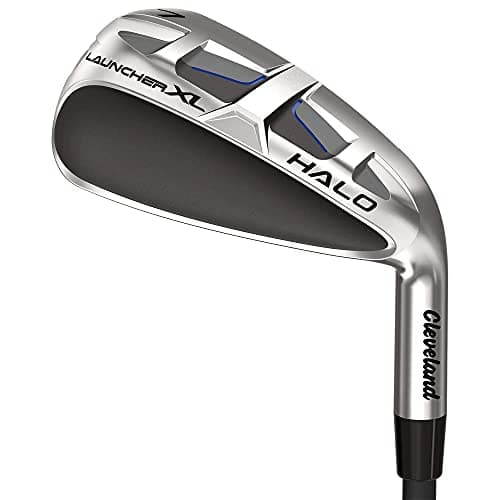
Cleveland Cleveland Launcher XL Halo Irons
Cleveland Launcher XL Halo Irons

Hybrid-like irons that make long-iron shots easy — the value pick for players who fear a 5-iron.

Easy long irons and high launch
7.6
$699.99Amazon

#ad · Live prices from the Amazon Product API, as of Aug 27, 2026. Where we have no verified live price, we show none — we would rather leave a gap than print a number that has rotted.

In detail

The picks, in full

01
TaylorMade TaylorMade SIM2 Max Irons (5-PW, AW)

Flagship forgiveness at a past-season price

TaylorMade SIM2 Max Irons (5-PW, AW)

7 clubs (5-PW, AW)Cap Back DesignThru-Slot Speed PocketSteel, regular flex
8.6/10

A past-season TaylorMade flagship for a fraction of what the current model costs. The clearest value move a mid handicapper can make in irons.

Forgiveness
9
Distance
9
Feel
8
Looks
8
Value
9

Pros

  • TaylorMade's Cap Back Design braces the topline with a lightweight polymer, which is how the face gets thin enough to be fast without ringing like a tin can
  • The Thru-Slot Speed Pocket in the sole is aimed at the low-face strike — the miss that quietly costs a mid handicapper the most distance
  • A genuine seven-club set including the gap wedge, so there is no hole between the pitching wedge and your sand wedge

Cons

  • This listing is steel in regular flex only — a slower swing wants the graphite build, which costs more
  • Game-improvement lofts are strong, so the number on the sole will not match your old set's yardages

Don't buy this if…

you are still learning to make contact. A super-game-improvement set like the Cleveland Launcher XL Halo gets the ball airborne with less help from you, and costs less.

$649.99View on Amazon

Price as of Aug 27, 2026. Prices change — Amazon's is the one that counts.

#ad · we may earn a commission from this link to TaylorMade SIM2 Max Irons (5-PW, AW)

02
Tour Edge Tour Edge Exotics Max Irons (6-PW)

The most current-model iron per dollar

Tour Edge Exotics Max Irons (6-PW)

5 clubs (6-PW)Hollow-body head360-degree undercut cavityKBS Tour Lite steel
8.4/10

The current-model iron that behaves like a past-season one on price. Tour Edge does not pay for tour contracts, and the discount lands in the head.

Forgiveness
9
Distance
9
Feel
8
Looks
7
Value
9

Pros

  • A hollow-body head with a 360-degree undercut cavity — the construction the big brands charge flagship money for
  • Tour Edge's Pyramid Face pattern varies face thickness to widen the fast area, and the VIBRCOR TPU insert takes the harshness out of a miss
  • Ships with a named aftermarket shaft, KBS Tour Lite, rather than an unbranded house blank

Cons

  • A five-club 6-PW set, so you still need a gap wedge and a long-iron replacement
  • Tour Edge trades on a smaller dealer network, and resale value trails the big four brands

Don't buy this if…

you want the badge as much as the club. Tour Edge builds the performance and skips the marketing; if the logo matters to you, that is a real cost.

$574.99View on Amazon

Price as of Aug 27, 2026. Prices change — Amazon's is the one that counts.

#ad · we may earn a commission from this link to Tour Edge Exotics Max Irons (6-PW)

03
Callaway Callaway Apex DCB Irons (5-PW)

Forged feel a mid handicapper can still hit

Callaway Apex DCB Irons (5-PW)

6 clubs (5-PW)Forged 1025 carbon steelDeep cavity backSteel, regular flex
8.4/10

A forged players-distance iron Callaway aims at a handicap index of 12 and above. The set to buy when you want feel without giving up forgiveness.

Forgiveness
8
Distance
8
Feel
10
Looks
9
Value
7

Pros

  • A forged 1025 mild carbon steel body with urethane microspheres behind the face — this is where the soft, muted impact everyone chases actually comes from
  • Callaway publishes the target for this model as a handicap index of 12 or higher, which is an unusually honest bit of labeling
  • Tungsten weighting in the long and mid irons pushes the center of gravity low, so the 5-iron is not the club you leave in the bag

Cons

  • The most expensive set on this page by a clear margin, and forged bodies mark up faster than cast ones
  • Lofts run about half a degree stronger than the standard Apex, so it is a distance iron with a forged badge, not a control iron

Don't buy this if…

your misses are still spread across the face. Forged feel is a reward for finding the middle; the Tour Edge or the TaylorMade will flatter a scattered strike pattern for less money.

$799.99View on Amazon

Price as of Aug 27, 2026. Prices change — Amazon's is the one that counts.

#ad · we may earn a commission from this link to Callaway Apex DCB Irons (5-PW)

04
Ram Golf Ram Golf FX77 Irons (5-PW)

The cheapest honest way into a players-distance iron

Ram Golf FX77 Irons (5-PW)

6 clubs (5-PW)Hollow head431 stainless body, 17-4 faceSteel, regular flex
8.0/10

A hollow-head players-distance iron from a direct-selling brand, at the price the big names charge for a single club.

Forgiveness
8
Distance
8
Feel
7
Looks
8
Value
9

Pros

  • A hollow head with a 431 stainless body and a 17-4 stainless face — the same recipe as sets costing several times more
  • Thin topline and modest head size, so it looks like a players iron at address rather than a shovel
  • Independently reviewed by MyGolfSpy, National Club Golfer and Plugged In Golf, which is rare for a brand at this price

Cons

  • Strong lofts and noticeable offset — the distance number flatters, and a fade is harder to hold
  • Effectively zero resale value, and no dealer network to fit you or fix a broken shaft

Don't buy this if…

you expect to trade these in within a couple of seasons. Ram has no trade-in market; buy this set to keep, not to flip.

$349.99View on Amazon

Price as of Aug 27, 2026. Prices change — Amazon's is the one that counts.

#ad · we may earn a commission from this link to Ram Golf FX77 Irons (5-PW)

05
Cleveland Cleveland Launcher XL Halo Irons

Easy long irons and high launch

Cleveland Launcher XL Halo Irons

Hollow, hybrid-like headsHigh launchForgiving soleLight graphite option
7.6/10

Hybrid-like irons that make long-iron shots easy — the value pick for players who fear a 5-iron.

Forgiveness
9
Distance
8
Feel
7
Looks
6
Value
8

Pros

  • The hollow, hybrid-style long irons are genuinely easy to hit off the deck
  • High, soft-landing ball flight that holds greens better than most game-improvement irons
  • Great value against pricier game-improvement sets

Cons

  • Chunky look at address won't appeal to better players
  • Less shot control than a compact iron

Don't buy this if…

you already launch your irons high and want to flight the ball down or shape it. The Halo's whole point is help getting the ball up — you don't need it.

$699.99View on Amazon

Price as of Aug 27, 2026. Prices change — Amazon's is the one that counts.

#ad · we may earn a commission from this link to Cleveland Launcher XL Halo Irons

How we picked

We do not run a testing lab

We compiled the published specifications, did the cost-per-round and value math, and read the independent robot and launch-monitor data — then scored each product against a published rubric. The scores are judgments from documented research — they are notmeasurements we took, because we do not have a lab and we are not going to pretend we do. Where a number came from someone else's lab, we name them and link them in Sources.

Questions

Frequently asked

What are the best irons for a mid handicapper?
A past-season flagship game-improvement set. The TaylorMade SIM2 Max is our pick — a full seven-club set with cap-back construction and a speed-slot sole, for a fraction of the current model's price.
Should a mid handicapper play game-improvement or players-distance irons?
Either, and the line between them is thinner than the marketing suggests. Game-improvement heads are larger and more forgiving; players-distance heads are more compact with a thinner topline. See what game-improvement irons are for the full breakdown.
Are forged irons worth it for a 15 handicap?
Only if your strike pattern is already tight. Forging buys feedback rather than forgiveness, and Callaway itself publishes a handicap index of 12 and above as the target for its forged Apex DCB set.
Is it better to buy last year's irons?
For this buyer, almost always. Iron technology changes slowly and pricing changes fast, so a one-year-old flagship is usually a better club than a brand-new budget set at the same money.
How many irons do I actually need in the set?
Six or seven clubs covers it for most mid handicappers: 5-iron through pitching wedge, plus a gap wedge if the set includes one. Replace the 4-iron with a hybrid rather than paying for a long iron you will not hit.

Keep reading

Receipts

Sources

We do not run a testing lab, and we do not pretend to. Where a measured number came from someone else's lab or robot, we name them and link them. Where we could not verify something, we say so on the page rather than quietly leaving it out. Read our full method.