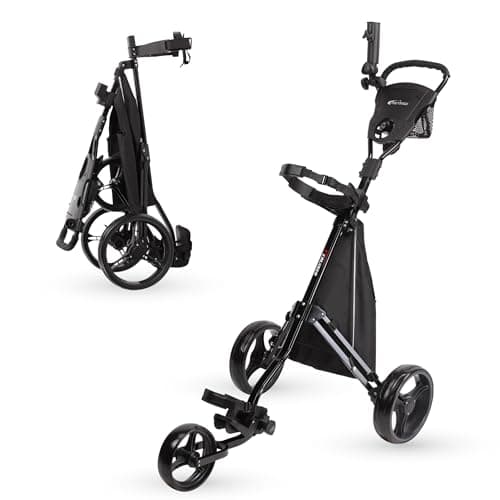
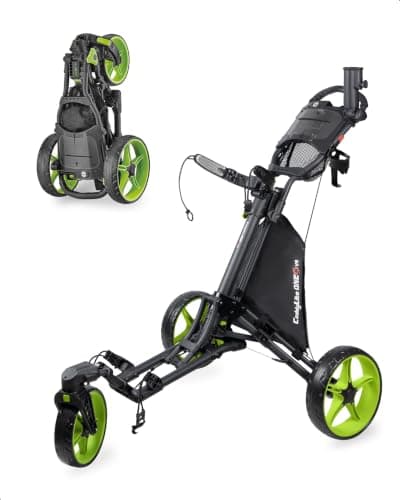
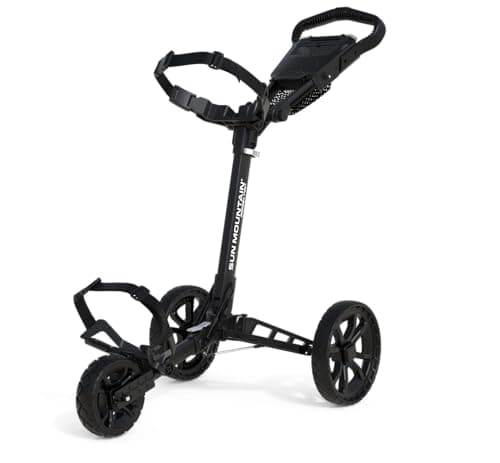
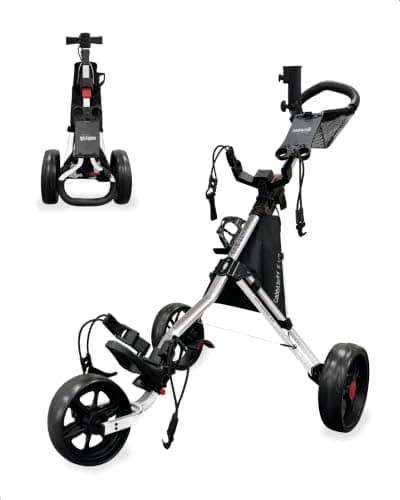
The Caddytek CaddyLite 11.5 V3 is the push cart to buy — the point where value pricing and build quality cross, from a brand that has been iterating the same frame for years. The Precise Cruiser is the cheapest cart here that still has a proper foot brake, and the Sun Mountain Ridgeline is the buy-it-once option.
The case for a cart, in one paragraph
A loaded carry bag weighs 20 to 30 pounds. Carrying that for four hours and five miles is real physical work, and the cost shows up where it hurts most — in swing quality over the closing holes, when fatigue turns a good swing into a tired one. A push cart removes almost all of that load while keeping every benefit of walking: the rhythm, the exercise and the fact that walkers consistently report better feel for the course than riders. Our push cart vs carrying guide works through the cases where carrying is still the better call.
It is also, unusually for golf, a one-time purchase that does not degrade. A decent cart lasts many seasons, does not need replacing when your handicap changes, and costs less than a single mid-range club.
Three wheels or four?
Three-wheel carts are lighter, fold smaller and turn more easily, which is why they dominate and why every cart on this page is a three-wheeler. Four-wheel carts track slightly straighter across side-slopes and feel more stable when fully loaded, at the cost of weight and folded size. Unless you play a genuinely steep, cambered course, three wheels is the right default.
The related question is whether the front wheel swivels. A swivel front wheel turns effortlessly and makes a cart feel far more expensive than it is; the trade is that on a steep traverse it can wander unless you lock it. Most swivel carts, including the Caddytek One Swivel V8, let you lock the wheel straight for exactly that reason.
What actually matters when you buy
- A real brake.This is the feature cheap carts skip and the one that ruins your day when they do. A loaded cart rolling away down a slope towards a pond is not a hypothetical. Foot brakes are more common; a hand brake on the handle, like the Sun Mountain's, is easier to use while walking.
- Folded size. Measure your car trunk before you buy, with whatever else lives in it. A cart that does not fit is a cart you stop using.
- Wheels and bearings. This is where cheap carts age. Better bearings and larger EVA wheels are most of what you are paying for when you step up in price, and they are what determines whether pushing feels effortless or like work.
- Handle adjustment. A fixed handle height suits one person. If you are tall, short, or the cart gets shared, adjustable is not optional.
- Bag compatibility. Almost every cart takes almost every bag, but very large 14-way cart bags can be a squeeze on lightweight frames. If you use a big cart bag, check the strap span.
Push cart or electric trolley?
Electric trolleys do the pushing for you and start at three to four times the price of a good push cart, before you think about battery replacement. They are a genuine quality-of-life purchase for golfers with back, knee or heart issues, and a luxury for everyone else. If you are walking for the exercise, an electric trolley removes a chunk of the reason you are walking. Start with a push cart; you can always upgrade.
What pairs with a cart
A cart changes which bag makes sense. Once you are pushing rather than carrying, the weight penalty of a bigger bag mostly disappears, and a stand bag's legs become dead weight you no longer use — which is the argument in stand vs cart bags. If you are walking every round, it is also worth reading best golf shoes for walking, because the cart fixes your back and your shoes fix your feet. Before you buy, check whether your bag fits a push cart — almost all of them do, but how well varies.