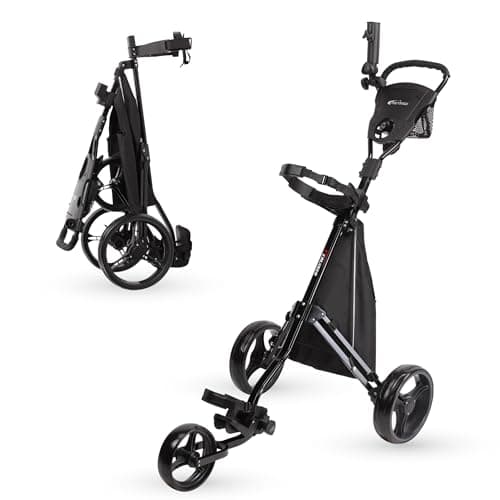
If you walk 18 holes with a full set more than a few times a season, a push cart is the better choice and the Caddytek CaddyLite 11.5 V3 Superlite is the one to buy — it takes around 30 lb off your shoulders for roughly the price of a decent stand bag. Carrying still wins in three specific situations: nine holes, a half set, or a course that bans carts off the path. The honest answer depends on how long you are out there and what is in the bag.
What carrying actually costs you
A loaded carry bag is commonly 20 to 30 lb and 18 holes is four to five miles of walking. The cost is not that you get tired — it is where you get tired. Fatigue shows up as a shorter, faster, more upright swing in the last few holes, and that is a scoring tax nobody charges to equipment because it does not look like equipment. A push cart removes the load without removing the walk, which is the entire point: you keep the rhythm and the exercise, and you arrive at the 16th tee with the same swing you had on the 4th.
There is a second, quieter cost. A carry bag you can comfortably haul for 18 holes is a bag with fewer pockets, less water, no spare layer and no cooler. People who switch to a cart almost always find they start bringing enough water, which matters more on a hot round than any club in the bag.
What a push cart costs you
- Trunk space. A folded cart takes a real chunk of a small boot. This is the single most common reason people go back to carrying, and it is worth measuring before you buy rather than after.
- A minute at each end. Unfold, load, strap. A one-button cart does this in seconds; a quad-fold takes a moment longer, which matters more at 6am than it does in theory.
- Course restrictions. Some courses keep trolleys on paths in winter, and a few restrict them in wet conditions. Check before a first visit.
- The money. Less than people expect. A cart that works properly — frame, bearings, a real brake — sits in the same price band as a mid-range stand bag.
The three cases where carrying is still right
Nine holes or an executive course. Two miles with a light bag is a pleasant walk, not a haul. A three-pound minimalist bag is the better tool and the cart stays in the car.
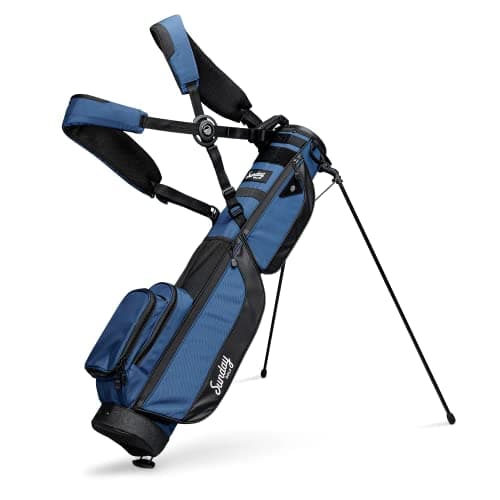
A half set. Seven clubs in a Sunday bag weighs almost nothing, and this is the most underrated way to play quick golf. The bag is the cart.
Walkability problems. Steep courses with long tee-to-green transfers and narrow paths can make a cart more work than the bag. If you are on a hillside links, try before you commit.
What to look for if you go the cart route
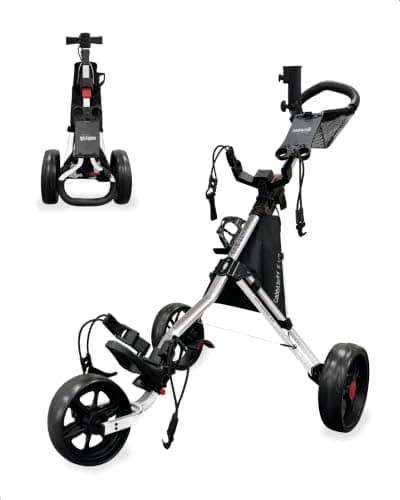
Three features separate a cart you keep from one you resent, and none of them is the price tag. First, a real brake — a step-on foot brake or a hand brake on the handle. This is the feature cheap carts skip and slopes punish; a loaded cart rolling away from you on a tee box is the moment people give up on a bargain. Second, a fold that fits your car, which you should check against your actual boot rather than against a photograph. Third, wheels and bearings, because push feel over four miles is almost entirely a bearing question and it is the thing that degrades first on a generic frame.
Everything else is convenience. An umbrella holder is genuinely useful. A cooler basket is genuinely useful. A scorecard console with a phone mount is pleasant and changes nothing. A swiveling front wheel is a real upgrade if your course has tight paths and lots of turning, and a mild liability on steep side-slopes unless you can lock it.
What to look for if you keep carrying
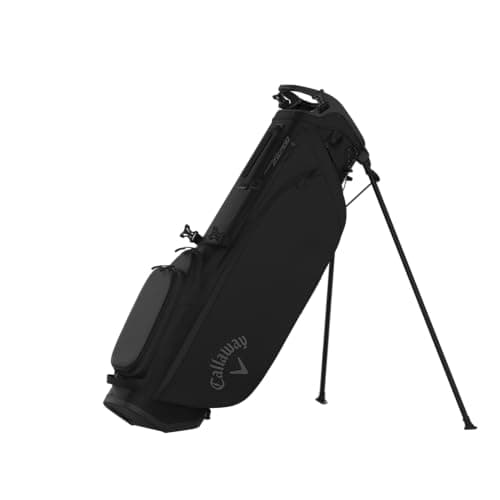
The strap is the whole game. A genuine dual strap spreads the load across both shoulders like a backpack and makes a heavy bag feel far lighter; a thin single strap is where a bargain bag punishes you for 18 holes. After that, weight — every pound is a pound you carry four miles — and then a top you can live with. Our bag buying guide works through the rest of the spec sheet, and the lightweight bags roundup is where the carry-first picks live.
The picks for both paths
Below: the two value carts we would actually buy, and the two carry bags that make carrying bearable. The order is the order of our recommendation for the most common case — walking 18 with a full set — not a claim that a cart is right for everybody.
The four options side by side
| Option | Type | Brake / strap | Published detail |
|---|
| Caddytek CaddyLite 11.5 V3 Superlite | 3-wheel push cart | Foot brake | Umbrella holder, mesh basket, bucket hook |
| Precise Cruiser | 3-wheel push cart | Step-on foot brake | Suitcase-style fold, adjustable handle |
| Callaway Hyperlite Zero | Carry stand bag | Dual strap | Ultra-light, minimalist, stand legs |
| Sunday Golf Loma XL | Carry stand bag | Single strap | Around 3.4 lbs, stand legs |
Those specifications come from the listings, not from a lab — we have not instrumented a golfer walking 18 holes with each one. The reasoning that ranks them is published on our methodology page: published specs, the cost-per-round math, and aggregated owner reports about which parts fail first.
The middle path nobody mentions
You do not have to choose once and forever. A lot of walkers keep a cheap cart in the boot for full 18-hole rounds and a three-pound carry bag for quick nines and the range, which together cost less than one premium stand bag. If you are buying your first of either, buy the cart — it is the one that changes your back nine.