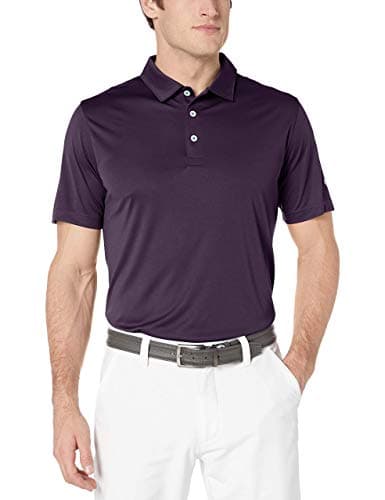
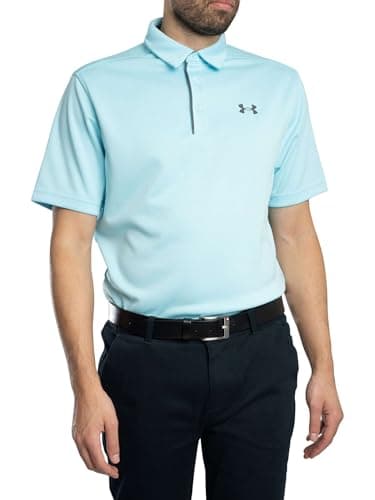
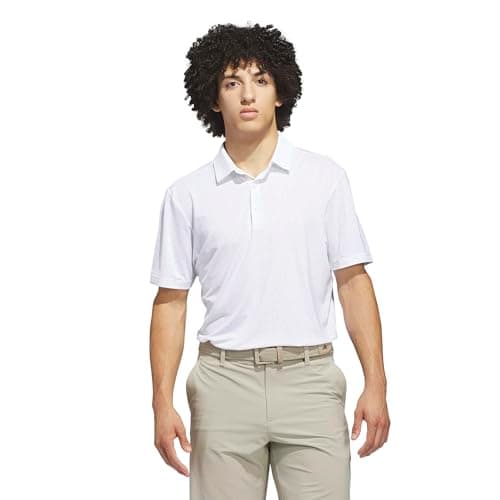
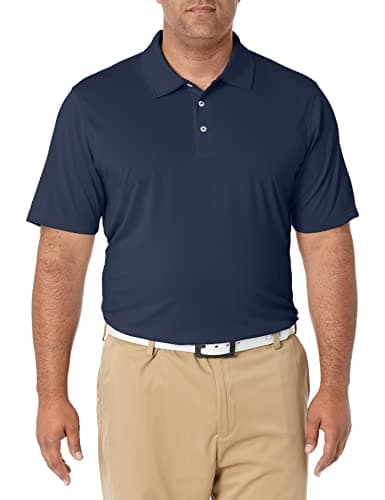
The Amazon Essentials quick-dry polo is the value winner — pique knit, wicking finish, ribbed collar and side vents for less than a bucket of range balls. The Puma Rotation is the one to buy if you play in strong sun, because it is the only shirt here with a published UPF rating.
What a golf polo has to do
Three things, and only three. It has to have a collar, because that is what the dress code requires. It has to move sweat off your skin, because you are outside for four hours. And it has to not restrict a shoulder turn. Everything else — the branding, the fabric name, the seasonal color story — is optional and priced accordingly.
Where polos genuinely differ is in two places most buyers never check: sun protection and how the collar ages.
Sun protection is the one real upgrade
You spend four to five hours in direct sun per round, most of it with your back and shoulders exposed. A UPF-rated fabric blocks a specified fraction of UV — Puma rates the Rotation polo UPF 40+, which it describes as letting through one-fortieth of UV radiation. A plain untreated polyester shirt offers some protection simply by being fabric, but it is not measured and not guaranteed, particularly in light colors and when wet.
If you play regularly in a sunny climate, that rating is the single spec on this page worth paying extra for. It is also the one benefit that compounds over decades rather than over a round.
Why cheap collars fail and what to look for
The collar is where a cheap polo shows its age, and it is the part everyone sees. A collar that curls at the points or goes soft and wavy after ten washes ruins a shirt long before the fabric wears out. Two things predict this: a ribbed knit collar (knitted separately and attached, rather than cut from the body fabric) holds its shape far better, and a three-button placket with proper interfacing sits flatter than a two-button one.
The Amazon Essentials polo has a ribbed collar, which is why it is our value pick rather than simply the cheapest thing available. Wash polos cold and hang them to dry and the collar life roughly doubles regardless of what you paid.
Pique or jersey?
Pique is the textured, slightly waffled knit most golf polos use. The texture creates air gaps, which makes it more breathable and much better at hiding sweat patches. Jersey is the smooth, t-shirt-like knit — softer against the skin, better drape, and noticeably worse at hiding sweat. If you sweat, buy pique or a mesh construction like the adidas Climacool. If you are always cool and want the softest shirt, jersey is fine. For a full hot-round kit rather than just the shirt, see best hot-weather golf clothes.
Fit, honestly
Golf polos come in athletic, regular and performance cuts, and the labels are not consistent between brands. Two practical rules: the shoulder seam should sit on the point of your shoulder, not below it, and you should be able to make a full backswing without the fabric pulling across your back. Puma's performance fit is deliberately wider through the shoulders and sleeves for exactly this reason, which makes it look baggier on a slim build than the adidas or Under Armour cuts.
The buying strategy
Buy three or four cheap polos, then one good one. That gets you through a week of golf without laundry pressure and gives you something you like for the days that matter. Reversing that order is how people end up wearing gym t-shirts on a Wednesday. The same reasoning is on best golf shorts — and if this is your first set of golf clothes entirely, start with what to wear for golf.