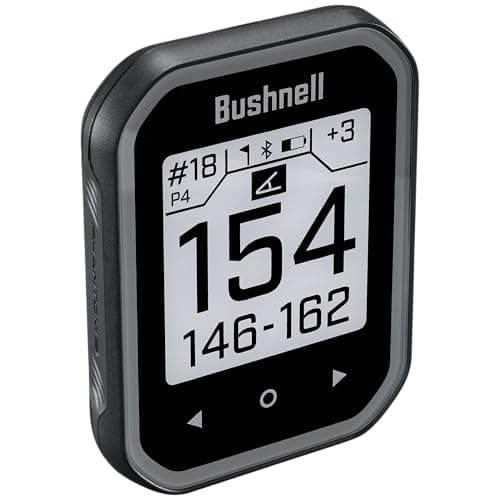
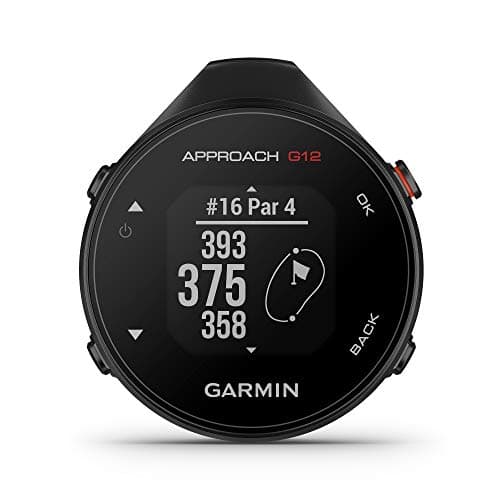
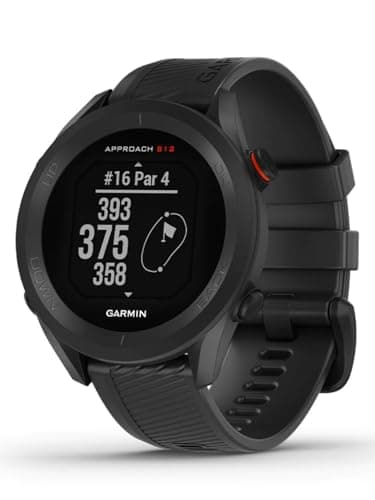
The Garmin Approach S12 is the GPS to buy under $200 — a proper Garmin watch with 42,000 preloaded courses, front/middle/back yardages and a battery measured in rounds rather than hours, with no subscription. If you want plays-like slope numbers without a laser, the Bushnell Phantom 3 is the pick. If you do not want to wear anything, the Garmin Approach G12 clips to your bag or belt for under $140 and gives you the same Garmin course data.
Three form factors, one job
Every device on this page does the same core thing: it works out where you are on a mapped golf hole and tells you how far it is to the front, middle and back of the green. The difference is how you read it.
| Form factor | Reads like | Best for | Trade-off |
|---|
| Watch | Glance at your wrist | Fast play, walking, no extra object to lose | Small screen; you are wearing a watch |
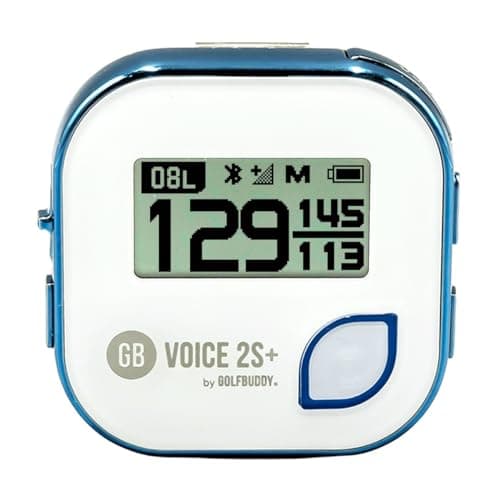
| Clip-on | Small screen on bag or belt | Golfers who hate wearing a watch | You have to reach for it |
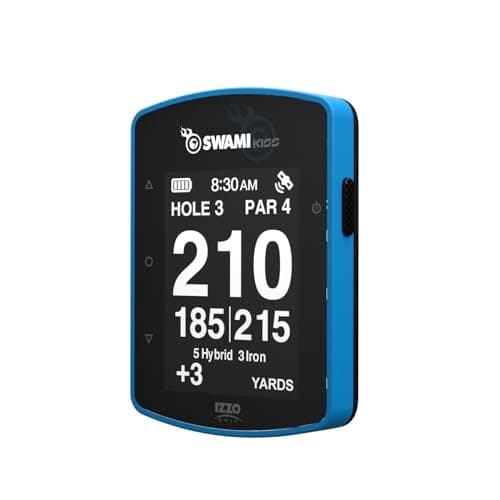
| Handheld | Large numbers, pocket-sized | Anyone who struggles with small displays | Bulkiest of the three |
There is no performance hierarchy here — they all read the same course database. Pick the one you will actually use on the 14th hole when you are tired, not the one with the longest feature list. Our best handheld golf GPS page goes deeper on the non-watch options and best value golf GPS watches does the same for the wrist.
The subscription trap, and why none of these have one
The most expensive thing about a cheap golf GPS can be the part that is not in the price. A number of app-linked devices and phone apps charge annually for full course data or features. Every device on this page has its course data included, with no recurring fee — that is a selection criterion here, not a coincidence.
Our GPS watch subscription guide lays out which brands charge for what. The short version: if a device needs a subscription to show you a yardage, it is not a $150 device.
What the $400 watches add — and it is not accuracy
- Full-colour hole maps. Genuinely nice. Also almost never the thing that changes your club. Front, middle and back is the number you play to.
- Shot tracking and stats. The one upgrade that can actually improve your golf, because knowing your real club distances is worth strokes. If this is what you want, it is a different purchase — see Garmin S12 vs Shot Scope V5.
- Smartwatch functions. Notifications, activity tracking, sleep. Worth money if it replaces a watch you would otherwise buy; worth nothing if it does not.
- Yardage accuracy. No improvement. All of these are reading the same satellite fix against the same kind of mapped course data. A $400 watch does not know where the green is better than a $200 one.
The one genuine feature upgrade under $200
Slope. The Bushnell Phantom 3 computes a plays-like distance that accounts for elevation change, which is the single most useful adjustment a distance device can make — and the only thing on this page that will change which club you pull. The caveat is the same as on a laser: a device that adjusts for elevation is not permitted in competition unless the function is switched off. Our slope rangefinder page covers the rule in full.
Do you want a GPS at all?
Be honest about this before you spend. A GPS is faster than a laser, works when you cannot see the flag, and needs no steady hand — which makes it the better tool for most amateurs, most of the time. A laser is exact and lets you shoot a specific target, which matters more as you get better. Buying both is the classic golf-tech overspend, and rangefinder vs GPS exists to stop you doing it.
And if the honest answer is that your phone already does this adequately, GPS watch vs phone app makes the case for and against spending anything at all. Three things push people off the phone: battery drain over four hours, taking a phone out on every shot, and glove-on operation in the rain.