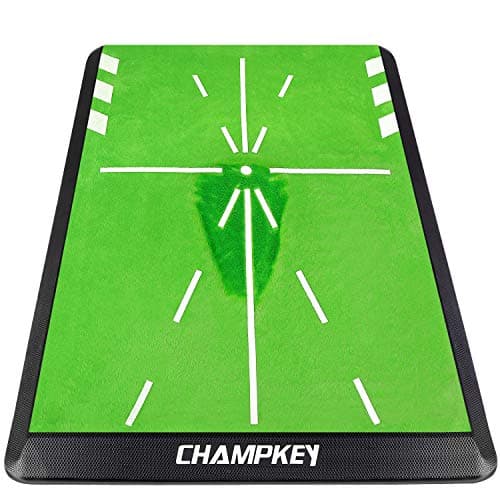
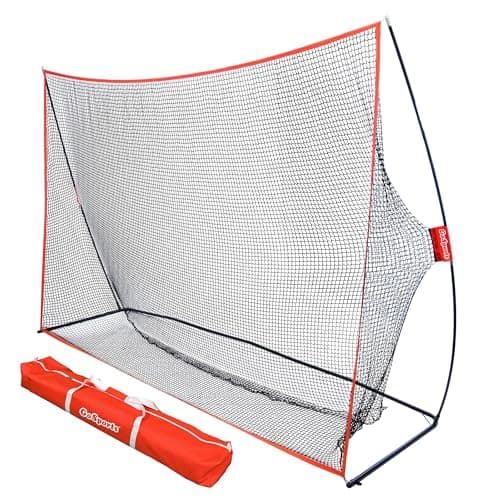
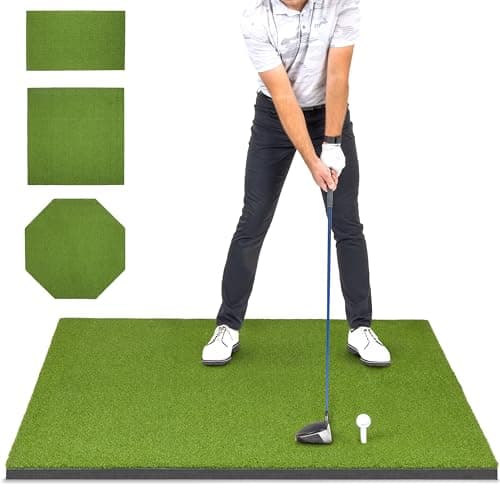
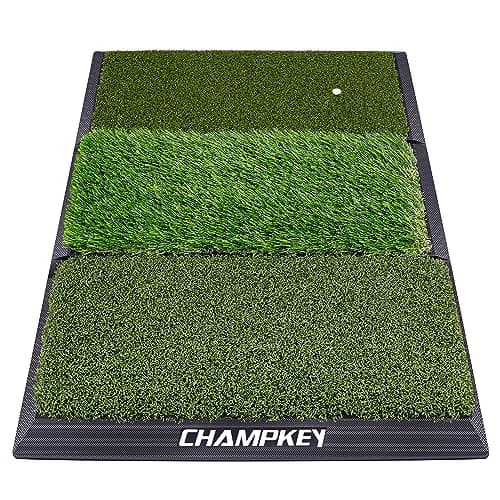
The Champkey Tri-Turf mat is the best value practice purchase on this site — three lie types on one portable pad for around the price of two buckets of range balls. Add the GoSports net if you have somewhere to swing, and step up to the GoSports Elite mat if you practice enough to worry about your wrists.
The math that makes this a value purchase
A large bucket at a typical range costs somewhere between eight and fifteen dollars and holds perhaps ninety balls. Two sessions a week for a season is a meaningful sum of money, most of which buys you the privilege of standing on someone else's mat.
A mat and a net cost roughly what fifteen buckets do, and then cost nothing. That is the whole argument, and it is the same last-gen, cost-per-use logic behind our home simulator roundup — just at a tenth of the price, because you are buying turf and netting rather than a launch monitor. If a launch monitor is the next thing you add to the net, our Garmin R10 vs Rapsodo MLM comparison is the two units most people choose between.
Mat thickness is a health spec, not a comfort spec
This is the part cheap mats do not advertise. When you hit down on a ball on a thin mat over a hard surface, the club bounces rather than cutting through, and the shock travels straight into your lead wrist and elbow. Golfer's elbow from mat practice is a genuinely common injury and it takes months to settle.
- Under 15mm. Fine for chipping and short pitches. Do not hit full shots off it repeatedly on concrete.
- 15 to 25mm. The sensible range for regular full-swing practice, which is where the GoSports Elite sits.
- 25mm and up. Approaching real turf feel, and priced accordingly.
If you can only afford a thin mat, put a piece of rubber horse-stall matting or old carpet underneath it. That costs almost nothing and does most of the job.
What size net do you need?
Bigger than you think, and specifically taller than you think. A 7 by 7 foot net is enough for controlled swings; a 10 by 7 gives you margin for the shots you are actually practicing to fix. Height matters more than width because a thinned wedge climbs fast.
Depth matters too. A net needs slack behind the striking surface to absorb the ball rather than rebound it. A taut flat net fires balls back at you, which is exactly as unpleasant as it sounds. Look for a design with a secondary baffle or a deep pocket.
On space: measure your ceiling height before buying anything for indoor use. You need roughly nine feet of clearance for a full driver swing, and most domestic garages do not have it. If yours does not, you have a wedge-and-iron bay, which is still worth having.
What you can and cannot practice without feedback
Hitting into a net teaches you strike quality, tempo and contact. It cannot teach you shot shape or distance control, because you cannot see where the ball goes. That limitation is real and worth being honest about.
Three ways to work with it. First, practice contact deliberately — put a coin or a tee an inch in front of the ball and try to take it. Second, use alignment sticks so at least your setup is being trained correctly. Third, if you want actual numbers, that is the moment to consider a cheap launch monitor from the simulator roundup — but do that after you own a mat and net, not instead of. And the one practice surface that does give feedback on its own is a putting mat, which needs no net and no ceiling.
Outdoor versus indoor
Outdoors, on grass, a net alone is enough — hit off the turf and skip the mat entirely, which is better practice anyway. The mat only becomes necessary on concrete, decking or indoors.
Outdoor nets need anchoring. Every cheap net will blow over in wind, and a net that falls onto a person or a car is a genuine problem. Peg it, weight the base, and take it down between sessions if you get real weather.
What we would actually buy
Someone starting out: the Champkey Heavy-Duty mat, on a patio, chipping into a net or a target. Twenty dollars and it changes your short game. Someone practicing full swings weekly: the Champkey Tri-Turf plus the GoSports net, which is the complete setup for well under two hundred dollars. Someone with a garage and a habit: the GoSports Elite mat, because at that volume of practice the thickness is protecting your joints, not your comfort.