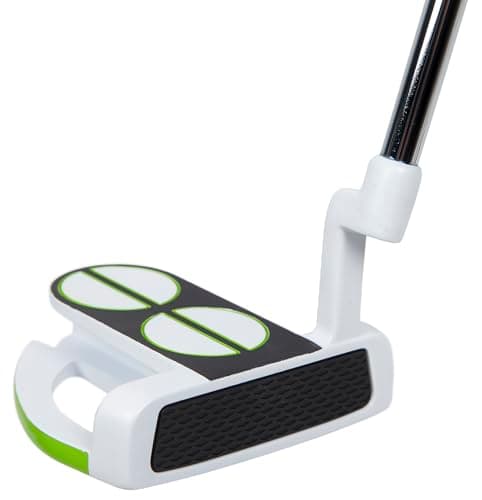
The Pinemeadow PGX SL is the best putter for the money — a big, forgiving mallet with real alignment aids for less than a single green fee at most resorts. The Cleveland Huntington Beach Soft 2 is the upgrade that genuinely improves your roll, and the Odyssey White Hot Versa is here to show you exactly what the extra $150 buys.
A note on the prices below. Complete-set and club prices on Amazon swing widely with third-party sellers — the live number on each card is today's, stamped with the date we checked it. If a set looks overpriced, it usually is, and it tends to come back down; it's also often cheaper in-store or direct. Treat the live price as a starting point and shop it around before you buy.
Why the putter is the best value club in the bag
A putter does not have to survive 100 mph of clubhead speed. It has no shaft to load, no face to deform, no loft to optimize and no launch condition to manage. It is a weighted stick that starts a ball rolling at somewhere between 3 and 12 feet per second. That is why a $60 putter and a $400 putter are closer in performance than any other two clubs at that price ratio in the bag.
What the money buys is real, but it is narrow: a milled face rolls the ball marginally truer over the first few inches, a better insert feels softer at impact, and a premium finish survives more seasons. None of those things are the reason you three-putt. Aim, speed control and start line are the reasons, and every putter on this page can do all three.
Head shape matters more than price
The one specification worth getting right is head shape, and it maps to your stroke rather than your budget.
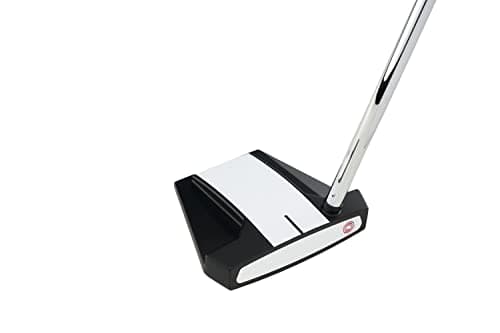
- Mallet (face-balanced). A large, heel-toe weighted head that resists twisting on off-center strikes and wants to move straight back and straight through. If you miss putts left and right of your line, this is your shape. The Pinemeadow and the Odyssey are both here.
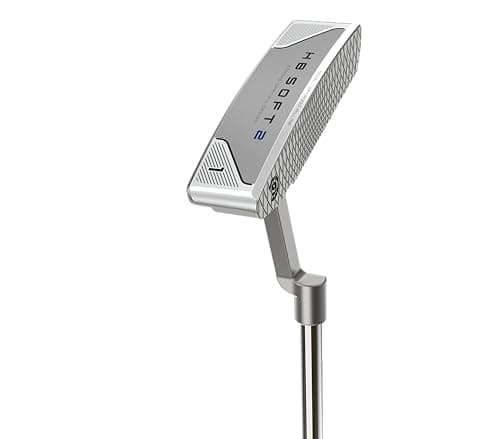
- Blade (toe hang). A compact head that hangs toe-down when balanced on a finger, which suits a stroke that arcs naturally inside on the way back. If a mallet feels like it fights you, a blade will not. The Cleveland is the blade on this list.
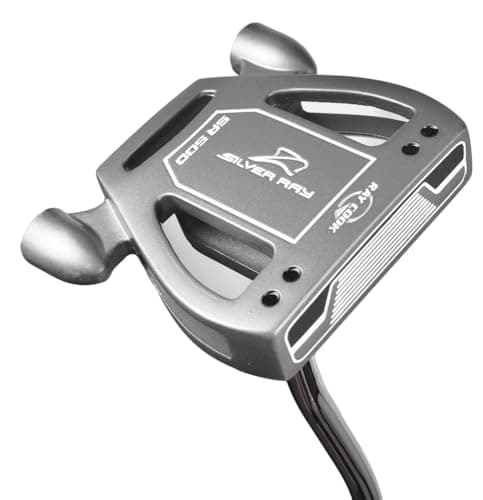
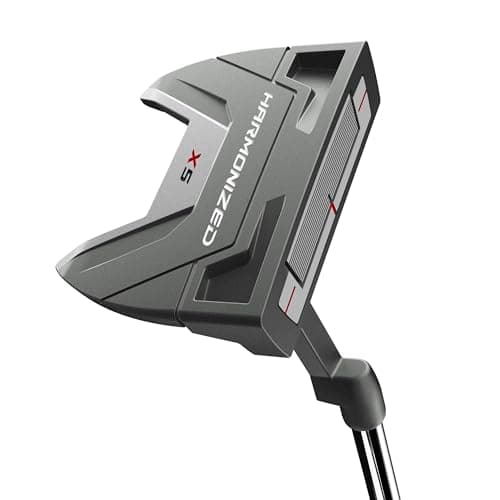
- Mid-mallet. The compromise, and a genuinely sensible default if you do not know your stroke type. The Wilson and the Ray Cook sit here.
There is a free test. Balance the putter shaft across your index finger. If the face points at the sky, it is face-balanced and suits a straight stroke. If the toe hangs down towards the floor, it has toe hang and suits an arced stroke. Do that before you spend anything.
Length is the spec that is actually wrong on most putters
Standard men's putters ship at 34 or 35 inches, and a large share of golfers are playing a putter too long for them. The symptom is that your eyes sit inside the ball rather than over it, which makes the ball look further right than it is and produces a pull.
Set up to a mirror or have someone film you from face-on. Your eyes should be over the ball or very slightly inside it, your forearms should hang under your shoulders, and your hands should be roughly under your chin. If you are reaching or crowding, the length is wrong. That single fix is worth more than every dollar of face-milling on this page, and it is why we call out length on each pick rather than burying it.
What a milled face is actually doing
A milled face is machined from a solid block with a fine pattern cut into it, rather than having a soft polymer insert glued in. The pattern grips the cover for a fraction longer, which reduces initial skid and gets the ball rolling end-over-end a little sooner. It is a measurable effect and it is also a small one — a few percent of the first foot of a putt.
The honest framing: milling is worth paying for if you already putt well and want a truer roll from a consistent strike. It is not worth paying for if your misses come off the toe, because a milled blade punishes that miss harder than a cheap mallet does. That is the same logic we apply to irons for the money — buy forgiveness before you buy precision.
The upgrade that beats all of these
If you want to putt better this season, a putter is the second-best thing to buy. The first is a way to practice. Ten minutes on a mat three times a week does more for your speed control than any head shape, and the whole setup costs less than the Odyssey. We rank the options on the training-aids page, and the putting mat is the single most score-relevant item on this site — we rank five of them, and the ramp that trains pace, on our best putting mats page.
What we would actually buy
A new or high-handicap golfer: the Pinemeadow PGX SL, in the correct length, with the change spent on a putting mat. A golfer with an arced stroke who already putts respectably: the Cleveland HB Soft 2, where the milled face gets used. A golfer who has putted well for years and wants the feel they grew up with: the Odyssey White Hot Versa, with our blessing and no pretense that it will lower your handicap.