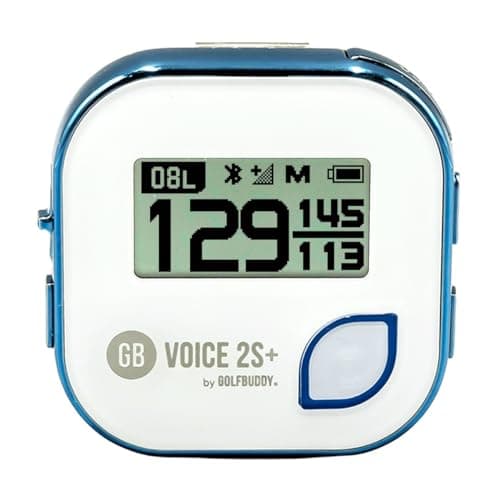
The GolfBuddy Voice 2S+ is the best value in golf GPS — it speaks front, center and back out loud, clips to your hat, and costs less than a third of a premium GPS watch. The Garmin Approach G12 is the accuracy pick, and the Bushnell Phantom 3 is the only handheld here with slope.
Why handhelds are cheaper than watches for the same numbers
A GPS watch has to be a watch. That means a rechargeable battery small enough for a wrist, a screen tough enough to live on your arm all day, a strap, water resistance for the shower and usually a fitness platform behind it. Those requirements cost money and none of them make the yardage more accurate.
A clip-on unit drops all of it. What is left is a GPS chip, a course database and a display — which is the part that actually tells you it is 147 yards to the middle. The result is that a $90 clip-on and a $300 watch frequently give you an identical number from the same spot.
If you want the watch anyway — and there are good reasons to, mostly convenience and shot tracking — our value watch roundup covers that tier.
The four form factors
- Talking clip-ons. No screen worth reading; they speak the distance when you press a button. Fast, hands-free, and the cheapest option. The GolfBuddy is this.
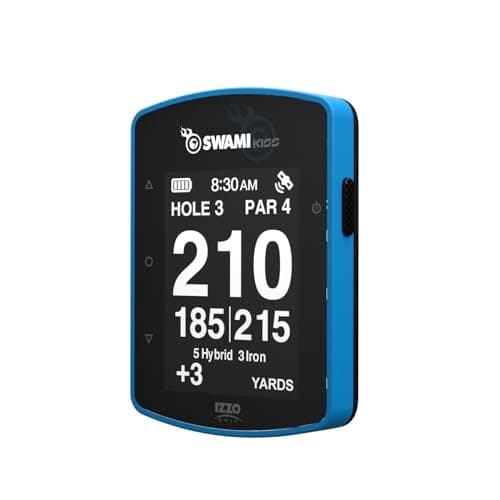
- Big-number handhelds. A simple screen showing front, center and back in large digits, usually with a magnet for the cart. The Izzo Swami is this.
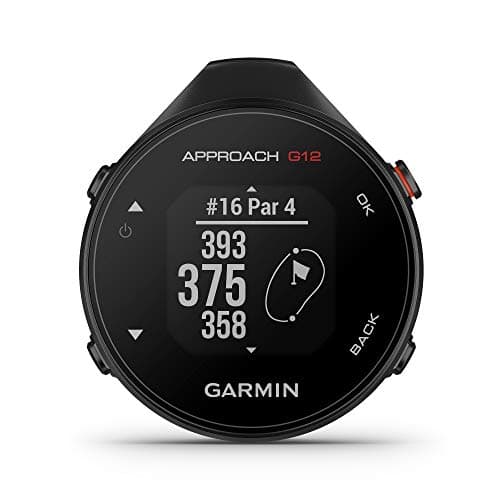
- Compact screen clip-ons. A small display with automatic hole advance and a proper course database. The Garmin G12 is this.
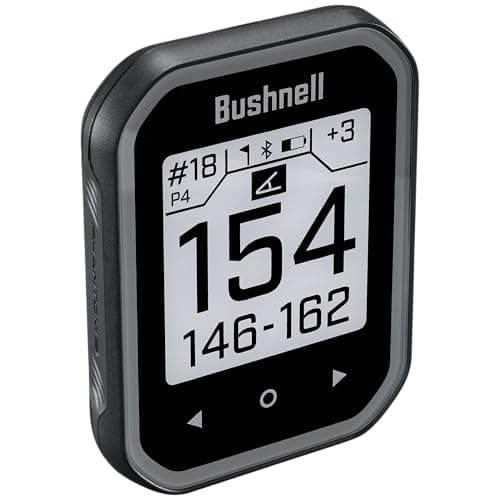
- Feature handhelds. Hazard distances, layup numbers and sometimes slope. The Bushnell Phantom 3 is this.
What you give up versus a laser
A GPS gives you the distance to a mapped point — usually front, center and back of the green. A laser gives you the distance to whatever you point it at, including the actual flag position on the day. That is the core difference, and it is covered in full on our rangefinder vs GPS page.
The short version for a value buyer: GPS is better for course management and for pace of play, because you get numbers instantly without aiming at anything. A laser is better for precision approach shots. If you are choosing one, choose GPS if you are a mid-to-high handicapper and a laser if you regularly hit greens.
Subscriptions: the cost that hides
Every unit on this page has free lifetime course updates and no subscription. That is not universal in this category — some manufacturers charge an annual fee for course data, and a $70 device with a $30 annual fee is a $160 device over three years.
Check before you buy, on anything not on this list. The phrase to look for is "no subscription fees" or "free lifetime course updates", and if a listing avoids saying it, assume there is a fee.
Slope on a GPS, and when it is legal
Only the Bushnell Phantom 3 here calculates plays-like distances for elevation. It is genuinely useful on a hilly course and completely pointless on a flat one.
The rules point matters: under the Rules of Golf a distance-measuring device may not measure elevation change during a competition round unless the local rule permits it. Every slope-capable device therefore has an off switch, and switching it off is your responsibility, not the device's. The full explanation is in our slope guide.
Battery, and why it is the spec nobody checks
The units here run between 12 and 30 hours per charge — three to seven rounds. That sounds academic until you are on the twelfth hole with a dead device. Battery life is the single most-cited complaint about cheap GPS units, and the Garmin's 30-hour figure is the main practical reason to pay more for it.
A simple habit fixes most of it: charge it when you clean your clubs after a round, not when you remember before one.
What we would actually buy
A walker who wants a number fast without breaking rhythm: the GolfBuddy Voice 2S+, clipped to a hat. An older golfer who wants to read a big number on a cart bar: the Izzo Swami KISS 2.0. Someone who wants the most accurate database and the longest battery: the Garmin Approach G12. And anyone playing a genuinely hilly course: the Bushnell Phantom 3, with slope switched off for competitions.