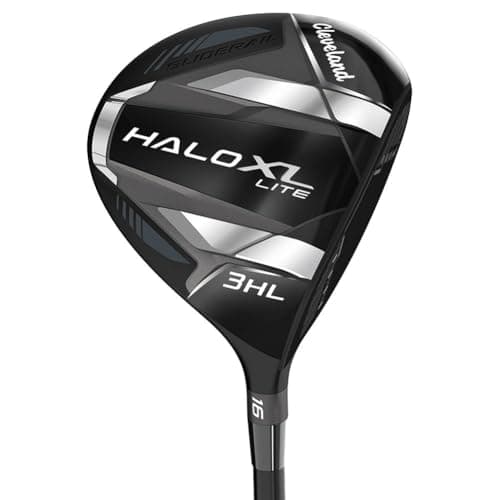
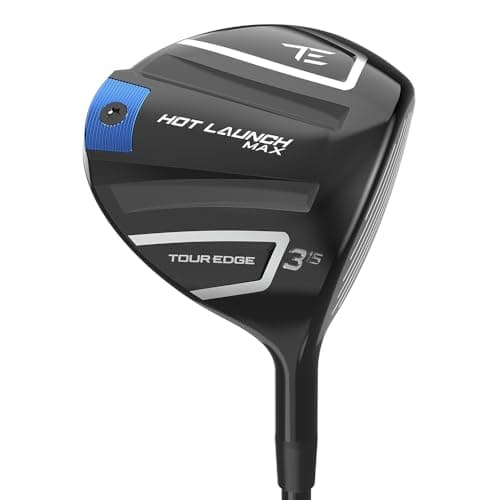
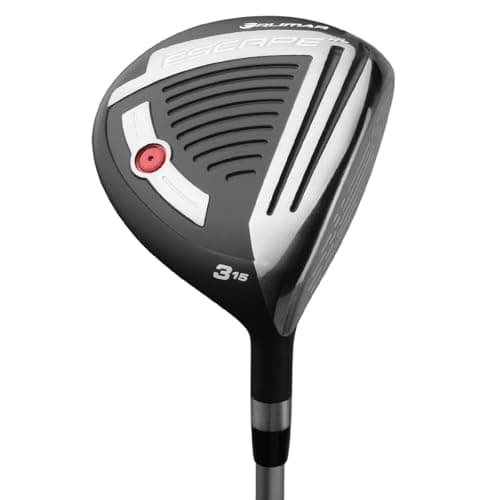
The Orlimar Escape HL 5-wood is the best fairway wood a value buyer can put in the bag — a 19-degree, shallow-faced, high-launch head sold one loft at a time, for less than the headcover money on a flagship. If you are determined to carry a 3-wood, the Cleveland Halo XL Lite is the right kind of one: lighter head, extra loft, light shaft. And if you want to read the shaft specification before you buy, the Tour Edge Hot Launch Max publishes it down to the gram.
A note on the prices below. Complete-set and club prices on Amazon swing widely with third-party sellers — the live number on each card is today's, stamped with the date we checked it. If a set looks overpriced, it usually is, and it tends to come back down; it's also often cheaper in-store or direct. Treat the live price as a starting point and shop it around before you buy.
The club most golfers should buy is not the one they search for
Almost everybody shopping for a fairway wood is shopping for a 3-wood, and for most of them that is the wrong club. It is the wrong club for a reason that has nothing to do with brand, price or face technology: a 3-wood is around 15 or 16 degrees of loft on a shaft close to 43 inches long, and that combination is the second-hardest club in the bag to hit off the ground. The face is shallow, the loft is low, and the ball is sitting on grass rather than on a tee.
A 5-wood is three or four degrees more loft on a shaft an inch or more shorter. It launches higher, it lands steeper so it holds a green, and it is far more forgiving of the strike a normal golfer makes from a normal lie. The distance you give up is smaller than you think — and if your swing is slow enough that the 3-wood barely gets airborne, you give up nothing at all, because a shot that never climbs does not carry.
That is why four of the five picks below are 5-woods, and why the one 3-wood on the page is specifically the lightest, highest-lofted 3-wood a major brand builds. It is not an anti-3-wood position for its own sake. It is where the value is: a 5-wood you hit is worth more than a 3-wood you own.
How we picked
Six criteria, applied in this order. We do not run a testing lab, so every judgment below comes from published manufacturer specification, independent tracked-shot data we name, and the live retail listing — never from our own testing, because we have not done any.
- A published loft, length and head volume. A fairway wood is a loft-and-length decision before it is anything else. Every club here has its numbers printed by the manufacturer, so you can see what you are buying rather than infer it from the number stamped on the sole.
- A high-launch head shape. Shallow faces, low and deep weighting, rear weight ports and wide soles all solve the same problem: getting the ball up from the turf. That is the entire job of this club, and it is a cheap thing to engineer, which is why value woods can compete here in a way they cannot in a driver.
- Flex options that actually exist. A wood offered in one flex only is fine if you happen to be that player and useless if you are not. We say plainly which clubs here are single-flex and who that rules out.
- Honest sole design. A fairway wood spends its life in contact with the ground. Rails, cambered soles and V-tapers are the difference between a fat shot that skids and a fat shot that stops dead, and we favored the clubs whose makers state what the sole does.
- Sold as a single club. Every pick here can be bought on its own, in the one loft you are missing. Buying a matched pair of woods when you only ever hit one of them is the most common way money leaves a bag.
- Availability today. Every club was verified live, in a right-handed men's build, and purchasable before it went on the page. The price on each card is pulled from the retailer rather than typed in by us.
Loft is the whole decision
Fairway woods run in a ladder, and the numbers are more consistent between brands than iron lofts are. Orlimar publishes the full ladder for the Escape HL family and it is a fair map of the category: 15 degrees at the 3-wood, 17 at the 4, 19 at the 5, 22 at the 7, 25 at the 9, then 29, 33 and 37 degrees at the 11, 13 and 15. Notice what happens alongside the loft — the club gets shorter and the head gets smaller at every step, from 43 inches and 170cc down to 39.5 inches and 120cc. Higher loft, shorter shaft and a smaller head are three separate reasons the higher-numbered wood is easier to hit.
Pick your loft from the gap in your bag rather than from the number you like the sound of. The usual gap for an amateur sits between the driver and the longest iron or hybrid that gets airborne reliably — and for most golfers that is a 19- to 22-degree wood, not a 15. If you already carry a hybrid around 21 degrees, jump past the 5-wood: buy a 7-wood or nothing. Two clubs that fly the same distance is the most expensive redundancy in golf, and it is the reason the honest advice on our what clubs a beginner needs page is seven clubs rather than fourteen.
Where the 3-wood does still earn its slot is on long par 5s for a player with the speed to reach them, and on tight par 4s where the extra control off the tee is worth the lost yards. If that is you, buy loft anyway: 16 degrees rather than 15, and a lighter build rather than a heavier one. That is precisely what the Cleveland Halo XL Lite is — Cleveland states the Lite build takes a lighter head, adds 1.5 degrees of loft and puts it on a 44.5-gram shaft in regular flex, which is a 3-wood designed around the speed a normal golfer has.
Fairway wood or hybrid?
These two clubs overlap badly in the 19- to 22-degree band, and owning both is common and usually wasteful. The real difference is shaft length and head shape, not loft. A fairway wood has a longer shaft and a shallower, wider head: it carries further for the same loft and runs out more on landing. A hybrid is shorter, heavier through the head and steeper into the ground: it is easier to strike from rough, easier to control, and it stops faster.
The practical rule is about lies. If most of your second shots come from fairway or light rough and you want maximum carry, take the wood. If you spend a lot of time in thick rough, or you need the ball to stop on a green rather than release through it, take the hybrid. Our best hybrids for the money page ranks that side of the decision with the same value filter, and the loft-matching table on it works in both directions.
One more consideration that is easy to miss: a fairway wood is genuinely usable off a tee and a hybrid is only adequate there. If part of what you want is a club to tee off with on holes where the driver is too much, that tips the decision to the wood.
The 3-wood-off-the-tee myth, with the data
The most common reason golfers buy a 3-wood is safety off the tee: the belief that it finds many more fairways than a driver. The tracked-shot data does not support it. Shot Scope, which collects real on-course shot data rather than range sessions, found that a 3-wood hits on average 1.5 percent more fairways than a driver — and concluded that a typical amateur should be pulling driver more often off the tee, not less, because the distance advantage dwarfs that accuracy sliver.
That is worth sitting with, because it changes what you should buy. If the 3-wood is not meaningfully straighter off a tee, then buying one as a driver substitute is buying a solution to a problem you do not have — and the money is better spent on a driver you can actually control. Our budget drivers ranking covers that, and drivers for beginners covers the slice-correcting end of it.
The exception is a specific and honest one: a golfer whose driver is genuinely out of control, who is losing balls rather than yards. Teeing off with a lofted wood for a season is a legitimate answer for that player, and it is the one case where a fairway wood is worth buying for tee shots rather than approach shots.
What a fairway wood does not need to cost money for
Three things get sold hard in this category and are worth very little to a value buyer.
An adjustable hosel. Adjustability is genuinely useful in a driver, where one club has to do one job and small changes in loft and face angle change ball flight a lot. In a fairway wood you are buying a specific rung on the loft ladder — the adjustment range mostly moves you toward a loft you could have simply bought. None of the value picks here has one, and none of them is worse for it.
Exotic face materials. Carbon crowns and forged titanium faces are real engineering, and in a driver head at 460cc they buy measurable stability. A fairway wood head is 120 to 175cc — there is far less mass to redistribute and far less to gain. Stainless steel with a variable-thickness face, which is what four of the five clubs here use, is the mature technology in this category rather than the cheap version of it.
This season's model. Fairway wood design moves slowly and fairway wood pricing moves fast. A wood from two seasons ago is the same club with a different year on the box, and it is the single easiest saving on this page. The same logic runs through buying used golf clubs, one step further down the depreciation curve.
The one place worth spending more is the shaft. It is the only component here that is fitted to you rather than to the shot, and it is the reason the Cleveland and the Tour Edge cost what they do. Both publish shaft weight by flex; the house brands do not. Whether that is worth the difference depends entirely on whether you know your numbers — our shaft flex guide is the fastest way to find out.
What we would actually buy
A golfer replacing a 3-wood they never hit: the Orlimar Escape HL in the 19-degree 5-wood, which is the pick for most people reading this. A golfer who really does need a 3-wood and has the speed to use one: the Cleveland Halo XL Lite, in regular flex, and treat the 1.5 degrees of extra loft as a feature rather than a compromise. Somebody who wants to know exactly what shaft is under the head before they spend: the Tour Edge Hot Launch Max, which publishes it and warrants the club for life.
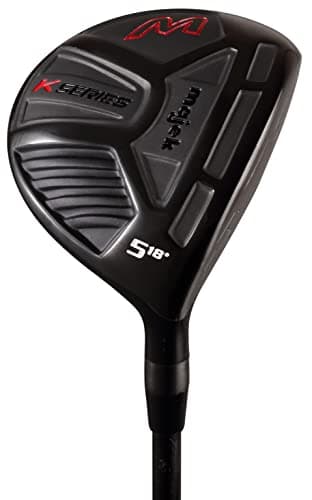
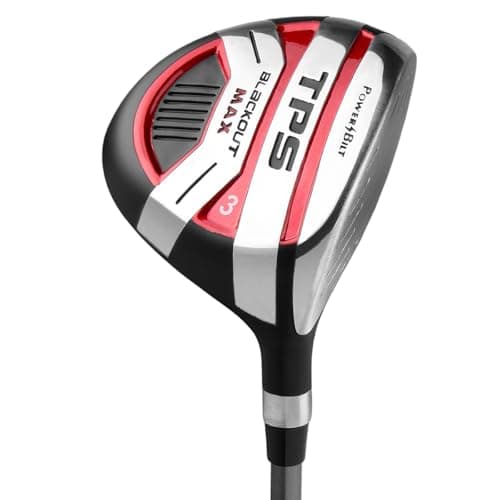
A senior or anyone under about 85 mph of driver speed: the Majek K-Series 5-wood, in the length build that matches your height rather than the standard one — and read our clubs for seniors guide before you buy anything else in the bag. And a golfer who wants to find out whether they will use a fairway wood at all before spending real money: the Powerbilt TPS Blackout Max, which costs less than a round of golf and is a real club.
Whatever you choose, spend the money you saved on the two things that will beat any head on this page: a lesson, and a ball matched to your swing speed. Our best value golf balls ranking covers the second one for a fraction of what a wood costs. Spend where it matters.
Two questions sit upstream of this ranking. Hybrid vs fairway wood decides whether a wood is the right club for your gap, and 3-wood vs 5-wood decides the loft once it is.