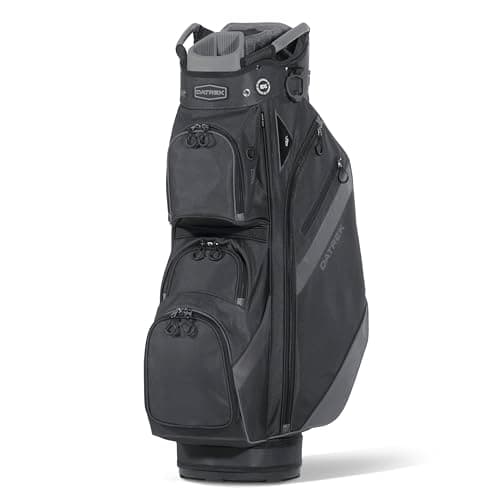
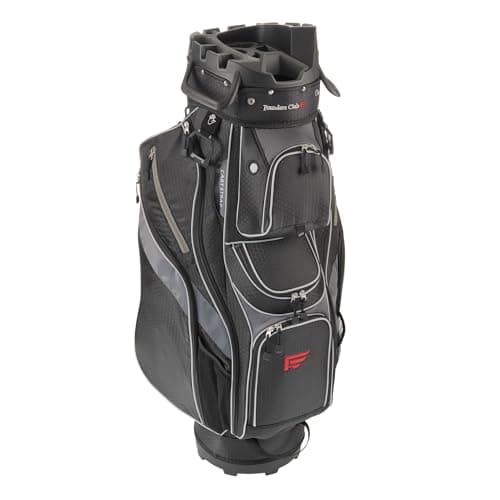
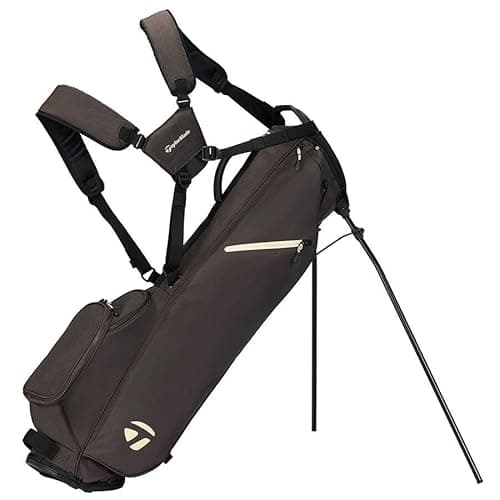
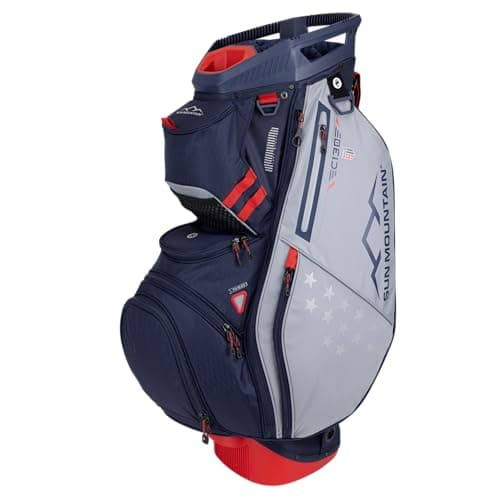
Buy the Sun Mountain C-130. It is a cart bag with a base built for a trolley deck, a 14-way full-length divider top and the storage a walking round actually uses, and it is the bag to own once a push cart is doing the carrying. The Datrek DG Lite III is the lighter version of the same idea with a cooler pocket and a putter well, and the Founders Club Premium Cart is the cheapest route to a full 14-way top. If some of your rounds are still carried, the TaylorMade FlexTech Carry is the stand bag on this list that rides without complaint.
A trolley changes which specs matter
Nearly all golf bag advice is written for a bag on your shoulders, which makes weight the headline. Put the bag on a push cart and weight stops being the point — you lift it twice a round, onto the frame and off it. What matters instead is how the bag sits, and how much of it you can reach while it is strapped down:
- The base. A cart bag has a flat, non-slip, cart-optimised base designed to sit on a deck without rotating. A stand bag has legs and a rounded base, which is why some stand bags twist every time you pull a club.
- The divider top. Full-length 14-way dividers matter more on a trolley than anywhere else, because the bag spends four miles vibrating. Half-depth dividers let shafts cross and grind, and graphite does not grow back.
- Pocket orientation.Cart bags put their pockets on the forward face so they are readable and reachable with the bag strapped in. Rear-facing stand-bag pockets end up pinned against the frame — the single most common complaint from golfers who put a carry bag on a trolley.
The four bags side by side
| Bag | Type | Divider top | Trolley-relevant feature |
|---|
| Sun Mountain C-130 | Cart | 14-way, full-length | Cart-optimised base |
| Datrek DG Lite III | Cart | 14-way, full-length | Insulated cooler pocket, putter well |
| Founders Club Premium Cart | Cart | 14-way anti-rattle | Most pockets per dollar |
| TaylorMade FlexTech Carry | Stand | 4-way | Carries as well as it rides |
Every figure and feature there is the manufacturer's own published specification. We do not weigh bags or measure cuffs; what we can do is read the spec sheet against the job, which is what our methodology says and all it says.
Can you just use the stand bag you own?
Usually, yes. Almost every bag sits on almost every cart, and the FlexTech is on this list precisely because it is a stand bag that behaves well on a frame. The three things to check are the top cuff width, the base shape and whether the lower strap crosses a pocket you need — will my golf bag fit a push cart walks through those measurements on the bag you already have, and it is the page to read before you spend anything at all here.
The honest case for switching to a cart bag is not compatibility, it is comfort of use: more storage you can actually reach, a top that holds 14 clubs in their own slots, and a base that does not rotate when you pull a wedge. None of that is worth money if you still carry half your rounds.
Spend the money on the cart first
If you are choosing between a better bag and a better cart, buy the cart. A trolley is the piece of equipment on this site with the clearest effect on how you feel over the closing holes, and the cheapest decent ones cost about the same as a value bag — the best golf push carts ranks them, and push cart vs carrying your bag makes the case for the switch if you have not made it yet. A $160 cart bag on a $100 cart is a better walking setup than a $350 premium stand bag on your back, for less money in total.
What we would buy
Walking every round with a trolley: the C-130, and expect to keep it for a decade. Walking most rounds on a budget: the Founders Club, which gives up fabric quality and nothing functional. Riding sometimes, pushing sometimes, carrying occasionally: the FlexTech, which is the only bag here that does all three without annoying you. And if your binding constraint is the number rather than the use case, the best golf bags under $200 cuts the same field at the price where a bag stops being a compromise.