Skip to content
Club&Carry

Hub 02 · Golf Clubs

3-Wood vs 5-Wood

Three degrees of loft and nearly two inches of shaft separate these clubs. For most amateurs that difference decides whether the club gets used or lives in the garage.

By Stephen V.Updated How we pick
#ad

We earn a commission when you buy through our Amazon links, at no extra cost to you. It never affects our rankings, and we say so when the cheaper product is the better buy. How this works.

Buy the 5-wood. For the large majority of amateurs the 19-degree club is the one that gets hit off the deck, and the Orlimar Escape HL 5-wood is the value pick at that loft. If you are set on a 3-wood, buy a light, higher-lofted one — the Cleveland Halo XL Lite is 16 degrees rather than the traditional 15 and is built around a 44-gram shaft, which is a 3-wood designed for the speed most golfers actually have. Slower swings should go higher still: the Powerbilt TPS Blackout Max is 21 degrees for very little money, and the Majek K-Series is sold in senior A-flex as standard.

What actually separates them

Three specifications, all published by the manufacturers, decide this entire argument:

ClubLoftLengthFlexes offered
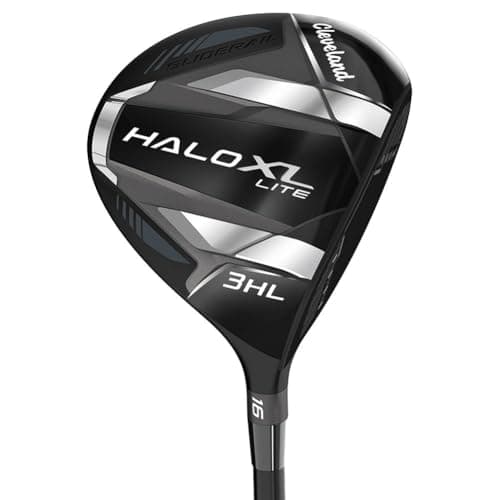
Cleveland Halo XL Lite (3W)16 degrees43.75 inA, R, S
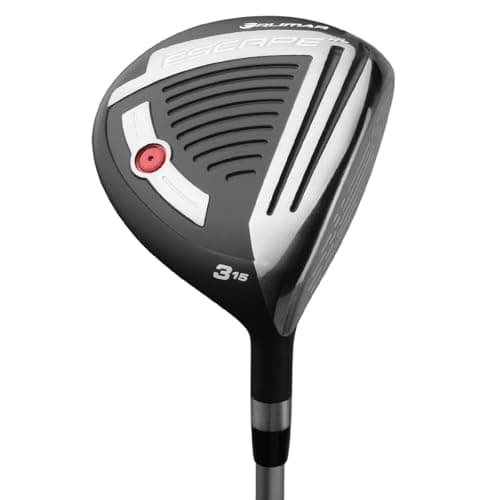
Orlimar Escape HL (5W)19 degrees42 in, 150ccLite, Regular
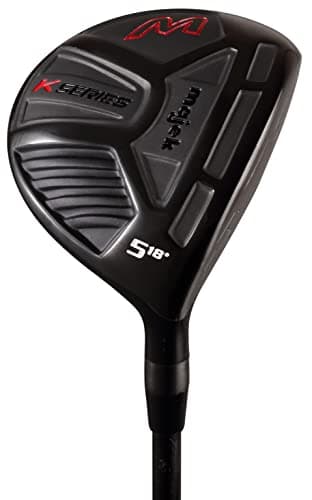
Majek K-Series Senior (5W)18 degrees42 inSenior A only
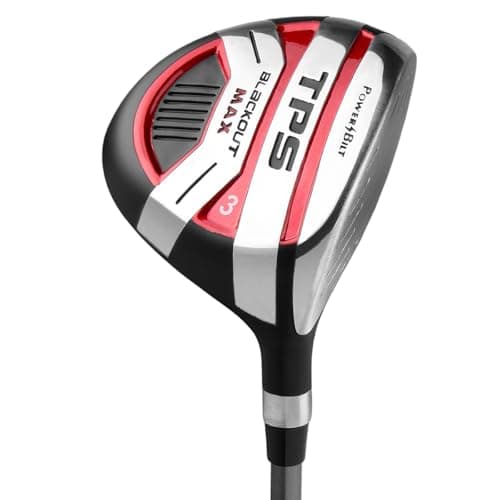
Powerbilt TPS Blackout Max (5W)21 degreesNot publishedRegular only

Nearly two inches of shaft and three to five degrees of loft is a much bigger difference than the club numbers suggest. The longer shaft on the 3-wood produces more clubhead speed, which is where its distance advantage comes from. The shorter shaft on the 5-wood produces better strike, and on a club you are hitting off the ground, strike beats speed almost every time.

Why the extra loft is the point

A fairway wood is bought to do one thing a long iron cannot: get a long shot airborne from the turf. Loft is what does that. National Club Golfer makes the argument directly in its wood-or-hybrid guidance — a higher-lofted wood such as a 4-wood, 5-wood or 7-wood can match a 3-wood for distance because the added loft launches the ball properly, and the larger, more forgiving head that usually comes with it is “well worth testing, especially for higher handicaps.”

That is the whole case for the 5-wood in one sentence. A 16-degree club struck thin runs 140 yards along the ground. A 19-degree club struck slightly thin still gets up and goes 170. The club that works on your average strike rather than your best one is the club that deserves the slot.

When a 3-wood is still the right buy

  • You use it from the tee.On tight par 4s where driver is too much club, a 3-wood off a tee peg is a genuinely useful shot — and from a tee you get the flat lie that makes 16 degrees workable.
  • Your swing speed is high. Faster players produce enough speed and spin to launch a lower-lofted head, and they want the extra distance the longer shaft brings.
  • You play firm, dry courses. A lower, running ball flight is an advantage on hard fairways and a liability on soft ones.

If none of those three describe your golf, the 3-wood is the most commonly carried club in amateur golf that does the least work.

The 7-wood nobody suggests

There is a third option that barely gets mentioned in shops: a 7-wood at 24 or 25 degrees. Powerbilt builds the same Blackout Max head as a 16-degree 3-wood and a 25-degree 7-wood, so the choice is genuinely available at the bottom of the market. For a golfer with a moderate swing who needs height above all, a 7-wood is often the easiest long club in the bag — easier than a 5-wood and easier than the 4-iron it replaces. The reason you rarely hear it recommended has more to do with how the clubs look in a bag than how they perform.

Do not buy both without checking your gaps

A 3-wood and a 5-wood only earn two slots if they produce two distinct yardages. Shot Scope's tracked on-course data, published by National Club Golfer, puts the average 20-handicap 3-wood at 195 yards — and the same golfer's 4-iron at 169. There is one real gap there, not two. Buy one wood, find out what it does, and only then decide whether a second one is filling a hole or duplicating a club you already own. Our golf club distance chart is the quickest way to see where your own numbers stack up, and hybrid vs fairway woodis the other half of this decision — because for a lot of golfers the answer to “3-wood or 5-wood” turns out to be “neither, buy the hybrid.”

Once you have settled the loft, best fairway woods for the money ranks the whole field on value, including the two picks here that are not on this page for their loft alone.
The short answer

Quick picks

#ProductBest forScorePrice
01
Orlimar Orlimar Escape HL Fairway Wood (5W, 19 degrees)
Orlimar Escape HL Fairway Wood (5W, 19 degrees)

A shallow-faced, high-launch 5-wood sold one loft at a time, at a price where the branded woods are still charging for the headcover.

The best fairway wood for the money
8.4
$89.99Amazon
02
Cleveland Cleveland Halo XL Lite Fairway Wood (3W, 16 degrees)
Cleveland Halo XL Lite Fairway Wood (3W, 16 degrees)

The only kind of 3-wood a moderate swing should own — lighter head, extra loft, lightweight shaft — from a brand with a real dealer network behind it.

Anyone set on carrying a 3-wood
8.4
$163.53Amazon
03
Powerbilt Powerbilt TPS Blackout Max Fairway Wood (5W, 21 degrees)
Powerbilt TPS Blackout Max Fairway Wood (5W, 21 degrees)

The cheapest club on this page by a wide margin, and still a real, high-lofted fairway wood with a headcover in the box.

The smallest sum that buys a usable wood
7.2
$67.96Amazon
04
Majek Majek K-Series Senior 5 Wood (18 degrees)
Majek K-Series Senior 5 Wood (18 degrees)

A wood built as a senior club from the start rather than a standard club with a soft shaft dropped into it, and sold one club at a time.

Slow swing speeds
7.8
$69.95Amazon

#ad · Live prices from the Amazon Product API, as of October 17, 2026. Where we have no verified live price, we show none — we would rather leave a gap than print a number that has rotted.

In detail

The picks, in full

01
Orlimar Orlimar Escape HL Fairway Wood (5W, 19 degrees)

The best fairway wood for the money

Orlimar Escape HL Fairway Wood (5W, 19 degrees)

19 degrees (5-wood)42 inches, 150cc headEscape Ultralight graphiteLite or Regular flex
8.4/10

A shallow-faced, high-launch 5-wood sold one loft at a time, at a price where the branded woods are still charging for the headcover.

Forgiveness
8
Launch
9
Turf interaction
8
Build quality
7
Value
10

Pros

  • Orlimar publishes the entire ladder — eight woods from 15 to 37 degrees, each with its own length and head volume — so you buy the gap you actually have instead of the club the brand wants to sell you
  • Orlimar states that the shallow high-launch profile and rear weight port shift the center of gravity to promote a higher launch, controlled spin and a soft landing — exactly what a fairway wood is bought to do
  • The progressive internal heel weighting is a stated draw bias, which is the correct bias for the miss most amateurs actually have

Cons

  • The house-brand Escape Ultralight shaft has no published weight or torque, so you cannot fit yourself into it on paper the way you can with the Cleveland or the Tour Edge
  • Only two flexes exist in this family — Lite and Regular — so a fast, aggressive tempo has nowhere to go
  • Orlimar sells direct and through discounters, so the same club can carry noticeably different prices in the same week

Don't buy this if…

…you swing hard. There is no stiff flex in this family, and overpowering an ultralight shaft costs you both direction and the launch you bought the club for.

$89.99View on Amazon

Price as of October 17, 2026. Prices change — Amazon's is the one that counts.

#ad · we may earn a commission from this link to Orlimar Escape HL Fairway Wood (5W, 19 degrees)

02
Cleveland Cleveland Halo XL Lite Fairway Wood (3W, 16 degrees)

Anyone set on carrying a 3-wood

Cleveland Halo XL Lite Fairway Wood (3W, 16 degrees)

16 degrees (3-wood)43.75 inchesAldila Ascent PL 40, 44.5g in RGliderail sole
8.4/10

The only kind of 3-wood a moderate swing should own — lighter head, extra loft, lightweight shaft — from a brand with a real dealer network behind it.

Forgiveness
9
Launch
8
Turf interaction
9
Build quality
9
Value
7

Pros

  • Cleveland describes the Lite build as a lighter clubhead with modified weighting, 1.5 degrees of added loft and a lightweight shaft — a 3-wood engineered around the speed most golfers actually have rather than the speed they wish they had
  • A named, specified shaft at this price: the Aldila Ascent PL 40 at 43.5g in A, 44.5g in R and 47g in S, plus Action Mass CB, Cleveland's 8-gram counterweight tucked into the butt end
  • Gliderail puts two rails along the sole, which Cleveland says help keep the face straight through impact — this is the one club where sole design earns its keep

Cons

  • Comfortably the most expensive club on this page, and roughly double the house-brand woods for a difference you will feel mostly in the shaft
  • Sixteen degrees is still a 3-wood: the extra loft helps, but it does not turn the club into a 5-wood, and 43.75 inches is still 43.75 inches
  • A 44-gram shaft is a genuinely light build, and a fast, aggressive player will overpower it

Don't buy this if…

…you already struggle to get a 3-wood airborne off the deck. A lighter, higher-lofted 3-wood is still a 3-wood, and the honest fix is a 19-degree wood, not a better 16-degree one.

$163.53View on Amazon

Price as of October 17, 2026. Prices change — Amazon's is the one that counts.

#ad · we may earn a commission from this link to Cleveland Halo XL Lite Fairway Wood (3W, 16 degrees)

03
Powerbilt Powerbilt TPS Blackout Max Fairway Wood (5W, 21 degrees)

The smallest sum that buys a usable wood

Powerbilt TPS Blackout Max Fairway Wood (5W, 21 degrees)

21 degrees (5-wood)Regular flex graphiteDual rebound channelsHeadcover included
7.2/10

The cheapest club on this page by a wide margin, and still a real, high-lofted fairway wood with a headcover in the box.

Forgiveness
7
Launch
8
Turf interaction
7
Build quality
5
Value
9

Pros

  • Costs a fraction of every other club here and is a genuine fairway wood, not a gimmick — Powerbilt sells the same Blackout Max head as a 16-degree 3-wood and a 25-degree 7-wood
  • Twenty-one degrees is unusually lofted for a 5-wood, which makes it one of the easiest clubs on this page to get airborne off a tight lie
  • A matching headcover is included, which two of the pricier woods here do not do

Cons

  • Powerbilt publishes almost no specification for it — no shaft weight, no head volume, no torque, and no length for the 5-wood
  • Regular is the only flex offered, so neither a genuinely slow swing nor a fast one is served
  • Twenty-one degrees sits right on top of a 4-hybrid, so it can quietly duplicate a club already in your bag

Don't buy this if…

…you already carry a hybrid around 21 or 22 degrees. This wood lands in the same yardage window, and two clubs that go the same distance is the most common way amateurs waste a slot in the bag.

$67.96View on Amazon

Price as of October 17, 2026. Prices change — Amazon's is the one that counts.

#ad · we may earn a commission from this link to Powerbilt TPS Blackout Max Fairway Wood (5W, 21 degrees)

04
Majek Majek K-Series Senior 5 Wood (18 degrees)

Slow swing speeds

Majek K-Series Senior 5 Wood (18 degrees)

18 degrees (5-wood)42 inchesSenior A-flex graphiteOversize senior grip
7.8/10

A wood built as a senior club from the start rather than a standard club with a soft shaft dropped into it, and sold one club at a time.

Forgiveness
8
Launch
9
Turf interaction
7
Build quality
6
Value
9

Pros

  • Senior A-flex graphite and an oversize senior Pro Velvet grip are the standard build, not a paid upgrade — the two things a slower swing needs and the two most commonly left out
  • Sold as a single club, so a senior can add one high-launch wood to a set that otherwise still works instead of replacing anything
  • Majek lists the same head in +1-inch and +2-inch big-and-tall builds, which practically nothing else at this price offers

Cons

  • Majek publishes loft, length, flex and grip and very little else — no head volume, no shaft weight, no torque figure to check
  • Senior flex is the only flex on this listing, so it becomes the wrong club the moment your speed comes back
  • Stock on this exact configuration runs thin and frequently drops to single-digit units

Don't buy this if…

…your driver clubhead speed is still comfortably above 85 mph. A senior shaft under a swing that fast balloons the flight and arrives closed, and you lose more than the light build gives back.

$69.95View on Amazon

$99.9530% off

Price as of October 17, 2026. Prices change — Amazon's is the one that counts.

#ad · we may earn a commission from this link to Majek K-Series Senior 5 Wood (18 degrees)

How we picked

We do not run a testing lab

We compiled the published specifications, did the cost-per-round and value math, and read the independent robot and launch-monitor data — then scored each product against a published rubric. The scores are judgments from documented research — they are not measurements we took, because we do not have a lab and we are not going to pretend we do. Where a number came from someone else's lab, we name them and link them in Sources.

Questions

Frequently asked

Should I carry a 3-wood or a 5-wood?
A 5-wood, for most amateurs. At 19 degrees it launches from the turf, where a 16-degree 3-wood needs a near-perfect strike. Carry the 3-wood only if you mainly use it from the tee, swing fast, or play firm courses where a lower flight helps.
What is the loft of a 3-wood vs a 5-wood?
A 3-wood is traditionally 15 degrees, with modern value models often a touch higher — the Cleveland Halo XL Lite is 16. A 5-wood is usually 18 to 19 degrees, and some value 5-woods go to 21.
How much distance do you lose with a 5-wood?
Less than the loft difference suggests, and for many golfers nothing at all. The 3-wood has roughly two inches more shaft, which is where its speed advantage comes from, but National Club Golfer notes a higher-lofted wood can match a 3-wood's distance because it actually gets airborne.
Is a 5-wood easier to hit than a 3-wood?
Yes, for two published reasons: more loft and a shorter shaft. Both improve launch and strike from the ground, which is the shot a fairway wood exists for.
Can a hybrid replace my 3-wood?
Often, yes — a 19 to 21 degree hybrid covers a similar window with an even shorter shaft, though it flies lower and runs out more than a wood. Our hybrid vs fairway wood comparison works through which one suits the lies you actually play from.

Keep reading

Receipts

Sources

We do not run a testing lab, and we do not pretend to. Where a measured number came from someone else's lab or robot, we name them and link them. Where we could not verify something, we say so on the page rather than quietly leaving it out. Read our full method.