Skip to content
Club&Carry

Hub 02 · Golf Clubs

Golf Club Distance Chart

Almost every distance chart online is quietly built from tour numbers. This one is built from tracked amateur rounds, and it is a lot shorter.

By Stephen V.Updated How we pick
#ad

We earn a commission when you buy through our Amazon links, at no extra cost to you. It never affects our rankings, and we say so when the cheaper product is the better buy. How this works.

A 20-handicap man averages about 225 yards with a driver, 146 with a 7-iron and 108 with a pitching wedge. If you have been working from a chart that says 260, 165 and 140, you have been clubbing off tour numbers — which is the most common and most expensive distance mistake in amateur golf.

The chart: tracked amateur distances by handicap

These are total distances, including roll, from Shot Scope's on-course tracking of amateur rounds, as published by National Club Golfer and compiled by PlayBetter. They are shots hit on real golf courses by real golfers, not launch-monitor numbers from a range mat.

Club0 hcp5 hcp10 hcp15 hcp20 hcp25 hcp
Driver285261259236225204
3-wood261234227215195178
4-iron223201199186169151
5-iron200183187169162143
6-iron185172171162151137
7-iron178164161154146132
8-iron166153150146138122
9-iron155139140136129108
Pitching wedge14112612712110890

All figures in yards. Two things in that table are worth pausing on. First, the gap from scratch to 25-handicap is enormous — about 81 yards of driver and 51 yards of 7-iron. Second, the 5- and 10-handicap columns are not cleanly ordered: on the 5-iron, 9-iron and pitching wedge the 10-handicap average is actually a yard or two longer. We have reproduced the data as published rather than smoothing it, because that wobble is the honest signal that distance and scoring are not the same thing. The 5-handicap is not shorter by accident; he is better at everything else.

The women's chart

Same source, same methodology — a roughly 20-handicap amateur, total distance including roll.

ClubDistance (yd)
Driver174
3-wood147
5-wood143
5-iron124
6-iron118
7-iron107
8-iron98
9-iron85
Pitching wedge69
Sand wedge41
Lob wedge35

Those numbers are the single best argument for the equipment recommendations on best women's golf club sets and women's vs men's clubs: at 174 yards off the tee, a long iron is unhittable and a high-launch hybrid or 5-wood is not a luxury.

How to use the chart without fooling yourself

Use total, not your best. Your real yardage is your average — including the thin one and the one off the toe — not the single best strike you remember from August. The numbers above are averages of tracked shots, which is why they look short.

These are total distances. They include roll. Carry is shorter, and on soft winter turf carry is all you get, which is also why cold weather hurts so much more than golfers expect.

Find your own numbers, then ignore the chart. The chart is for calibration — to tell you whether you are clubbing off fantasy. Your own distances are the only ones worth playing to, and the cheapest way to learn them is to hit ten balls with each club on a launch monitor or to let a GPS or launch monitor record them over a few rounds.

What the chart is really for: finding your gaps

The useful output of a distance chart is not the yardages. It is the differencesbetween them. Through the irons you want roughly even steps — about 10 to 15 yards per club for most amateurs. Two patterns show up over and over when golfers write their real numbers down:

  • A canyon at the top of the bag. Driver 225, 3-wood 195, then nothing until a 4-iron at 169. That is a 26-yard hole, and it sits exactly where most approach shots on a par 5 start. A hybrid or a high-launch 5-wood fills it, which is why those are two of the three picks on this page.
  • A pile-up at the bottom.Pitching wedge 108, sand wedge 85, and a 60° that goes the same distance as the 56° because you have never measured either. Modern pitching wedges are much stronger-lofted than they used to be, which opens a gap under them — see the wedge loft chart for the fix and the lofts to buy.

Why your clubs are not the problem

Golfers who discover they are 30 yards shorter than they thought usually go shopping for a driver. The data does not support that as the first move. Across a whole bag, the distance difference between handicap bands is a swing-speed and strike-quality story, not an equipment story — a 25-handicap with a tour driver is still a 25-handicap.

The equipment moves that do follow logically from this chart are the two above: close the gap at the top of the bag with something you can actually launch, and fix the wedge spacing at the bottom. Both are cheap. Both change a yardage you face every round. And neither requires you to swing any faster — see what game-improvement irons do for why forgiveness beats loft-jacking on distance claims.
The short answer

Quick picks

#ProductBest forScorePrice
01
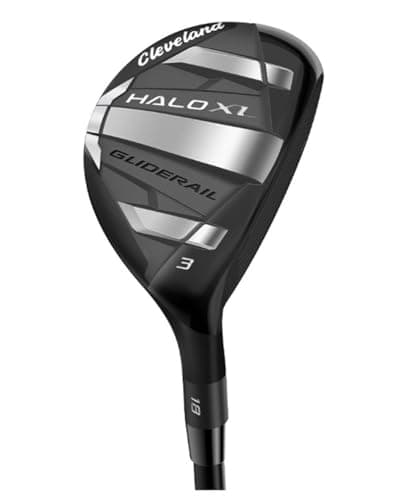
Cleveland Cleveland Launcher Halo XL Hybrid (24 degrees)
Cleveland Launcher Halo XL Hybrid (24 degrees)

The hybrid version of the irons we already rank for forgiveness — a rail sole that refuses to dig, in the loft most golfers actually need.

Golfers who hit the ground first
8.8
$179.99Amazon
02
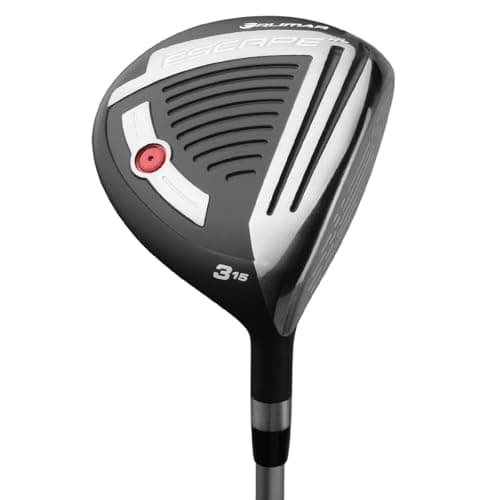
Orlimar Orlimar Escape HL Fairway Wood (5W, 19 degrees)
Orlimar Escape HL Fairway Wood (5W, 19 degrees)

A shallow-faced, high-launch 5-wood sold one loft at a time, at a price where the branded woods are still charging for the headcover.

The best fairway wood for the money
8.4
$84.99Amazon
03
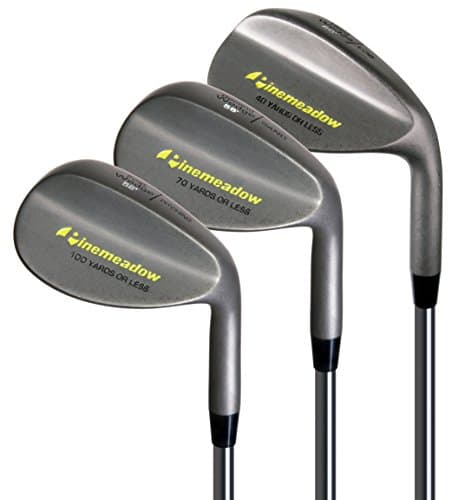
Pinemeadow Pinemeadow 3-Wedge Set (52/56/60)
Pinemeadow 3-Wedge Set (52/56/60)

Three properly gapped wedges for less than one wedge from a premium brand. If your bag has a pitching wedge and nothing else, start here.

Filling three wedge slots at once
7.0
$108.92Amazon

#ad · Live prices from the Amazon Product API, as of October 10, 2026. Where we have no verified live price, we show none — we would rather leave a gap than print a number that has rotted.

In detail

The picks, in full

01
Cleveland Cleveland Launcher Halo XL Hybrid (24 degrees)

Golfers who hit the ground first

Cleveland Launcher Halo XL Hybrid (24 degrees)

24 degreesRail soleGraphite shaftSenior flex
8.8/10

The hybrid version of the irons we already rank for forgiveness — a rail sole that refuses to dig, in the loft most golfers actually need.

Forgiveness
9
Launch
9
Turf interaction
10
Build quality
9
Value
7

Pros

  • The sole rails stop the leading edge digging on a fat strike, which is the miss this club is bought to survive
  • Matches the Launcher XL Halo irons already on our irons list, so the set flows
  • Cleveland's stock graphite shaft is a genuinely decent one, not a filler

Cons

  • Costs more than both house-brand hybrids on this page
  • The rails are visible at address and some players hate the look

Don't buy this if…

…you strike your long clubs cleanly off tight lies. You are paying for a sole design built to rescue fat shots you do not hit.

$179.99View on Amazon

$199.9910% off

Price as of October 10, 2026. Prices change — Amazon's is the one that counts.

#ad · we may earn a commission from this link to Cleveland Launcher Halo XL Hybrid (24 degrees)

02
Orlimar Orlimar Escape HL Fairway Wood (5W, 19 degrees)

The best fairway wood for the money

Orlimar Escape HL Fairway Wood (5W, 19 degrees)

19 degrees (5-wood)42 inches, 150cc headEscape Ultralight graphiteLite or Regular flex
8.4/10

A shallow-faced, high-launch 5-wood sold one loft at a time, at a price where the branded woods are still charging for the headcover.

Forgiveness
8
Launch
9
Turf interaction
8
Build quality
7
Value
10

Pros

  • Orlimar publishes the entire ladder — eight woods from 15 to 37 degrees, each with its own length and head volume — so you buy the gap you actually have instead of the club the brand wants to sell you
  • Orlimar states that the shallow high-launch profile and rear weight port shift the center of gravity to promote a higher launch, controlled spin and a soft landing — exactly what a fairway wood is bought to do
  • The progressive internal heel weighting is a stated draw bias, which is the correct bias for the miss most amateurs actually have

Cons

  • The house-brand Escape Ultralight shaft has no published weight or torque, so you cannot fit yourself into it on paper the way you can with the Cleveland or the Tour Edge
  • Only two flexes exist in this family — Lite and Regular — so a fast, aggressive tempo has nowhere to go
  • Orlimar sells direct and through discounters, so the same club can carry noticeably different prices in the same week

Don't buy this if…

…you swing hard. There is no stiff flex in this family, and overpowering an ultralight shaft costs you both direction and the launch you bought the club for.

$84.99View on Amazon

$99.9915% off

Price as of October 10, 2026. Prices change — Amazon's is the one that counts.

#ad · we may earn a commission from this link to Orlimar Escape HL Fairway Wood (5W, 19 degrees)

03
Pinemeadow Pinemeadow 3-Wedge Set (52/56/60)

Filling three wedge slots at once

Pinemeadow 3-Wedge Set (52/56/60)

52/56/60 setSteel shaftsOversized face areaRight-hand regular
7.0/10

Three properly gapped wedges for less than one wedge from a premium brand. If your bag has a pitching wedge and nothing else, start here.

Spin
5
Forgiveness
8
Feel
6
Durability
6
Value
10

Pros

  • Buys you the whole short-game gap ladder in one go instead of one club at a time
  • Pinemeadow advertises an unusually large face area, which is exactly what a mid-handicapper wants out of bad lies
  • Consistent shafts and grips across all three, so the set feels like a set

Cons

  • Grooves and finish are basic — this is value engineering, not tour engineering
  • Sold in common right-hand regular-flex configurations only

Don't buy this if…

…you only need one wedge. Buying three at once is the whole value argument here; for a single 56, the Wilson Harmonized is the cheaper, better-known club.

$108.92View on Amazon

$118.098% off

Price as of October 10, 2026. Prices change — Amazon's is the one that counts.

#ad · we may earn a commission from this link to Pinemeadow 3-Wedge Set (52/56/60)

How we picked

We do not run a testing lab

We compiled the published specifications, did the cost-per-round and value math, and read the independent robot and launch-monitor data — then scored each product against a published rubric. The scores are judgments from documented research — they are not measurements we took, because we do not have a lab and we are not going to pretend we do. Where a number came from someone else's lab, we name them and link them in Sources.

Questions

Frequently asked

How far does an average golfer hit each club?
A 20-handicap man averages about 225 yards with a driver, 195 with a 3-wood, 146 with a 7-iron and 108 with a pitching wedge, from Shot Scope's tracked on-course data. A 20-handicap woman averages about 174 with a driver and 107 with a 7-iron.
How far should a beginner hit a 7-iron?
Tracked amateur data puts a 25-handicap at about 132 yards and a 20-handicap at about 146 yards with a 7-iron, total distance. Most beginners are at or below the 25-handicap figure, and that is normal rather than a problem.
Are golf club distance charts accurate?
They are accurate as averages, and useless as targets. Most charts online are built from tour or launch-monitor numbers, which is why they read 20 to 40 yards long. Use a chart to check whether your assumptions are fantasy, then play to your own measured numbers.
How many yards should there be between golf clubs?
Roughly 10 to 15 yards per club through the irons for most amateurs, as evenly spaced as you can get them. The useful output of a distance chart is the gaps, not the yardages.
Is carry or total distance used in distance charts?
The figures on this page are total distance, including roll, because that is how Shot Scope records on-course shots. Your carry numbers are shorter, which matters most on soft turf and in cold weather.

Keep reading

Receipts

Sources

We do not run a testing lab, and we do not pretend to. Where a measured number came from someone else's lab or robot, we name them and link them. Where we could not verify something, we say so on the page rather than quietly leaving it out. Read our full method.