Modern pitching wedges run 43 to 46 degrees. Gap wedges sit between 46 and 52, sand wedges at 54 to 56, lob wedges at 58 to 62. If you own a game-improvement iron set, check the pitching wedge loft before you buy another wedge — because the number on that one club determines every other wedge in your bag.
The chart
| Wedge | Typical loft | Marked | Job |
|---|
| Pitching wedge | 43–46° | PW, P or 10 | Full-swing approach; the longest wedge in the bag |
| Gap / approach wedge | 46–52° | GW, AW, A or the loft | Fills the hole a strong pitching wedge creates |
| Sand wedge | 54–56° | SW or the loft | Bunkers, and the standard greenside pitch |
| Lob wedge | 58–62° | LW or the loft | Short, high shots over something |
The loft ranges above are the ones GOLF.com's equipment desk publishes: modern-day pitching wedges range anywhere from 43 to 46 degrees, and a typical gap wedge has anywhere between 46 and 52 degrees of loft. The letters are the problem — a wedge stamped "SW" could be 54 or 56 degrees depending on who made it, which is why every wedge worth buying now has the number stamped on the sole instead.
Why your pitching wedge got stronger
For decades a pitching wedge was about 48 degrees. Then the distance race arrived. Iron manufacturers discovered that the easiest way to make a 7-iron fly further than a rival's 7-iron was to give it less loft — so lofts crept down through the whole set, and the pitching wedge went with them. A game-improvement set's pitching wedge today can be as strong as 43 or 42 degrees.
That is not a scandal; the club still works, and the stronger loft is part of why your irons genuinely do go further than the ones you grew up with — our game-improvement irons guide explains how much of modern iron distance is loft and how much is design. But it does leave a specific, measurable hole: the gap between a 44-degree pitching wedge and a 56-degree sand wedge is twelve degrees, which for most golfers is 25 to 30 yards of unserved distance. That hole is why the gap wedge exists as a category at all.
The gapping rule
Space your wedge lofts as evenly as you can, in 4 to 6 degree steps, and start from your pitching wedge rather than from the lob wedge. GOLF.com's worked example is the cleanest version of the rule: a golfer with a 44-degree pitching wedge should look at a 48 or 50-degree gap wedge, then a 54 or 56-degree sand wedge, then a 58 or 60.
| Your PW | Gap wedge | Sand wedge | Lob wedge |
|---|
| 43–44° | 48–50° | 54–56° | 58–60° (optional) |
| 45–46° | 50–52° | 56° | 60° (optional) |
| 47–48° | 52° | 56° | 60° (optional) |
Note how little the sand wedge moves. That is because 56 degrees is the de facto standard and almost everything is designed around it. The club that actually changes with your iron set is the gap wedge, and it is the one golfers most often skip.
How many wedges do you actually need?
Three including the pitching wedge is right for most amateurs: PW, a gap wedge, and a 56. Add a lob wedge only if you can genuinely hit one — a 60-degree club is the least forgiving in the bag and a thin strike with it goes thirty yards past the hole.
The honest value case: a fourth wedge costs you a slot you could give to a hybrid, and the distance chart shows the top of the bag is where most amateurs have the bigger hole. If you have 14 clubs and a 30-yard canyon between your 3-wood and your longest iron, a second lob wedge is the wrong purchase.
What to look for when you buy a wedge
- The loft stamped on the sole.Buy by number, never by letter. If a listing only says "SW", find the spec sheet or buy something else.
- Bounce, roughly.Bounce is the angle between the leading edge and the ground. More bounce (10–14°) helps on soft turf and in fluffy sand and forgives a steep swing; less bounce (4–8°) suits firm turf and a shallow swing. If you do not know which you are, mid-bounce is the right default and is what nearly every value wedge ships with.
- Fresh grooves. Grooves are the one genuinely consumable thing on a wedge. A worn 56 spins dramatically less than a new one, which is the best argument for buying value wedges and replacing them rather than buying premium ones and keeping them for a decade.
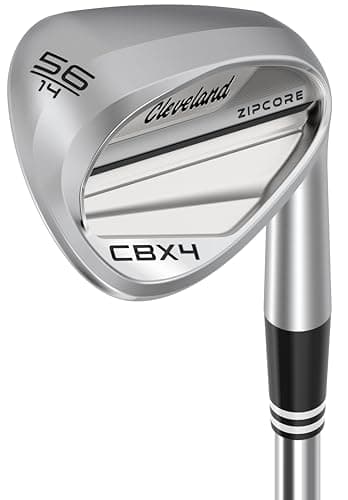
- A cavity back, if you are a mid or high handicapper. A cavity-back wedge such as the Cleveland CBX4 is markedly more forgiving on a thin or heel strike than a tour-style blade wedge, and you give up nothing you can use.
The three wedges on this page
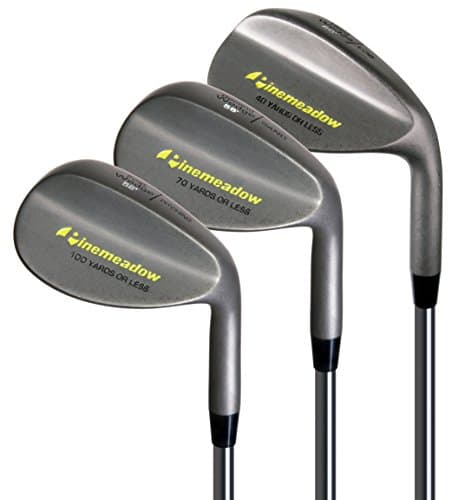
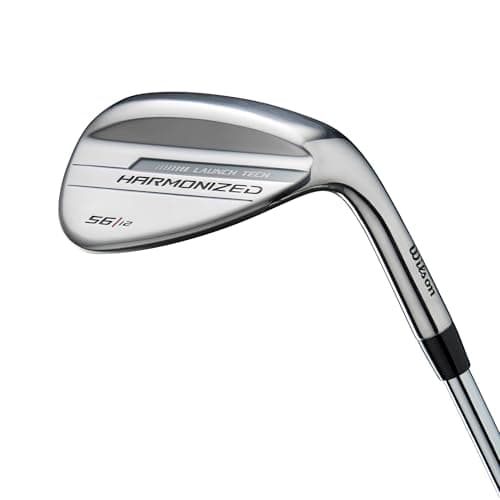
Wilson Harmonized is the single-wedge pick: real grooves and a proper sole grind at a price that makes replacing it when the grooves go a non-event. The Pinemeadow 3-wedge set (52/56/60) is the pick if you are filling every slot at once — three correctly gapped wedges for roughly the price of one brand-name club, which is exactly the kind of trade this site exists to point out. The Cleveland CBX4 ZipCore is the step up for a mid handicapper who wants real greenside spin with cavity-back forgiveness behind it.
Our full ranking with live prices is on best golf wedges, and if your pitching wedge is the one club you are unsure about, check it against the iron sets we rank — most publish their full loft chart.