You can use a hunting rangefinder for golf, and it will give you accurate yardages. What it will not do reliably is pick a thin flagstick out from the trees behind it — which is the entire job on a golf course. Given that value golf lasers now start around the same money as a decent hunting unit, the cross-over case is much weaker than it used to be.
The hardware is genuinely the same
Both device types fire an infrared laser pulse, time how long it takes to return, and convert that to a distance. The emitter, the receiver and the timing circuit are common components. A $120 hunting laser and a $180 golf laser are frequently built on the same platform in the same factories.
Accuracy is therefore comparable — both are typically specified to within a yard. If someone tells you golf lasers are inherently more accurate, that is marketing rather than physics.
The one difference that actually matters: target priority
When a laser pulse goes out, it hits multiple things and multiple returns come back. Which return the device reports is a firmware decision, and it is exactly opposite between the two categories.
- Golf: first-target priority. The device reports the nearest object that produced a return, because the flag is in front of the trees. Golf units add a confirmation — a vibration or a visual lock — to tell you it found a small nearby target and not the background.
- Hunting: distant-target priority. The device reports the furthest return, and specifically ignores near-field clutter like branches and grass in the foreground, because the animal is behind them.
Point a hunting rangefinder at a flag with a treeline behind it and it will very often hand you the distance to the trees. That is not a defect; it is the device working exactly as designed, for the wrong sport.
When a hunting rangefinder is genuinely fine for golf
There are real cases, and we would rather name them than pretend the answer is always no.
- You already own one. Obviously. Use it before spending anything, and see how you get on.
- Open, links-style courses. With nothing behind the green, there is no background for the laser to grab. Target priority stops mattering.
- You range to bunkers, trees and layup points rather than flags. Large objects are easy targets for either device.
- Some hunting units have a switchable mode.A number of mid-range hunting lasers offer a "first target" or "brush" mode. If yours does, it will work on flags reasonably well.
The three golf-only features you would be giving up
Flag lock with confirmation. The vibration or on-screen lock that tells you the reading is the flag. Without it you are guessing whether the number is the pin or the pine tree, and a 15-yard error is a lost shot.
Slope. Golf units calculate a plays-like distance for elevation change. Hunting units generally have angle compensation aimed at steep downhill shots — related, but calibrated for a different purpose. Whether you need it at all is covered in our slope guide.
A magnetic cart mount. A small thing that turns out to matter a lot over four hours. Most golf units have one; hunting units never do.
Going the other way: golf lasers for hunting
Worth stating because the search goes both ways. A golf laser used for hunting will tend to report the distance to the brush in front of the animal rather than the animal, and most golf units have shorter maximum ranges than hunting equivalents. It is the same mismatch, reversed.
What the money actually looks like now
This comparison was a live question when golf lasers cost $400. It is much less live now. A slope-capable golf rangefinder with flag lock and a magnetic mount can be had for well under $200, which is squarely in mid-range hunting-laser territory — and our under-$200 roundup is entirely built from that tier.
So the honest recommendation: if you already own a hunting rangefinder, use it and see. If you are choosing what to buy, buy the golf one. The price gap that made this question interesting has largely closed, and target priority is not a feature you can work around.
What we would actually buy
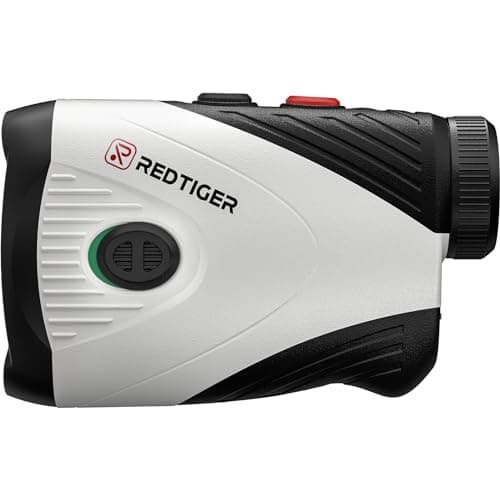
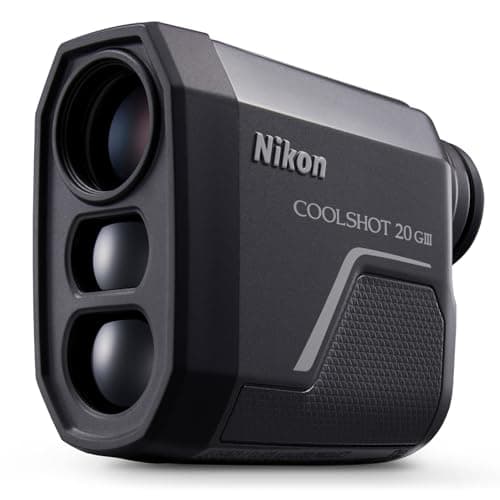
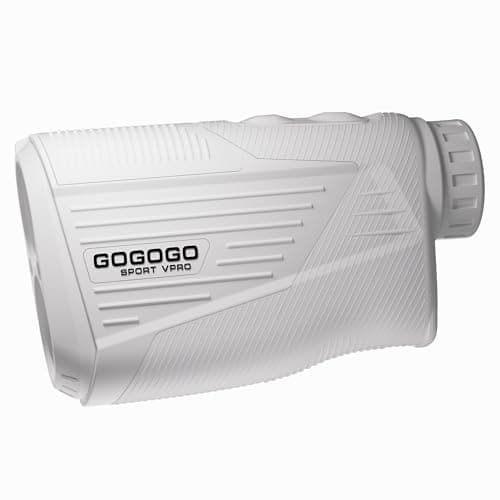
The Gogogo Sport Vpro is the value answer — flag lock with vibration, switchable slope, and a magnetic mount, at hunting-laser money. The REDTIGER is the alternative at a similar price if the Gogogo is out of stock. And if optical quality is what you actually miss about your hunting glass, the Nikon COOLSHOT 20 GIII is the one on this page with genuine Nikon optics behind it.