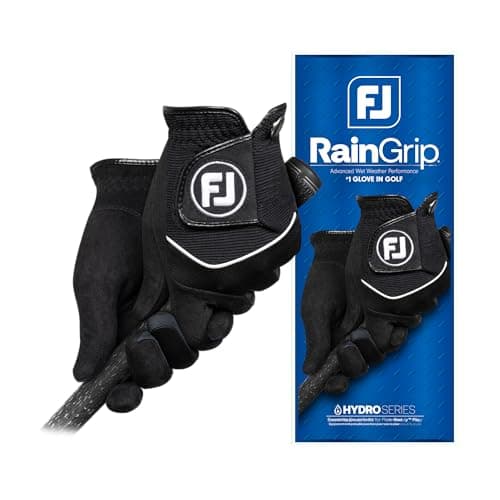
Buy a pair — two gloves, both hands — with a synthetic or microfiber suede palm, and keep them in the bag permanently for the days you need them. A rain glove is not a wet-weather version of your normal glove. It is a different material doing the opposite thing: where cabretta leather turns slick as it wets and stiff as it dries, a suede knit palm absorbs water and grips harder for it. That is the entire category, and it is the reason a fourteen-dollar leather glove is the wrong purchase for a wet round at any price.
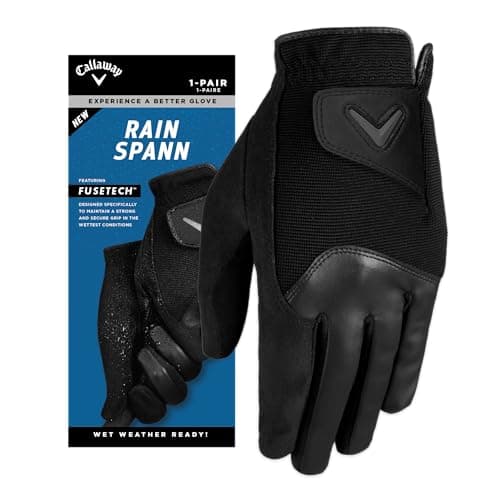
The other half of the answer is the part golfers get wrong: rain soaks both hands. A single glove leaves your trail hand on a wet grip, which is where the club actually slips at the top of the backswing. FootJoy states it flatly on its own listing — RainGrip gloves are sold in pairs — and Callaway says the same about the Rain Spann. Buying one is buying half a solution.
How we ranked these
We do not run a lab, we have not measured grip force on a wet grip, and nobody credible has published a rain-glove test with numbers in it. So this page is ranked on what each maker actually states about its own glove — the palm fabric by name, the back-of-hand material, the closure, the sizing, and whether the listing confirms you get two gloves — and on the places where a listing states nothing at all. Our methodology page sets out that standard: published beats implied, and silence gets named rather than filled in.
- Does it say what the palm is made of?Autosuede, synthetic suede, microfiber suede — the fabric is the product. A glove sold on “wet performance” with no material named is selling you an adjective.
- Does it confirm a pair? Two of these listings say so outright, one says nothing either way, and one is a single glove sold by hand. That difference is worth more than any spec here.
- Fit options. Rain gloves are cut looser than leather and sizing is coarser. Cadet cuts and half sizes genuinely matter, because a glove with slack in the fingertips is a glove that moves on the grip.
- Does the hand breathe? Rain gloves are at their worst between showers, when the rain stops and your hands are still inside wet knit. Only one maker here publishes anything about the drying fabric.
- Cost per pair. Not per glove. A single-glove price next to a pair price is the oldest trick in this aisle.
Why wet suede grips harder
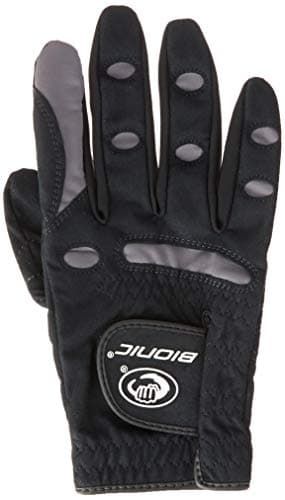
Bionic puts the mechanism in one line on its own listing: the suede microfiber becomes tackier when wetto reduce club slippage. That is the clearest statement any brand here makes, and it describes what is happening physically — a napped synthetic surface, soaked, has thousands of raised fibers that bind against rubber instead of sliding across it.
FootJoy describes the same effect from the other direction: a water-absorbent Sure-Grip Autosuede knit palm that provides improved fit and grip in rainy conditions, conforming to both your hand and the club. Note the word absorbent. A rain glove is not trying to keep water out; a waterproof palm would just hold a film of water between glove and grip. It is trying to take the water into the fabric so that the surface touching the rubber is textured instead of wet.
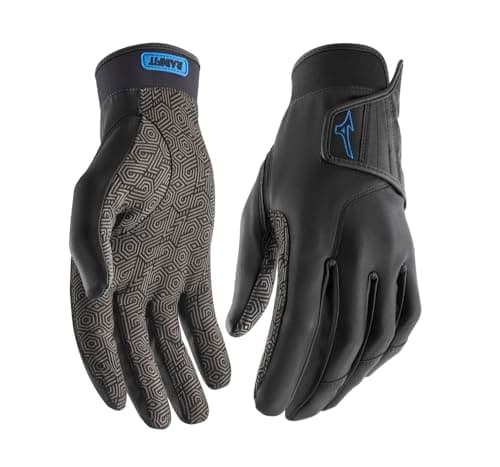
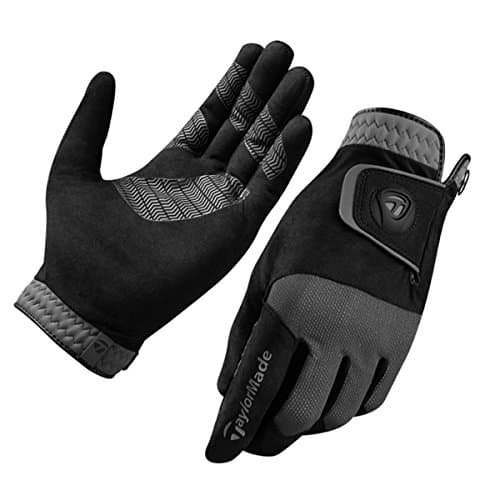
Mizuno adds the only mechanical grip feature on this page — a foam-resin 3D-printed “1906” pattern on the synthetic suede palm, stated to enhance grip in adverse conditions. Callaway specifies a microfiber suede full palm for grip in the wettest conditions, and TaylorMade an ultra-thin microfiber suede. Five gloves, five variations on one idea, all of them published by the maker.
What rain does to a leather glove
The flip side explains why this is a second pair and not an upgrade. Cabretta leather is thin sheepskin, and it is the best material in golf for feel, which is why nearly every glove worth owning in dry weather is made of it. Wet, it does two bad things. First it goes slippery, because the smooth grain surface holds a water film. Then, as it dries, the leather contracts and hardens — and a glove that has been soaked and dried once is stiffer, shinier and noticeably worse than it was. Do that two or three times and the glove is finished.
So the arithmetic for a value buyer is better than it looks. A rain glove pair costs about what two good leather gloves cost, and it saves the leather gloves from the rounds that destroy them. If you play through wet weather at all, the pair in the bag is cheaper than the leather it replaces on those days. Our best golf gloves for the money page covers the dry-weather side of the decision, and leather versus synthetic golf gloves runs the material comparison properly.
Rain gloves versus gloves for sweaty hands
These sound like the same problem and are not quite. A rain glove is built for external water arriving faster than the fabric can shed it; a glove for sweaty hands is built for moisture coming from inside, continuously, over four hours. The overlap is real — a suede palm that grips wet also grips sweaty, which is why rain gloves are a legitimate answer for very humid climates — but the trade-offs differ. Rain gloves run warmer and bulkier, and a hot hand sealed in synthetic knit on a dry August afternoon is not a pleasant experience.
If heat and sweat are your year-round problem rather than rain, start with our best golf gloves for sweaty hands page, which deals with breathability and mesh backs. If the problem is three wet rounds a season, buy a rain pair and leave it in the bag.
Sizing: looser, coarser, and worth checking twice
Rain gloves are sized more coarsely than leather ones. Pairs commonly come in Medium, Medium/Large and Large rather than the full ladder of cadet and regular sizes you get in cabretta, which means there is a good chance your exact size does not exist in the model you want. That matters more here than in a dry glove: a rain glove works by conforming to the hand and the grip, and slack fabric at the fingertips undoes the whole mechanism.
Two specifics from this page. Callaway's Rain Spann listing here is the cadetcut — shorter fingers on the same palm width — which is genuinely hard to find in a rain glove and exactly right if that is your hand. If it is not, the regular cut is a different listing and you want that one instead. And the Bionic AquaGrip is sold as a single glove, by hand and by size, which is useful if you only want to try the material and a problem if you expected two. If you are unsure what size you take at all, our golf glove sizing guide walks through measuring it properly.
What the listings do not tell you
Three gaps worth knowing about before you buy, because none of the five makers here closes all of them.
- Drying.Only FootJoy publishes anything about it — Quick-Dry II along the back of the fingers. Everyone else is silent, and the back of the hand is where a rain glove gets uncomfortable once the rain stops.
- Durability.Nobody states a wear rating. What we can say from the published designs: a printed resin palm pattern is a wear point, and Bionic's patented pad system is specifically described as adding durability in areas prone to wear.
- What the trade names mean.FUSETECH, Opti Fit, Quick-Dry II, Taction — these are brand words, not specifications. We quote them because they are what the maker said; we do not pretend they tell you anything testable.
And one claim worth singling out, because it is the emptiest thing we read while writing this page. TaylorMade's Rain Control listing offers “perform when others won't” and “claim made versus stratus wet in wet conditions” — a dangling comparison with no stated test, no stated condition and, as published, no meaning. The glove is ranked here on its published ultra-thin microfiber suede construction and its pair sizing, not on that.
Playing the rest of the round wet
Gloves are one of four things that decide whether a wet round is playable. The others are staying dry from the shoulders down, keeping your feet from sliding, and keeping grips and faces usable — which is a towel problem. Our best golf rain gear page handles the first, best waterproof golf shoes the second, and best golf towelsthe third — including why one soaked towel actively costs you wedge spin.
The short version
Buy the FootJoy RainGrip pair. It is the category standard, it is the only listing here that publishes the palm fabric, the drying fabric, the closure and the pair count, and that is worth more than a few dollars. Buy the Mizuno pair if you want the printed grip pattern and a neoprene cuff, and confirm the count on the listing first. Buy the Callaway Rain Spann if you need a cadet cut, which almost nobody offers in a rain glove. Buy a single Bionic AquaGrip only to try the material. And skip the most expensive pair here unless thin feel is the thing you cannot live without — because nothing published about it justifies the gap.
How to use a rain glove properly
Put them on before you need them. The common mistake is playing four wet holes in leather, ruining the leather, and then changing into the rain pair with wet hands. If the forecast is wet, start in the rain gloves — they work dry, they just feel bulkier than you would like.
Then keep them wet, not dried out. This is genuinely counterintuitive and it is the one piece of technique in the category: a rain glove at its best is damp. If the rain stops and the gloves start drying stiff mid-round, a quick dunk brings the grip back. Do not stuff them under an umbrella to dry and then expect them to perform.
Between rounds, the opposite. Dry them flat, out of the bag and away from heat. A radiator or a car dashboard will cook a synthetic palm the same way it hardens leather, and a rain glove balled up wet in a side pocket for a week comes out smelling like a pond.
Pair pricing, decoded
The single most common way to overpay in this category is to compare a single-glove price against a pair price. Three of the five entries here are confirmed pairs, one is a single glove sold by hand, and one is listed as plural without actually saying so. Before you buy, read the listing title and the bullets for the words “pair” or “worn on both hands.” If neither appears, assume one glove and check again.
Worth knowing for the value math: a rain pair costs roughly what two decent cabretta gloves cost, and it protects those gloves from the rounds that destroy them. Across a season with even a handful of wet rounds, the pair is the cheaper decision — which is a rare thing to be able to say about a weather-specific purchase.
Palm fabrics, in the makers' own words
- FootJoy.“Water absorbent Sure-Grip Autosuede knit palm,” with Quick-Dry II along the back of the fingers and a ComforTab closure. The most complete published description on this page.
- Mizuno. Synthetic suede palm plus a 3D-printed foam-resin pattern stated to enhance grip in adverse conditions, with a neoprene wristband.
- Callaway.“Microfiber Suede Plus Full Palm Extreme Grip in Wet Conditions,” with FUSETECH and Opti Fit materials — trade names with nothing published behind them.
- Bionic.“Suede microfiber material that becomes tackier when wet to reduce club slippage,” plus a patented pad system that evens out the hollows of the palm.
- TaylorMade.“Ultra-thin microfiber suede,” form-fitting. The thinnest feel here, and the least informative listing.
What a rain glove will not fix
Grip condition. A rain glove grips a worn, shiny, hardened rubber grip better than a bare hand does, and worse than it grips a fresh one. If your clubs slip in the wet and the grips are three seasons old, the gloves are the second purchase and new grips are the first — our best golf grips page covers the cheap fix, and how long golf clubs last explains why grips are the component that wears out first on any set.
It also will not fix standing water on the face or in the grooves. That is a towel job, and the published wedge research is blunt about the cost: a new wedge lost about 30% of its full-swing spin from one spray of water. Rain gloves keep your hands on the club; a wet half and a dry half of a towel keep the clubface doing its job.