A golf glove should fit like a second skin: snug across the palm, no loose fabric you can pinch at the fingertips, and the closure fastened without straining. If you can pinch material at the end of a finger it is too big — and too big is why gloves wear through at the thumb and slip when damp. Two numbers get you there: the width of your hand and the length of your fingers.
The two measurements
Hand width is the circumference around your palm at the widest point, just below the knuckles, with your hand flat and the thumb out of the way. Take it with a tape measure on your glove hand — the left for a right-handed golfer. That number drives the size: small, medium, large and so on.
Finger length is the sanity check. Measure from the base of your middle finger to its tip. Hands with the same palm circumference can carry very different finger lengths, and that mismatch is what the second half of the sizing system exists to solve.
What cadet sizing actually is
A cadet glove is built for a wide palm with shorter fingers: roughly the same palm circumference as the standard size, with the fingers cut shorter. It is one of the most common hand shapes in golf and one of the least-known options at the counter, which is why so many golfers end up in a standard glove that fits the palm and bunches at the tips.
The tell is simple. If a glove fits your palm well but leaves slack at the fingertips, you want the cadet version of that size. If the fingers fit and the palm is tight, you need to go up a size rather than into a cadet.
How snug is snug enough
- The palm should have no wrinkles or folds when your hand is flat. Slight tension across the back is correct and will relax within a round or two.
- The fingers should reach the end with no air gap. Pinch the tip of the middle finger: a millimetre or two of give is fine, a fold of fabric is not.
- The closure should fasten comfortably somewhere in the middle of its range. If you are pulling it to the very end of the strap, the glove is too big.
- Making a fist should not pull the glove off your palm or cut off circulation. If it does either, you are a size out.
Why too big is the expensive mistake
A loose glove moves against your hand on every swing, and that movement is abrasion. It concentrates at the thumb and the heel of the palm, which is exactly where gloves tear. So a glove half a size too big does not just grip worse — it wears out faster, which means you buy more of them. People who think gloves are a rip-off are quite often people wearing the wrong size.
A glove slightly too small is the less costly error. It will feel tight for a round and then ease, because both leather and synthetic fabrics relax. Leather relaxes more, which is partly why leather gloves are often sold to fit snug out of the packet.
Leather and synthetic size differently
Cabretta leather stretches and moulds to your hand, so a leather glove that is tight on day one is often perfect by day three. Synthetic and blended gloves hold their shape far more, so what you feel in the packet is close to what you will be wearing all season. If you are switching material, re-check the fit rather than assuming your size carries over — and expect a synthetic to feel slightly less contoured at the same nominal size.
Brands also differ. There is no industry-standard hand, so a medium from one maker is not guaranteed to match a medium from another. Where you can, buy the same brand once you know what fits; where you cannot, check that brand's own published size chart rather than a generic one.
One glove or two, and which hand
Golfers wear one glove on the lead hand — left for a right-handed player, right for a left-handed player — because that is the hand doing the holding. Listings usually describe the glove by the player's handedness, so a right-handed golfer buys the glove marked for right-handed players and receives a left-hand glove. Read the listing, because this trips up a lot of first orders.
Once you know your size, the gloves below are the ones we would buy, and the full glove roundup has the rest of the field with live prices.
How material changes the size you order
| Glove | Material | Fit character | Sizing note |
|---|
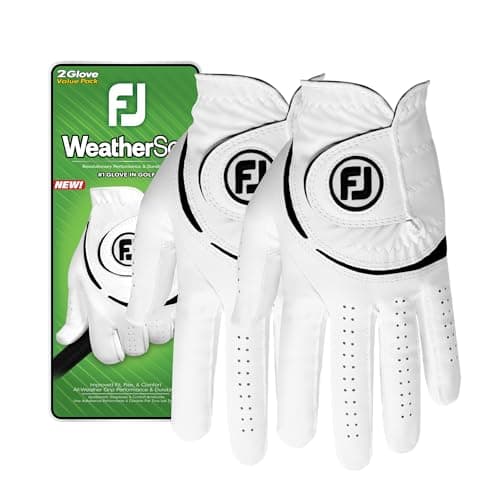
| FootJoy WeatherSof | Synthetic blend | Slightly less contoured than a tour glove | Holds its shape — buy the size that fits in the packet |
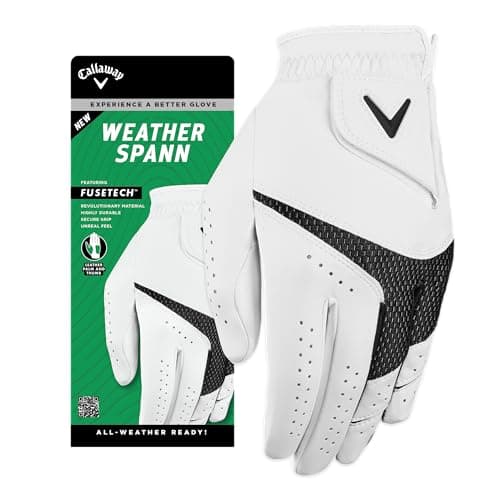
| Callaway Weather Spann | Premium synthetic | Softer, closer to leather | Some give, but less than cabretta |
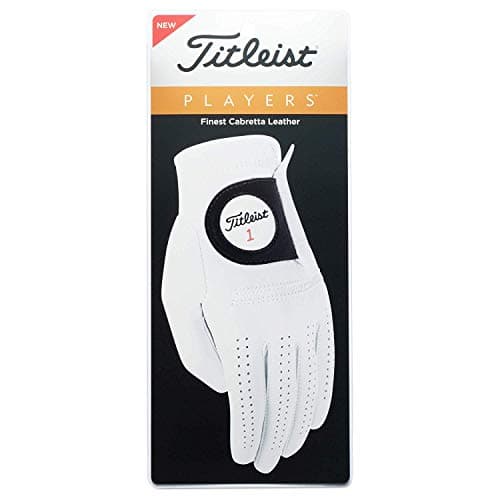
| Titleist Players Glove | Cabretta leather | Thin, precise, tour-style | Leather moulds — snug out of the packet is correct |
The fit descriptions there come from the product listings and the makers' own positioning, not from a fitting study. We have not measured hands or gloves in a lab; what we have done is line up what each listing claims against the way these materials behave.
Two things worth knowing before you order a multipack
A 2-pack is the best value in gloves and the worst thing to get wrong — two gloves in the wrong size is twice the mistake. Buy a single glove first, confirm the size over a couple of rounds, then buy the multipack. And if your hands sweat, read our gloves for sweaty hands page before you choose the material, because fit and material interact: a damp glove that is half a size large slips far more than a dry one.