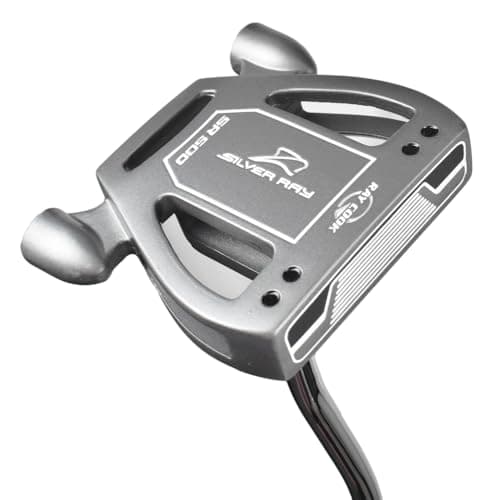
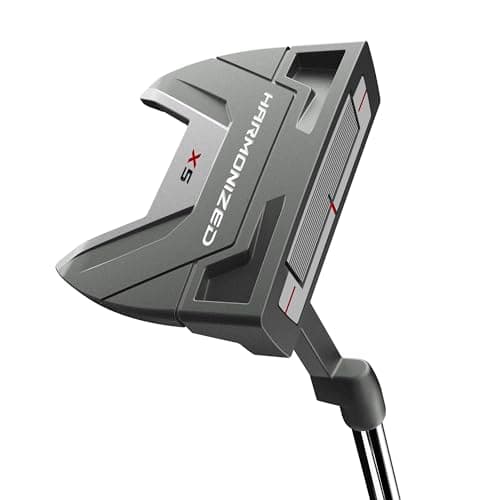
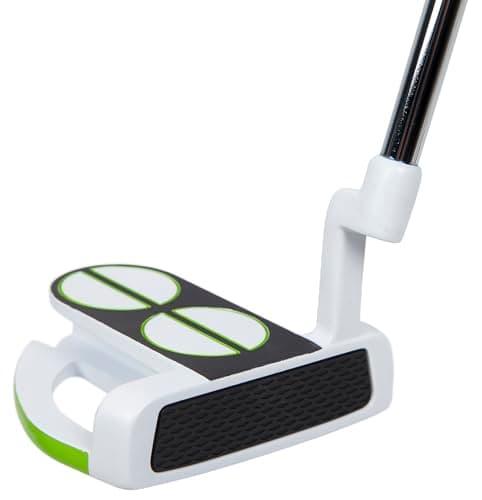
The Pinemeadow PGX SL is the mallet to buy: a high-MOI head with bold alignment lines, at roughly a quarter of what the brand-name mallets cost. If you want a traditional mallet profile rather than a modern slab, the Ray Cook Silver Ray SR500 has been doing that job for decades. Our budget pick is the Wilson Harmonized X5 — the cheapest mid-mallet here that arrives at a standard 34 inches with an oversize grip already fitted.
This page exists because the putter aisle sorts itself by price and brand, and the question that actually matters is shape. A mallet and a blade are different tools with different miss patterns, and most amateurs are better served by one of them. If you have not decided which camp you are in yet, start with our best budget putters page, which ranks the whole field by price. This one assumes you have already decided you want a mallet.
Why a mallet forgives what a blade punishes
A mallet moves mass back and out to the perimeter of the head. That raises the moment of inertia — the head's resistance to twisting — so a putt struck off the toe or the heel loses less ball speed and starts closer to your intended line. The effect is small on a six-footer and large on a thirty-footer, which is exactly where amateurs leave three-putts.
A blade concentrates the mass behind a smaller face. It gives a better golfer more feedback and tends to swing on a more natural arc, which is why tour players who rotate the face through impact still use them. Cleveland's Huntington Beach Soft 2 blade is on our budget-putters page for precisely that player. If you miss the center of the face often, the mallet is the better club and the feedback is a cost, not a feature.
The three mallet shapes, and what each one is for
- Full mallet. The big, squared-off or fang-style head. Highest forgiveness, boldest alignment, usually face-balanced so it wants to move straight back and straight through. The PGX SL is this shape.
- Traditional mallet.A rounded, smaller-footprint head — the shape that existed long before “high MOI” was a marketing phrase. Less visually intrusive, still more forgiving than a blade. The Silver Ray SR500 is this shape.
- Mid-mallet. The compromise: a half-moon or small-wing head that sits between the two. The Harmonized X5 is this shape, and it is the easiest of the three to get on with if you are coming off a blade.
How we picked these
We do not run a putting lab and nobody here rolled a hundred putts on a SAM PuttLab. What we did was read what each listing publishes — head shape, face treatment, standard length, what comes in the box — and rank on how well the design serves an amateur who misses the center of the face. Our methodology page states the rule.
- Perimeter weighting. The whole reason to buy a mallet. A head that is mostly a face with a bit of metal behind it is a blade wearing a mallet costume.
- Alignment you can actually use. High-contrast lines or a sightline that frames the ball. This is the half of putter performance nobody measures and everybody feels.
- Published length, and whether it suits you. The most ignored spec in putting. A 35-inch putter on a 5-foot-7 golfer forces the hands away from the body and the eyes inside the ball.
- What is in the box. A headcover and a usable grip are real money. Two of these four include a headcover; one includes an oversize grip.
Published specs, side by side
These are the figures the makers state. Live prices, with a per-row buy link and the date each price was checked, are in the Quick Picks table above — we never type a price into prose.
| Putter | Head | Face | Standard length |
|---|
| Pinemeadow PGX SL | Full mallet | Insert | Not published |
| Ray Cook Silver Ray SR500 | Traditional mallet | Soft insert | 35 in |
| Wilson Harmonized X5 | Mid-mallet | Micro-injection | 34 in |
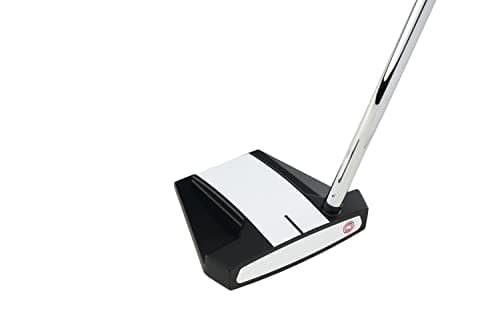
| Odyssey White Hot Versa (Twelve S) | Winged mallet | White Hot insert | 34 in |
The length trap
Standard putter length is 34 or 35 inches because that is what fits the middle of the adult range, not because it fits you. The quick check: set up as you normally would, let your arms hang, and see whether the grip end points at your belt buckle with your eyes over or just inside the ball. If you are reaching out for the handle, the putter is too long, and the fix is buying a shorter one rather than cutting this one down — shortening a shaft changes the head weight you feel through the stroke. The Silver Ray ships at 35 inches, which is a genuine caveat for anyone under about 5 foot 9. Our club length for your height guide covers the whole bag.
The honest version of this purchase
A better putter will not lower your scores on its own. Thirty minutes a week on a mat will, and it costs less than any putter on this page — which is why our best putting mats under $100page exists and why the Odyssey's own entry here says so plainly. What a mallet does buy you is a smaller penalty on the putts you mis-strike, and bolder alignment on the ones you line up badly. For a golfer who three-putts from distance, that is worth real money. For a golfer who lips out from six feet, the money belongs on practice.
The cheapest alignment upgrade of all is not a putter head at all: a line drawn on the ball, which costs a few dollars from the stencils on our ball markers and divot tools page. That page also covers what the Rules allow a marker to do, which matters if you are tempted by one with a line on it.
If you have already settled on a head shape, our best mallet putterspage ranks just the mallets on perimeter weighting, alignment and published length — and explains the one putting stroke a face-balanced mallet actively fights.
A chipper and a forgiving putter solve adjacent problems. If the second one is yours, our best mallet putters page covers why a mallet head forgives the miss a blade punishes.
Working to a hard ceiling rather than to value? Our best golf irons under $500 page applies that number to the live price feed and drops the two sets here that sit above it.
If the irons are the only part you are replacing, our best golf irons under $500 page spends the whole budget on iron sets instead of spreading it across a bag.
Flex matters most in the value bracket, because several sets come in exactly one build. Our best golf irons under $500 page lists which flexes each set actually offers, and our clubs for seniors over 70 page builds a whole bag around getting the flex right.
Past seventy the selection rule changes again: total weight starts to matter more than head technology. Our best golf clubs for seniors over 70 page builds the bag club by club on grams and flex rather than brand.
If you are over seventy, the lighter builds matter more than anything on the face. Our clubs for seniors over 70 page starts with the driver and works through the rest of the bag by weight.