Skip to content
Club&Carry

The flagship · Golf Balls

The Best Golf Ball Retrievers

The only golf purchase that pays you back in golf balls. Buy the right reach and it clears its own price in a few rounds.

By Stephen V.Updated How we pick
#ad

We earn a commission when you buy through our Amazon links, at no extra cost to you. It never affects our rankings, and we say so when the cheaper product is the better buy. How this works.

Buy a 9-foot stainless retriever with a locking scoop and stop there. That covers the balls you can actually see, it fits in a bag pocket, and it costs less than a sleeve of premium balls. Only go to eighteen feet if your home course has open ponds you genuinely find your ball sitting in. And if the real problem is bending down fifty times a round, you want a 31-inch grabber, not a retriever — different tool, different job.

This is the one accessory in golf with a payback calculation attached. Every other thing you clip to a bag costs money and gives you convenience. A ball retriever costs money once and then hands you golf balls, for years, until you lose it or bend it. The only question worth answering is how much reach you need before the extra length stops earning anything — and that is a question about your course, not about the product.

How we ranked these

We do not run a lab and we have not fished a pond with all six of these. What we did is read what each listing actually states about reach, retracted length, shaft material and head mechanism, flag the places where a listing states nothing or contradicts itself, and rank on the two things that decide whether a retriever gets used: does it reach your balls, and does it fit in your bag. Our methodologypage spells out the same rule for every category here — a published figure beats a marketing adjective, and an absent figure gets said out loud rather than guessed.

  1. Reach, published in feet.Not “extra long.” The number, and whether the number is shaft length or maximum reach — those are different, and the better listings say which.
  2. Whether the head holds the ball. An open scoop on a nine-foot pole drops the ball about as often as it lands it. A locking cup or a gripping jaw is the single biggest difference in use.
  3. Retracted length. The spec that decides whether you own a retriever or own one that lives in the trunk. If it does not fit a bag pocket, you will not have it when you need it.
  4. Rust.This tool's whole job is going into water. Stainless is the claim to look for, and two of the listings here make it while a third contradicts itself about it.
  5. Reach per dollar. The value test, and the one the brand-name pick fails badly enough that we ranked it last.

How much reach do you actually need?

Start with where your lost balls actually are. Almost everything recoverable sits in one of three places: the first few feet of a water edge, where you can see it through the shallows; a bush, tree line or fence where you can see it but cannot get an arm in; and the far bank of a creek. All three are inside nine feet. That is why the 9-footer wins this page — not because it is the cheapest, but because the next nine feet of reach buy you access to balls you mostly cannot see anyway.

Eighteen feet changes the category only if your course has real ponds with clear, shallow margins. On that kind of hole a long retriever is genuinely a different tool: a ball five or six yards out stops being somebody else's. The cost is bulk. Every telescopic pole flexes more the longer it gets, an 18-footer needs two hands and some patience at full extension, and it does not disappear into a side pocket.

The in-between lengths — six feet, twelve feet — are where this category gets silly. Six feet barely beats your arm and a club. Twelve is a compromise that costs nearly as much to carry as eighteen. Pick the short one you will always have with you, or the long one that does something your arm cannot. There is no reason to buy the middle.

The head matters more than the pole

Everything in this category that goes wrong, goes wrong at the head. Golf Compendium's rundown of the category splits the designs into claw-grip and scoop types, and notes that scoop heads may have a manual ball lock, an automatic one, or none at all. That last option is the trap. A scoop with no lock is a dish on a stick: it works fine at three feet and starts dropping balls the moment the pole is long enough to wobble.

There are three mechanisms worth your money. An automatic locking scoop grabs the ball as you push down on it, which is what the 9-footer here does and the reason it beats cheaper tubes. A hinged locking cup does the same job with a lid and is what makes an 18-foot pole usable at all. And a single-piece gripping jaw— the I GOTCHA JAWZ design, with a co-molded rubberized surface and, in the maker's own words, no moving parts — removes the hinge and spring that are the failure points on everything else. That is the durability pick, and it costs accordingly.

Golf Compendium also flags weight at full extension as a real consideration for older golfers or anyone with wrist or hand pain, which is worth more attention than it usually gets: an 18-foot pole with a ball on the end of it is a long lever, and the hand holding it is doing all the work.

Is it legal to carry one?

Yes. A ball retriever is not a club, it does not count against the 14-club limit, and carrying one in your bag is treated the same way as carrying an umbrella. Golf Compendium states this plainly — retrievers are legal under the Rules of Golf, they are not one of your fourteen even when they have a club-style grip, and the only way they become a problem is if a competition writes a specific condition banning them.

Two practical caveats, because this is where golfers do get into trouble. First, recovering a ball is not the same as rescuing a shot: if your ball is in a penalty area you still take your penalty and your relief, and all the retriever saves is the ball's cash value. Second, pace of play is a real rule. Fishing a pond while the group behind waits is the fastest way to turn a free golf ball into an expensive social problem. Recover on the way past, not instead of playing.

The payback math, honestly

Here is the calculation nobody in this category runs for you. A retriever costs a fixed amount once. Every ball you pull out of a pond is worth whatever you would otherwise pay for a ball — and on a value-first site, that number is deliberately small. If you play the cheap end of the market, you need to recover a fair number of balls before the tool clears its own price. If you play a premium ball, a 9-foot retriever can pay for itself in a single good hunt.

Which points at something more useful than any pick on this page: the retriever is worth most to the golfer buying expensive balls, and the golfer buying expensive balls usually has a cheaper problem to solve first. Our are expensive golf balls worth it page runs that argument properly, and best value golf balls is where it lands. A retriever plus a cheaper ball is a much bigger saving than a retriever alone.

There is a second payback nobody advertises, which is the balls that were never yours. The scale of the supply is genuinely large: an estimate attributed to Danish Golf Union research and widely repeated puts the number of golf balls lost or discarded in the United States at around 300 million a year — a figure Earth911 notes dates to 2009 and is almost certainly low now. Those balls are the raw material for the whole recycled-ball industry, which is to say they are worth money to somebody. A retriever is how you participate in that economy for free. Our guide to whether refurbished golf balls are worth it explains what happens to the ones you do not get first — and why a pond ball you fished out yesterday is in better shape than most of what gets resold.

Three different tools, one aisle

Amazon files all of these under “golf ball retriever” and they do not do the same thing. It is worth being clear which problem you are buying for:

  • Telescopic retriever. For balls you cannot reach: water, bushes, fence lines, the far side of a creek. Nine feet for most people, eighteen for ponds.
  • Short grabber. For balls at your feet: out of the cup, off the green, out of a bunker. About 31 inches, and the reason to buy one is a back, hip or knee, not lost balls.
  • Shag bag. For balls you hit on purpose: collecting a practice session off a field or a yard without squatting seventy times. Holds the balls as well as picking them up. It belongs with the rest of your home-practice kit alongside our practice nets and mats picks.

The short version

Buy the 9-foot stainless retriever with the locking scoop. Buy the I GOTCHA JAWZ instead if you would rather own one retriever for a decade than replace a cheap one. Buy the 18-footer if, and only if, you can picture the pond it is for. Buy the 31-inch grabber if bending down is the actual problem. Buy the shag bag if you practice somewhere you have to pick up after yourself. And do not buy six feet of reach at a brand-name price — it is the one genuinely poor purchase in the category, and the logo is the only thing you are getting for the money.

The short answer

Quick picks

#ProductBest forScorePrice
01
HOW TRUE HOW TRUE 9 ft Telescopic Ball Retriever
HOW TRUE 9 ft Telescopic Ball Retriever

Nine feet of stainless steel with a self-locking scoop, for less than a sleeve of premium balls. The length that covers most of the balls you can actually see.

Almost everyone — bank-edge water, bushes and fence lines
7.8
$15.99Amazon
02
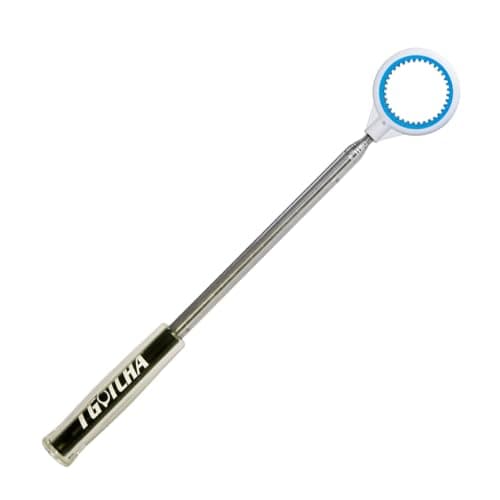
I GOTCHA I GOTCHA JAWZ Ball Retriever (10 ft reach)
I GOTCHA JAWZ Ball Retriever (10 ft reach)

The one head design in the category with nothing to break. A single rubberized jaw that grips the ball instead of cradling it.

Buying one retriever and never thinking about it again
7.8
$34.95Amazon
03
HOW TRUE HOW TRUE 18 ft Telescopic Ball Retriever
HOW TRUE 18 ft Telescopic Ball Retriever

Eighteen feet of reach for about what a brand-name six-footer costs. If your course has real water, this is the one that pays for itself.

Courses with open ponds you can see your ball sitting in
7.2
$29.99Amazon
04
Golf Ball Plucker Golf Ball Plucker Telescopic Grabber (magnet handle)
Golf Ball Plucker Telescopic Grabber (magnet handle)

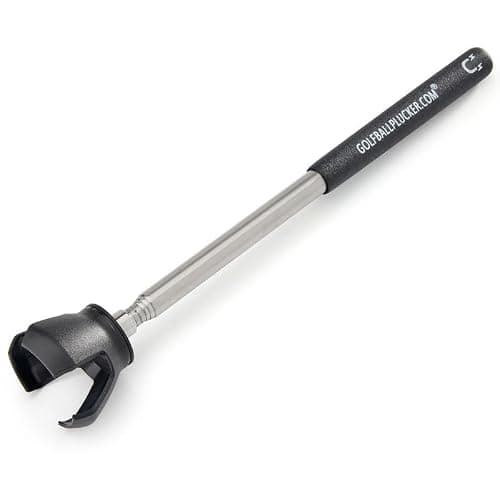
Not a water retriever — a back saver. Picks the ball out of the hole and off the green without you bending for it.

Bad backs, stiff hips, and anyone who plays a lot of holes
6.4
$27.99Amazon
05
HOW TRUE HOW TRUE Shag Bag Ball Collector (70 balls)
HOW TRUE Shag Bag Ball Collector (70 balls)

The right tool for a different job: picking up the seventy balls you just hit, without seventy squats.

Short-game practice in a field, a yard, or a range with no picker
6.4
$26.99Amazon
06
Callaway Callaway Ball Retriever, 6 ft (dual-zip headcover)
Callaway Ball Retriever, 6 ft (dual-zip headcover)

The brand-name option, and the clearest brand tax on this page: six feet of reach in the same price bracket as eighteen.

Golfers who want a known name and a headcover that hides it in the bag
5.8
$27.74Amazon

#ad · Live prices from the Amazon Product API, as of November 12, 2026. Where we have no verified live price, we show none — we would rather leave a gap than print a number that has rotted.

In detail

The picks, in full

01
HOW TRUE HOW TRUE 9 ft Telescopic Ball Retriever

Almost everyone — bank-edge water, bushes and fence lines

HOW TRUE 9 ft Telescopic Ball Retriever

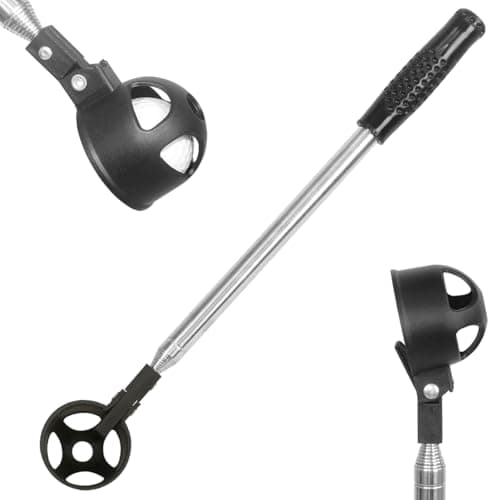
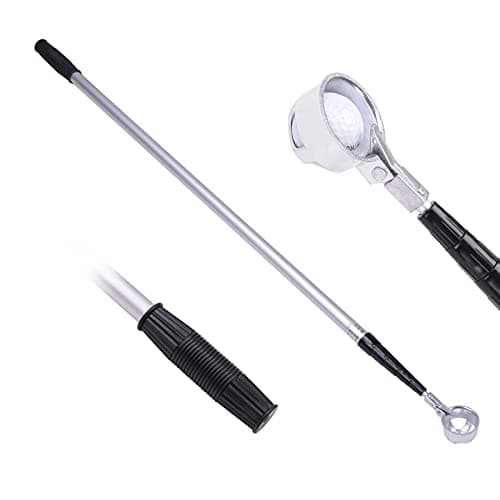
9 ft reachStainless shaftAuto-locking scoopFits a bag pocket
7.8/10

Nine feet of stainless steel with a self-locking scoop, for less than a sleeve of premium balls. The length that covers most of the balls you can actually see.

Reach
5
Ball retention
8
Portability
9
Build
7
Value
10

Pros

  • The listing states a thickened stainless shaft specifically to stop the wobble that makes a cheap long retriever useless at full extension
  • The scoop locks the ball automatically, so you are not trying to balance a ball on a dish nine feet away
  • Retracts small enough for a stand-bag side pocket, which is the difference between owning one and leaving it in the trunk

Cons

  • Nine feet is a bank-edge tool. Anything out in open water past the reeds stays there
  • HOW TRUE publishes no weight and no retracted length, so you are trusting the photos on how compact it really is
  • Unbranded hardware: no warranty worth the name, and replacement scoops are not sold separately

Don't buy this if…

…your home course has big open ponds you routinely find water in. Buy the 18-foot version instead and accept the extra bulk.

$15.99View on Amazon

Price as of November 12, 2026. Prices change — Amazon's is the one that counts.

#ad · we may earn a commission from this link to HOW TRUE 9 ft Telescopic Ball Retriever

02
I GOTCHA I GOTCHA JAWZ Ball Retriever (10 ft reach)

Buying one retriever and never thinking about it again

I GOTCHA JAWZ Ball Retriever (10 ft reach)

10 ft max reachNo moving partsCo-molded rubber headCollapses to 15.5 in
7.8/10

The one head design in the category with nothing to break. A single rubberized jaw that grips the ball instead of cradling it.

Reach
6
Ball retention
9
Portability
9
Build
9
Value
6

Pros

  • I GOTCHA states the head is a single piece with no moving parts — the hinge and the spring are the two things that fail on every other design
  • The co-molded rubberized surface grips and holds the ball, so it works on a ball sitting in mud where a scoop just pushes it along
  • 6 ft shaft, 10 ft maximum reach, collapsing to 15.5 inches — all three figures published, which is rare in this category

Cons

  • Costs multiples of an unbranded 9-footer for one extra foot of reach
  • A gripping jaw needs a firmer, more deliberate push than a scoop, and it can skip off a ball lying on hard ground
  • Reach is still modest. The same brand's 14-foot and 18-foot models cost substantially more again

Don't buy this if…

…you want maximum reach per dollar. This is a durability purchase, not a distance one.

$34.95View on Amazon

Price as of November 12, 2026. Prices change — Amazon's is the one that counts.

#ad · we may earn a commission from this link to I GOTCHA JAWZ Ball Retriever (10 ft reach)

03
HOW TRUE HOW TRUE 18 ft Telescopic Ball Retriever

Courses with open ponds you can see your ball sitting in

HOW TRUE 18 ft Telescopic Ball Retriever

18 ft max lengthHinged locking cupTelescopicWater-rated
7.2/10

Eighteen feet of reach for about what a brand-name six-footer costs. If your course has real water, this is the one that pays for itself.

Reach
10
Ball retention
7
Portability
5
Build
5
Value
9

Pros

  • Eighteen feet changes what is recoverable: a ball five or six yards out in a pond stops being somebody else's property
  • Hinged cup design that locks the ball, rather than an open dish you have to keep level on a long pole
  • The most reach on this page, and not the most expensive pick on it

Cons

  • The listing contradicts itself on the shaft — one bullet says lightweight aluminum, another says stainless steel that will not rust. We could not establish which, and you should not assume either
  • Any 18-foot telescopic pole flexes and wobbles at full extension; expect to need two hands and some patience
  • Long retracted length compared with a 9-footer, so it rides outside the bag or across the cart

Don't buy this if…

…you mostly lose balls in bushes and tree lines rather than water. The extra length is dead weight and a 9-footer handles rough better.

$29.99View on Amazon

Price as of November 12, 2026. Prices change — Amazon's is the one that counts.

#ad · we may earn a commission from this link to HOW TRUE 18 ft Telescopic Ball Retriever

04
Golf Ball Plucker Golf Ball Plucker Telescopic Grabber (magnet handle)

Bad backs, stiff hips, and anyone who plays a lot of holes

Golf Ball Plucker Telescopic Grabber (magnet handle)

31 in extensionMagnet in handleStainlessCart-mountable
6.4/10

Not a water retriever — a back saver. Picks the ball out of the hole and off the green without you bending for it.

Reach
2
Ball retention
8
Portability
10
Build
7
Value
5

Pros

  • Thirty-one inches is exactly the range that matters for the dozens of times a round you bend down to pick up a ball
  • The magnet in the handle sticks it to the cart frame, so it is in your hand rather than buried in a bag pocket
  • A genuine mobility aid: the listing pitches it at golfers with back pain or limited movement, and that is the honest use case

Cons

  • Thirty-one inches will not reach into water. This does not replace a telescopic retriever, it sits alongside one
  • Priced above the 9-foot telescopic retriever despite doing a fraction of the job
  • The handle magnet only holds on a steel cart frame; aluminum push-cart tubing and plastic shells give it nothing to grab

Don't buy this if…

…you bend down fine and you are buying this to recover lost balls. Buy reach instead.

$27.99View on Amazon

Price as of November 12, 2026. Prices change — Amazon's is the one that counts.

#ad · we may earn a commission from this link to Golf Ball Plucker Telescopic Grabber (magnet handle)

05
HOW TRUE HOW TRUE Shag Bag Ball Collector (70 balls)

Short-game practice in a field, a yard, or a range with no picker

HOW TRUE Shag Bag Ball Collector (70 balls)

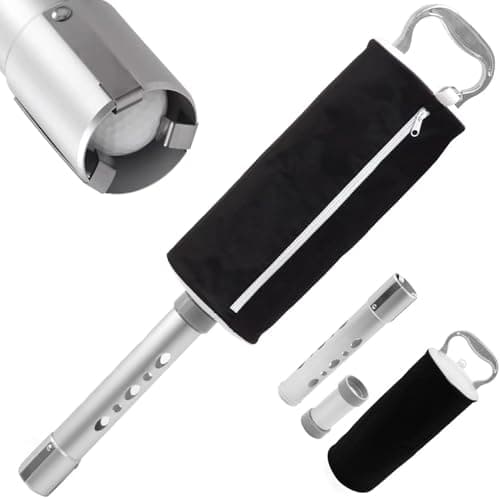
Holds 70 ballsAluminum tube3-section, detachablePress-down chute
6.4/10

The right tool for a different job: picking up the seventy balls you just hit, without seventy squats.

Reach
3
Ball retention
9
Portability
6
Build
7
Value
7

Pros

  • Press the chute over a ball and it drops in — the single best time-to-practice upgrade for anyone who hits shots into a field
  • Three-section screw-together aluminum tube, so it breaks down to travel in a car or a bag
  • Doubles as a ball store: 70 balls zipped into one nylon bag beats a bucket rolling around the trunk

Cons

  • Nothing to do with lost-ball recovery. It cannot reach water, rough or a fence line
  • Chute pickups need reasonably short grass; in long grass you still hunt for the ball by hand
  • No published weight, and a full bag of 70 balls is heavy enough that you will not want to carry it far

Don't buy this if…

…you only practice at a range with mats and a bucket. This solves a problem you do not have.

$26.99View on Amazon

$28.997% off

Price as of November 12, 2026. Prices change — Amazon's is the one that counts.

#ad · we may earn a commission from this link to HOW TRUE Shag Bag Ball Collector (70 balls)

06
Callaway Callaway Ball Retriever, 6 ft (dual-zip headcover)

Golfers who want a known name and a headcover that hides it in the bag

Callaway Ball Retriever, 6 ft (dual-zip headcover)

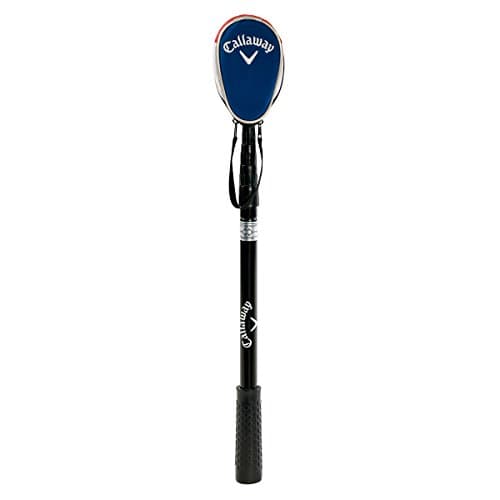
6 ft extensionAluminum alloy shaftStainless scoopDual-zip headcover
5.8/10

The brand-name option, and the clearest brand tax on this page: six feet of reach in the same price bracket as eighteen.

Reach
3
Ball retention
7
Portability
9
Build
7
Value
3

Pros

  • The included dual-zip headcover makes it look like another club in the bag, which is the one thing no unbranded retriever offers
  • Ergonomic sure-grip handle that is genuinely easier to hold at full extension than a bare tube
  • Callaway sells a 15-foot version of the same design if you want the brand with real reach

Cons

  • Six feet is the shortest reach here, in the same price bracket as an 18-foot retriever from an unbranded seller
  • Aluminum alloy shaft rather than the stainless the cheaper picks advertise — fine out of water, less reassuring in it
  • You are paying for the logo and the headcover. The mechanism is a standard stainless scoop

Don't buy this if…

…you care how far it reaches. On published reach per dollar it is the weakest buy on this page, and we say that about a brand we rank highly elsewhere.

$27.74View on Amazon

$44.9938% off

Price as of November 12, 2026. Prices change — Amazon's is the one that counts.

#ad · we may earn a commission from this link to Callaway Ball Retriever, 6 ft (dual-zip headcover)

Reading a retriever listing

Two numbers, and sellers mix them up constantly. Shaft length is how long the pole gets. Maximum reach is the pole plus your arm plus the lean of your body over a bank, which is usually three or four feet more. The I GOTCHA listing here is the honest example: it states six feet of shaft and ten feet of maximum reach, and both figures are true. A listing that only gives you the bigger number and calls it length is telling you less than it appears to.

Then look for the retracted figure. Fifteen and a half inches, as on the JAWZ, fits anywhere. Around sixteen inches is the threshold for a stand-bag side pocket. Anything that only retracts to three feet rides outside the bag, and a retriever that rides outside the bag is one you leave in the car on a day you did not expect to need it.

Stainless, aluminum, and listings that cannot keep their story straight

Shaft material is the one spec where this category is least trustworthy, and the 18-footer on this page is the example: one of its own bullet points says lightweight aluminum shaft and another says made of stainless steel which will not rust in water. Both cannot be right. We left the pick on the page because the reach is real and the head design is sound, but we are not going to tell you which metal you are buying when the seller cannot.

In practice: aluminum is lighter and fine for anything that comes out of the water and gets dried; stainless is what you want for a tool that spends its life wet. Either way, the part that actually corrodes first is the telescoping joint, not the tube. Pull it apart, rinse it with fresh water and let it dry extended after a day of pond work. That one habit outlasts any material claim on any listing.

Where the brand tax shows up

We rank Callaway highly in several categories on this site, and the retriever is not one of them. The published specification is six feet of aluminum alloy with a stainless scoop and a headcover — which is to say, the shortest reach on this page in the lighter metal, for a price in the same bracket as eighteen feet from an unbranded seller. What you are actually buying is the dual-zip headcover, and it does do one thing no generic retriever does: it makes the thing look like a club in your bag rather than a pole. If that matters to you, it is an honest reason. It just is not a performance reason, and nobody should pretend otherwise.

Looking after it, and the rest of the bag

A retriever lives in the same compartment as the other cheap kit that earns its weight, and it has the same enemy: mud. Rinse the head, and wipe it down with the towel you should be carrying anyway — our best golf towels page covers why a wet half and a dry half beat one soaked rag, which applies to a muddy scoop as much as to a clubface. If you are assembling a bag from scratch, our what to keep in your golf bag list puts a retriever in context with everything else fighting for the same pocket.

One last piece of advice that is worth more than any pick here: do not go in after it. A nine-foot pole exists so you can stay on the bank. Pond margins are steep, slick and frequently deeper than they look two feet out, and in a good part of the country they have residents. The ball is worth a few dollars. Keep both feet on the grass.
How we picked

We do not run a testing lab

We compiled the published specifications, did the cost-per-round and value math, and read the independent robot and launch-monitor data — then scored each product against a published rubric. The scores are judgments from documented research — they are not measurements we took, because we do not have a lab and we are not going to pretend we do. Where a number came from someone else's lab, we name them and link them in Sources.

Questions

Frequently asked

Are golf ball retrievers legal?
Yes. A retriever is not a club, so it does not count toward the 14-club limit, and carrying one in your bag is treated like carrying an umbrella. Golf Compendium states it directly: retrievers are legal under the Rules of Golf, and the only exception is a competition that writes a specific condition banning them. Recovering your ball does not change your penalty if it was in a penalty area.
How long should a golf ball retriever be?
Nine feet suits almost everyone. Nearly every recoverable ball sits within nine feet of where you can stand — a water edge, a bush, a fence line. Go to fifteen or eighteen feet only if your course has open ponds with shallow margins where you can see your ball sitting out in the water. Six feet is barely more than an arm and a club.
What is the difference between a scoop and a claw retriever?
A scoop is a cup you slide under the ball; the good ones lock it in place automatically, the cheap ones have no lock and drop the ball on the way back. A claw or jaw head grips the ball instead, which works better on a ball sitting in mud. I GOTCHA's JAWZ head is a single piece with no moving parts, which removes the hinge and spring that fail on most scoop designs.
Will a golf ball retriever fit in my bag?
Check the retracted length, not the extended one. Around sixteen inches or less will slide into a stand-bag side pocket — the I GOTCHA JAWZ publishes 15.5 inches. Longer retrievers, including most 15 and 18-footers, ride outside the bag or across a cart, which in practice means you have it less often.
Do golf ball retrievers rust?
The tube usually does not if it is genuinely stainless, but the telescoping joints are where corrosion and grit actually bind things up. Rinse the head and the joints in fresh water after a day in a pond and leave the pole extended to dry. That habit matters more than any rust claim in a listing — and at least one listing on this page contradicts itself about whether its shaft is stainless at all.
Is a ball retriever worth the money?
It is the rare golf purchase with a real payback: it costs a fixed amount once and then returns golf balls indefinitely. How fast it clears its price depends entirely on what you pay per ball, so it is worth most to golfers buying premium balls — who usually have a cheaper saving available first. Pair it with a value ball and you are saving twice.

Keep reading

Receipts

Sources

We do not run a testing lab, and we do not pretend to. Where a measured number came from someone else's lab or robot, we name them and link them. Where we could not verify something, we say so on the page rather than quietly leaving it out. Read our full method.