Skip to content
Club&Carry

Hub 02 · Golf Clubs

The Best Golf Chippers

One club that turns the shot amateurs waste most strokes on into a putting stroke. Just make sure the one you buy has only one face.

By Stephen V.Updated How we pick
#ad

We earn a commission when you buy through our Amazon links, at no extra cost to you. It never affects our rankings, and we say so when the cheaper product is the better buy. How this works.

The Intech EZ Roll is the value winner, because it is the cheapest chipper that both publishes its own numbers — 35 degrees of loft, 35 inches long — and has a single striking face, which is what keeps it legal in a competition. Want the most forgiving sole for chunked strikes? The Orlimar Escape. Want a lower, earlier-running shot, or a left-handed club? The Ray Cook Silver Ray CP-01. Want a club from a brand you recognize? The Wilson Harmonized.

A chipper is the most quietly sensible purchase in golf and the one most often sold badly. It is a single iron, usually around 32 to 37 degrees of loft, built on a putter-length shaft with putter-style weighting and alignment. You stand to it like a putt, make a putting stroke, and the ball pops up over the fringe and runs out to the hole. No wrists, no hinge, no deceleration — and crucially, no leading edge arriving at the equator of the ball for the bladed chip that sails over the green.

That shot is where a high handicapper leaks more strokes than almost anywhere else. If two or three times a round you chunk or blade a greenside chip, a chipper does not improve your short game; it removes your worst outcome. On a value site, that is exactly the kind of purchase we like — a modest amount of money that buys a genuine scoring change, in a category where the expensive option does nothing extra.

How we ranked these

We do not run a lab, and these judgments come from published specifications, the Rules of Golf, and what each listing is willing to state in writing — the same standard our methodology page sets out for every category on this site. Four criteria, in this order:

  1. Is it legal?A chipper with two striking faces is non-conforming. This is not a technicality in this category — several of the cheapest chippers sold are two-way clubs, and one of them is on this page with that stated plainly.
  2. Does the maker publish a loft?Loft decides how the shot behaves, and this is the category where that number is hardest to find. A club that prints 35 degrees on the listing can be gapped against your irons; one that says “like a 7-iron” cannot.
  3. Sole width and weighting. The forgiveness mechanism. A wide, smooth sole skids through turf instead of digging, which is what saves the fat strike.
  4. Price against the wedge you already own.These clubs span a narrow range — the dearest here is two to three times the cheapest — and they all do the same job. The top spot goes to the cheapest one that is legal and specified.

The two-faced chipper trap

This is the single most useful thing on this page, so it goes near the top. Browse chippers and you will quickly find “two-way” or “dual-sided” models — one club with a striking face on both sides, so a right-hander and a left-hander can share it. They are usually the cheapest clubs in the category. They are also not legal under the Rules of Golf.

GOLF's Rules Guy column, citing Decision 4-1/3, puts it bluntly: a single-faced chipper can be A-OK, but a chipper with two striking faces is nonconforming. The reason is that a chipper is classified as an iron, not a putter, and only a putter is allowed two faces. The penalties are not trivial either. Make one stroke with a non-conforming club and you are disqualified; merely carrying it unused in stroke play is a two-stroke-per-hole penalty up to a maximum of four strokes, and in match play you lose a hole for each hole it was in the bag, up to two.

We have still ranked a two-way chipper here, last, because it genuinely has a use: a family set, a loaner bag, a left-hander who cannot find stock, or a casual golfer who never posts a score. If that is you, the two-way club is cheap and works. If you play club competitions, buy the single-faced one and do not think about it again.

Loft is the whole decision — and only one of these publishes it

Once legality is settled, loft is what separates these clubs, and the useful range is narrow. Think of it as a carry-to-roll ratio:

  • Around 32 degreesis close to a 6- or 7-iron. The ball hops up briefly and then runs a long way — the pick on slower greens, into an upslope, or when you have a clean path from fringe to hole.
  • Around 35 degrees is the middle of the category and the most generally useful: roughly a third of the distance in the air and two-thirds on the ground, which is the classic bump-and-run ratio.
  • Around 37 to 40 degrees is an 8- or 9-iron equivalent. More air, less roll, and the version most likely to stop reasonably quickly on a receptive green.

Here is the problem with that neat framework: of the five clubs on this page, only the Intech publishes a loft at all. Its listing states 35 degrees. Orlimar, Ray Cook, Wilson and Powerbilt publish nothing, and their listings state only a length. We are not going to print numbers for them that we cannot source — third-party resellers quote figures for all four, and those figures disagree with each other. If the number matters to you, and in a club whose whole job is predictable distance control it should, that alone is a reason the cheapest club here wins.

What none of them will do is stop fast on a firm, quick green from a short distance. That is a lob wedge's job, and no chipper substitutes for it — our best wedges for the moneypage covers the higher-lofted clubs and where each one belongs. The chipper's territory is the low, running shot from just off the green, which is also the highest-percentage shot available to most amateurs.

Length, and why 33 versus 35 inches matters

Most chippers are built at 35 inches — standard men's putter length — so you can set up over the ball with your putting posture and your putting grip. That is a deliberate design choice, not a cost saving: a shorter club than a 9-iron shortens the swing arc and makes a wristless stroke natural.

The Wilson Harmonized is the exception on this page at 33 inches, which is a real advantage if you are shorter, if you choke down on your putter, or if you set up with more knee flex than most. A 35-inch club in the hands of someone who needs 33 produces exactly the problem the chipper exists to solve: the hands sit too high, the leading edge rides up, and the strike thins. If your putter is cut down, buy the 33.

The real cost of a chipper: a slot in the bag

You are allowed 14 clubs, and a chipper takes one. That is the honest objection to this club, and it is a better objection than the money. For most amateurs the slot is available — plenty of players carry a 3-iron or a second fairway wood they hit twice a season, and what clubs a beginner needs works through which ones genuinely earn a place.

But if your 14 are all working, think carefully. The alternative is free: learn the same shot with the 9-iron already in your bag, gripping down, hands slightly ahead, a putting stroke and no wrist hinge. The ball comes out lower and runs, and it is the same shot the chipper plays. The chipper is easier because the sole is wider and the weighting is more forgiving — it is not magic, it is a club shaped to make one stroke harder to get wrong.

Is using a chipper embarrassing?

It is a legitimate question and worth a straight answer: no, and mildly, in that order. A single-faced chipper is a conforming golf club that tour players do not use because they have world-class short games and need shot-shaping options a chipper cannot provide. You are not them. If a chipper turns two wasted strokes a round into two tap-ins, it is the cheapest handicap reduction on this entire site.

The caveat we will give is a real one. A chipper can become a crutch that stops you ever learning greenside control, and there are lies — a plugged ball in deep rough, a shot over a bunker lip, a tight pin on a fast green — where it simply cannot play the shot and you will need a wedge anyway. Carry it as the club that removes your disaster, and keep practicing the wedge for everything else.

Who should skip this club

If you already chip confidently with a wedge, a chipper will do nothing for you except cost a slot. If you play fast, firm greens, a running shot that will not stop is the wrong tool. And if you are buying a first set rather than filling a gap, put the money into the set and the lesson first; our best irons for beginners page covers the game-improvement irons that make the full-swing version of this shot easier too.

The short version

Buy the Intech EZ Roll if you want the cheapest legal chipper with published numbers. Buy the Orlimar Escape if your miss is a chunk and you want the widest sole. Buy the Ray Cook Silver Ray for putter-grade shaping, or because you play left-handed. Buy the Wilson Harmonized if the brand and the shorter length matter to you and you are willing to pay the most on this page for the same job. Buy the Powerbilt two-way only if you never post a score, and know going in that it cannot legally sit in your bag during a competition round.

The short answer

Quick picks

#ProductBest forScorePrice
01
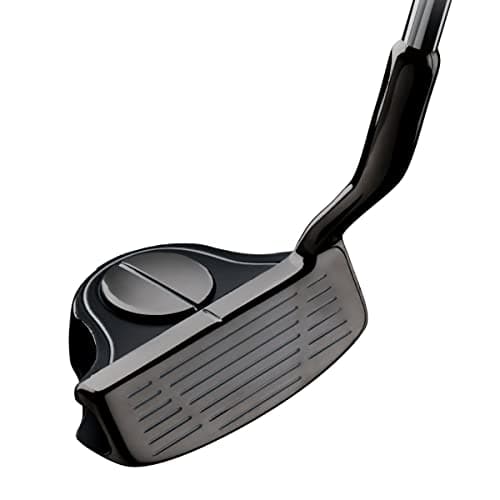
Intech Intech EZ Roll Chipper (35 in, 35 degrees)
Intech EZ Roll Chipper (35 in, 35 degrees)

The cheapest conforming chipper that publishes its own numbers: one face, 35 degrees of loft, 35 inches long. That combination is the whole brief for this club.

The duffed-chip problem, for the least money
8.4
$35.66Amazon
02
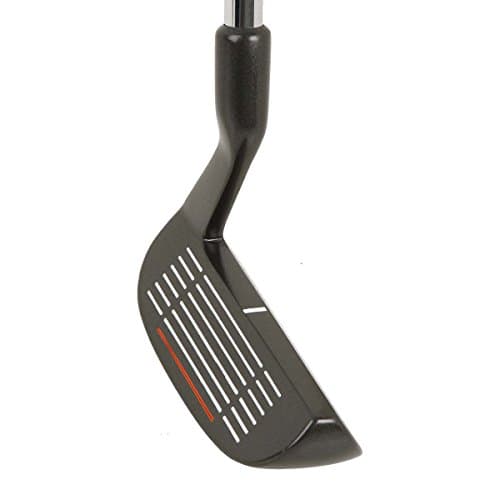
Orlimar Orlimar Escape Mallet Chipper
Orlimar Escape Mallet Chipper

A wide-soled mallet head that skids over the turf instead of digging into it. The forgiveness pick for the player whose miss is a chunk.

Fat strikes and soft, grabby lies
7.4
$44.45Amazon
03
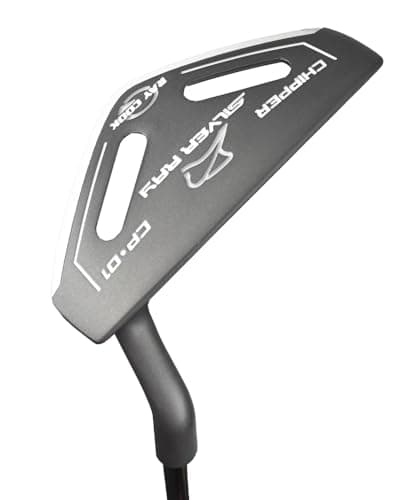
Ray Cook Ray Cook Silver Ray CP-01 Chipper (35 in)
Ray Cook Silver Ray CP-01 Chipper (35 in)

The putter specialist's chipper, and the one on this page with a left-handed twin on the shelf. Buy it for the shaping and the lefty option — Ray Cook does not publish a loft.

Left-handers, and anyone who wants putter-grade head shaping
7.2
$69.99Amazon
04
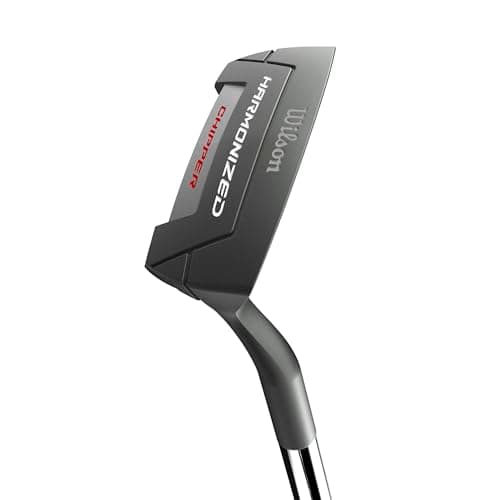
Wilson Wilson Harmonized Chipper (33 in)
Wilson Harmonized Chipper (33 in)

The one chipper here from a company that also makes the rest of your bag. Shorter than the others at 33 inches, which suits a player who stands close to the ball.

A recognized brand, and shorter players
7.2
$69.77Amazon
05
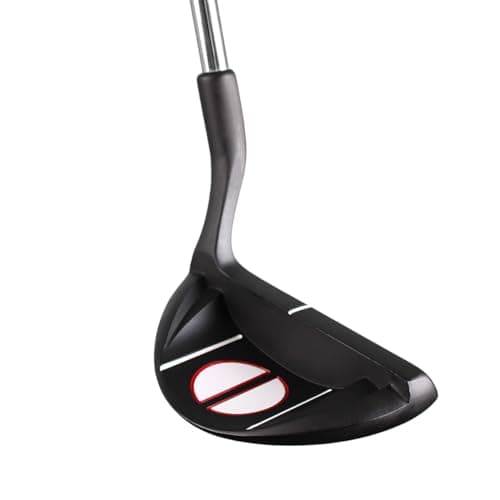
Powerbilt Powerbilt TPS Two-Way Chipper (ambidextrous)
Powerbilt TPS Two-Way Chipper (ambidextrous)

Two striking faces, so one club works right- or left-handed. That is also the reason it cannot go in your bag for a competition round.

Casual rounds, shared clubs, left-handers on a budget
4.6
$29.99Amazon

#ad · Live prices from the Amazon Product API, as of November 12, 2026. Where we have no verified live price, we show none — we would rather leave a gap than print a number that has rotted.

In detail

The picks, in full

01
Intech Intech EZ Roll Chipper (35 in, 35 degrees)

The duffed-chip problem, for the least money

Intech EZ Roll Chipper (35 in, 35 degrees)

35 degrees loft35 in lengthSingle faceBack-weighted head
8.4/10

The cheapest conforming chipper that publishes its own numbers: one face, 35 degrees of loft, 35 inches long. That combination is the whole brief for this club.

Forgiveness
9
Published specs
8
Build quality
5
Rules-conforming
10
Value
10

Pros

  • Publishes both loft and length on the listing, which half this category does not — 35 degrees is roughly a 7-iron, so the ball lands short and runs out like a putt
  • Single striking face, so it is legal to put in the bag for a club competition
  • Putter-length shaft and alignment lines let you use your putting stroke, which is the point of owning one

Cons

  • Intech is a value house brand, and the finish, grip and sound are what the price suggests
  • 35 degrees runs a long way out, so it is the wrong club when you need the ball to stop near the pin on a fast green
  • It occupies one of your 14 slots to do a job a 9-iron can be taught to do

Don't buy this if…

…you already chip confidently with a wedge, or you play fast greens where a running chip finishes past the hole. This club exists to remove a disaster shot, not to add finesse.

$35.66View on Amazon

Price as of November 12, 2026. Prices change — Amazon's is the one that counts.

#ad · we may earn a commission from this link to Intech EZ Roll Chipper (35 in, 35 degrees)

02
Orlimar Orlimar Escape Mallet Chipper

Fat strikes and soft, grabby lies

Orlimar Escape Mallet Chipper

Mallet headWide soleLoft not publishedSteel shaft
7.4/10

A wide-soled mallet head that skids over the turf instead of digging into it. The forgiveness pick for the player whose miss is a chunk.

Forgiveness
9
Published specs
4
Build quality
6
Rules-conforming
10
Value
8

Pros

  • The wide, smooth sole is the real feature — it stops the leading edge burying when you come in steep, which is the exact miss that costs a high handicapper a shot
  • Mallet shaping sits square behind the ball and makes a putting stroke feel natural
  • A long-standing value model, so there is a deep discount and used market around it

Cons

  • Orlimar publishes no loft figure for it and the listing does not state one, so you are buying a club whose single most important number is unknown until you hit it
  • The wide sole that saves you on soft turf bounces off hardpan, where a thinner wedge sole is better
  • Cosmetics and colorways change between production runs, so the club you receive may not match the photo

Don't buy this if…

…you want to know the loft before you buy, or you play firm links turf where a wide sole skips. The Intech publishes its numbers; a wedge handles hardpan better.

$44.45View on Amazon

$49.9911% off

Price as of November 12, 2026. Prices change — Amazon's is the one that counts.

#ad · we may earn a commission from this link to Orlimar Escape Mallet Chipper

03
Ray Cook Ray Cook Silver Ray CP-01 Chipper (35 in)

Left-handers, and anyone who wants putter-grade head shaping

Ray Cook Silver Ray CP-01 Chipper (35 in)

35 in lengthLoft not publishedSingle faceRight and left handed
7.2/10

The putter specialist's chipper, and the one on this page with a left-handed twin on the shelf. Buy it for the shaping and the lefty option — Ray Cook does not publish a loft.

Forgiveness
8
Published specs
5
Build quality
7
Rules-conforming
10
Value
6

Pros

  • A left-handed version of the same club is listed, which is rarer in this category than it should be
  • Ray Cook has built putters for decades and the head shaping shows it: it sits and aims like a putter, which is most of what makes a chipper easy to use
  • A single striking face, so it is legal to carry in a competition round

Cons

  • Mid-priced in a category whose cheapest conforming club does the same job, so you are paying for shaping and the name
  • No published loft from Ray Cook and none on the listing, so you cannot gap it against your own irons before you buy
  • 35 inches only in this listing, which is long if you set up close over a cut-down putter

Don't buy this if…

…the loft number matters to you. The Intech publishes 35 degrees; this one asks you to find out on the course.

$69.99View on Amazon

Price as of November 12, 2026. Prices change — Amazon's is the one that counts.

#ad · we may earn a commission from this link to Ray Cook Silver Ray CP-01 Chipper (35 in)

04
Wilson Wilson Harmonized Chipper (33 in)

A recognized brand, and shorter players

Wilson Harmonized Chipper (33 in)

33 in lengthLoft not publishedSingle faceSteel shaft
7.2/10

The one chipper here from a company that also makes the rest of your bag. Shorter than the others at 33 inches, which suits a player who stands close to the ball.

Forgiveness
8
Published specs
5
Build quality
8
Rules-conforming
10
Value
5

Pros

  • Wilson's build and finish are a visible step up from the house brands — this is the chipper that does not look like a gimmick in your bag
  • 33 inches is genuinely useful for a shorter player, or anyone who stands tall over a putter; most chippers come only at 35
  • Matches the Harmonized wedge family if you already own one, so look and feel carry across

Cons

  • At the top of this page's price range, and it does the same job as the cheapest club here
  • Wilson prints no loft figure for it and the listing states only the length, so you cannot gap it against your own irons before you buy
  • A 33-inch club is too short for a tall player, and the longer version is a separate, pricier listing

Don't buy this if…

…you are tall, or you are buying a first chipper to find out whether you like the club at all. Start with the cheap conforming one and upgrade if you keep using it.

$69.77View on Amazon

Price as of November 12, 2026. Prices change — Amazon's is the one that counts.

#ad · we may earn a commission from this link to Wilson Harmonized Chipper (33 in)

05
Powerbilt Powerbilt TPS Two-Way Chipper (ambidextrous)

Casual rounds, shared clubs, left-handers on a budget

Powerbilt TPS Two-Way Chipper (ambidextrous)

Two striking facesAmbidextrousNon-conformingLowest price here
4.6/10

Two striking faces, so one club works right- or left-handed. That is also the reason it cannot go in your bag for a competition round.

Forgiveness
8
Published specs
3
Build quality
5
Rules-conforming
0
Value
7

Pros

  • One club covers both hands, which is genuinely useful for a family set, a loaner bag, or a left-hander who cannot find stock
  • The cheapest way to find out whether a chipper helps your short game at all
  • The two-face design sits square from either side, so nobody has to learn a reversed setup

Cons

  • It is non-conforming. GOLF's Rules Guy, citing Decision 4-1/3, is explicit that a chipper with two striking faces is nonconforming while a single-faced one is fine
  • Carrying a non-conforming club without using it is still a penalty in stroke play, and one stroke with it means disqualification
  • Powerbilt publishes no loft figure for it, so you cannot gap it against the clubs you already own

Don't buy this if…

…you ever post a score in a competition, a club event, or anything played under the Rules of Golf. For that, buy the single-faced Intech instead; it costs about the same.

$29.99View on Amazon

Price as of November 12, 2026. Prices change — Amazon's is the one that counts.

#ad · we may earn a commission from this link to Powerbilt TPS Two-Way Chipper (ambidextrous)

Why chipper specs are so badly published

You will notice something odd shopping this category: the biggest names in golf barely compete in it. Chippers are mostly built by value houses and putter specialists, and the consequence is a spec vacuum. Of the five clubs here, exactly one prints its loft and length on its own listing. The other four give you a length and nothing else, and third-party resellers fill the gap with figures that contradict one another.

That is why “published specs” is one of our scoring criteria rather than an afterthought. A club you cannot gap is a club you will mis-club with, and the whole point of a chipper is predictability. We have not reprinted reseller loft numbers anywhere on this page: where a maker does not publish a loft, the pick says “loft not published” and you should ask the seller before you buy if the number matters to you.

The free alternative, properly explained

Before you spend anything, try this for one practice session. Take your 9-iron. Grip down an inch or two, stand closer to the ball than normal, put the ball back of center, put your hands slightly ahead of it, and make a putting stroke with no wrist hinge at all. Let the loft do the work. The ball will come out low, hop once, and roll.

That shot is the chipper shot, and it is free. What the chipper adds is a wider sole that resists digging, more head weight behind the ball for a smoother stroke, and alignment aids borrowed from putter design. For many golfers that difference is worth the price of the club. For some it turns out the 9-iron was enough all along, and the honest version of this page says so.

Buying used, and what to check

Chippers hold value poorly, which is good news: the used market is full of them, and the technology here is a wedge-shaped lump of steel, so age is nearly irrelevant. Two things to check. First, count the faces — a two-way head on a used rack is non-conforming no matter how nice it looks. Second, check the grip. A chipper that has sat in a garage for a decade will have a hardened, slick grip, and on a club you hold like a putter, grip condition is most of the feel. Our best golf grips roundup covers a regrip, which costs a fraction of the club, and how long golf clubs last explains why a hardened grip is the one part of any used club you should assume needs replacing.

Practicing with it so it actually earns the slot

A chipper is the rare club you can practice indoors productively, because the stroke is short and the ball barely leaves the ground. Ten minutes on a mat or a carpet, hitting to a target at a fixed distance, teaches you the one number you need: how far the ball carries and how far it rolls with your stroke. Our best putting mats page covers the surfaces that work for this, and the tee roundup covers the rubber mat tees worth owning if your practice setup involves a mat at all.

Left-handed availability

Chippers are one of the categories where left-handers are worst served, which is part of why the illegal two-way club sells. The Ray Cook Silver Ray CP-01 is listed in a left-handed version, and the Intech EZ Roll has a separate left-handed listing — both are single-faced and legal. If you are shopping a whole left-handed bag rather than one club, best left-handed golf clubs covers what the market does and does not offer.
How we picked

We do not run a testing lab

We compiled the published specifications, did the cost-per-round and value math, and read the independent robot and launch-monitor data — then scored each product against a published rubric. The scores are judgments from documented research — they are not measurements we took, because we do not have a lab and we are not going to pretend we do. Where a number came from someone else's lab, we name them and link them in Sources.

Questions

Frequently asked

Are golf chippers legal?
A single-faced chipper is legal and conforming. A chipper with two striking faces is not: GOLF's Rules Guy, citing Decision 4-1/3, states that a chipper with two striking faces is nonconforming, because a chipper counts as an iron and only putters may have two faces. Using a non-conforming club means disqualification; carrying one unused still carries a penalty.
What loft is a golf chipper?
The category sits roughly between a 6-iron and a 9-iron, so about 32 to 40 degrees. Lower loft means less carry and more roll; higher loft means more air time and a quicker stop. Be aware that most chipper makers do not publish the figure at all — of the five clubs on this page, only the Intech states a loft, at 35 degrees.
Is a chipper good for high handicappers?
That is exactly who it is for. It replaces a wristy greenside chip with a putting stroke, and the wide sole resists digging, so the chunked and bladed chips that cost two strokes become one-putt range instead. It will not produce a high, soft shot that stops quickly — that still needs a wedge.
Chipper vs wedge: which should I use?
Use a chipper from just off the green with a clear path to the hole and room for the ball to run. Use a wedge when you have to carry something, stop the ball quickly, or play from deep rough or sand. Most amateurs would score better playing the running shot far more often than they do.
Does a chipper take up one of my 14 clubs?
Yes. A chipper is a club like any other and counts against the 14-club limit, so something has to come out of the bag. For most amateurs that is a long iron or a second fairway wood they rarely hit.
Can you use a chipper on the green?
You can — there is no rule against playing any club from the putting surface — but it is a poor idea. A lofted club on a green strikes down into the putting surface and is far harder to control than a putter. The chipper's job starts at the fringe.

Keep reading

Receipts

Sources

We do not run a testing lab, and we do not pretend to. Where a measured number came from someone else's lab or robot, we name them and link them. Where we could not verify something, we say so on the page rather than quietly leaving it out. Read our full method.