For an amateur, a set of irons does not wear out. What wears out is the rubber you hold and the grooves on the wedge you use most — and both are replaceable for a small fraction of what a new set costs. Grips are the first thing to go, at roughly 40 rounds or a year. The sand wedge is next. A driver face can genuinely fatigue, but the published guidance says that is a fast-swinger problem, not an everyday one. These are judgments from the research and testing cited below, not our own measurements — our methodology page says so plainly.
What wears out, in order
- Grips. Always first, and by a wide margin. They are the only part of a club made from a material that degrades on its own: rubber hardens with heat, UV, hand oils and time, whether you play or not.
- Wedge grooves.The sand wedge takes the most abrasive punishment in the bag, and the groove edges round off. The effect on your shots is smaller than the internet believes, and it is specific — it shows up in the wet, not the dry.
- The ferrule, epoxy and shaft bond. The joint, not the metal. A head that rattles or twists has an epoxy failure, which is a cheap fix at any club repair bench and a dangerous thing to ignore.
- Shaft and grip alignment on graphite.Graphite shafts do not fatigue the way metal does, but they chip and crack where they rub — the point where an iron sits against a bag divider, or where a cart strap holds the bag.
- The driver face. Last, and for most golfers never. Titanium does fatigue, but the threshold is high.
- Iron heads. Effectively never, for an amateur. A cast stainless iron head is a lump of steel. It gets cosmetically beaten and keeps working.
Grips: roughly 40 rounds, or once a year
This is the one number in this article worth acting on. National Club Golfer, writing on regripping, reports that Golf Pride advises a golfer who plays more than 40 rounds a year may need to replace grips more often than annually, with the article's own baseline recommendation being that changing grips every year keeps on top of wear and tear for most golfers. Tour players, the same piece notes, tend to change theirs every six weeks or every other month.
The mechanism is simple and it works against you quietly. As a grip hardens and glazes, you respond by holding on tighter. A tighter grip means more forearm tension, which means less clubhead speed and a less free release — so a worn grip costs you distance and consistency without ever announcing itself as the culprit. Heat and humidity accelerate it, and so does storing clubs in a hot car trunk.
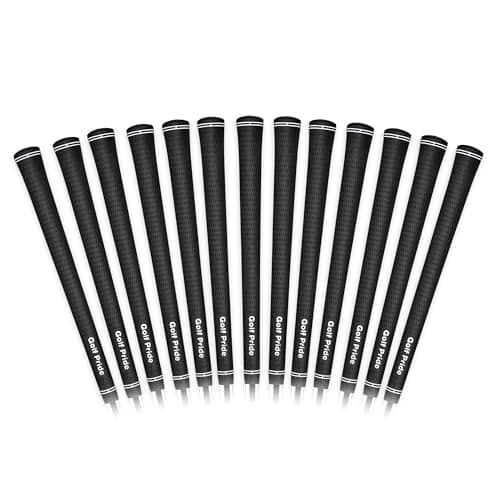
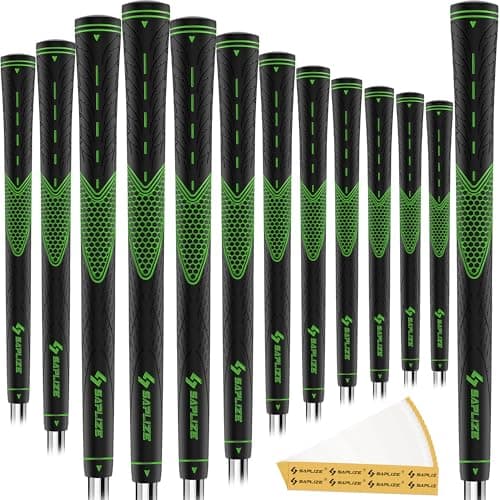
The economics here are the best in golf. A full set of thirteen grips in a value compound costs less than a single new wedge, and a set of the industry-standard rubber costs about what one mid-priced club does. For the price of replacing nothing at all, you get a set that feels new in your hands. Our best golf grips for the money page ranks the field properly; the two picks below are the value option and the standard everyone compares to.
Wedge grooves: what the testing actually found
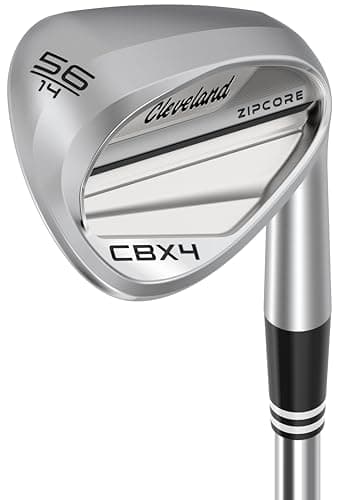
The widely quoted figure is about 75 rounds. MyGolfSpy, answering reader questions on wedges, relays Titleist's guidance that you should start thinking about replacing a wedge after roughly 75 rounds, and notes that as grooves wear you lose friction, which shows up as higher launch, lower spin and more roll out.
The most useful data we found, though, complicates that cleanly. Plugged In Golf took three new Cleveland RTX-3 wedges and wore them deliberately — one with 1,000 pitch shots, one with 1,000 full swings, one with 1,000 bunker shots — retesting on a launch monitor at 500 and 1,000 shots, in dry and wet conditions. The findings:
- Dry and clean, wear barely mattered.Launch, spin, distance and descent angle stayed virtually identical even after 1,000 bunker shots. The article's own summary of the dry results is that grooves are irrelevant.
- Wet, wear mattered a lot.With a wet face, the worn wedges showed spin reductions of 5% to 20%, with higher launch and inconsistent results — some shots spinning normally, others carrying no spin at all.
- Bunker shots did the most damage. After 500 bunker shots the wedge produced over 700 rpm less spin on a full swing; after 1,000, more than 1,000 rpm less.
- Moisture alone is enormous.A brand-new wedge lost 30% of its full-swing spin from a single spray of water — which is why one soaked towel is the wrong tool, and why our best golf towels page ranks on a wet half and a dry half.
Read those together and the practical rule falls out. If you play in dry conditions and mostly from fairways, your old wedge is fine and the 75-round figure is conservative. If you play early-morning dew, wet climates, or practice heavily out of sand, the wedge is the one club in your bag genuinely worth replacing on a schedule — and you can replace it alone, because wedges are sold individually. The one to replace first is the sand wedge, since it does the bunker work that causes the wear.
Worth knowing before you spend: if the shot going wrong is the short chip rather than the pitch, the problem may not be groove wear at all. A putting-stroke club plays that shot with no wrists and no leading edge to catch — the best golf chippers page covers the option, including the one trap that makes a cheap chipper illegal in competition.
Drivers: fatigue is real, and probably not your problem
Golf Digest's equipment editors are direct about this: metal, even one as strong as titanium, suffers fatigue, especially when thinned to the level of a driver face, and repeated impacts can change a face until it no longer conforms and eventually splits. Their example is Cameron Champ, who swings around 128 mph and broke a driver just before winning the 2018 Sanderson Farms Championship.
Then comes the part most articles leave out. The same editors say it is really tough for an everyday golfer to wear out a driver enough to crack it: you need to be at least 105 to 110 mph and play and practice a lot. At 90 mph, their verdict is that it is nothing to worry about, and you will almost certainly buy a new driver before the old one fails.
So if you are wondering whether a five-year-old driver has gone “dead”, the honest answer for a typical amateur swing is no — and that is good news for a value buyer, because it is exactly why last season's model is such a strong purchase. Our best budget drivers page is built on that depreciation, and buying used golf clubs covers what to inspect when the club has already had a life.
Irons: the technology dates before the steel does
A cast stainless iron head struck tens of thousands of times by an amateur is, mechanically, barely changed. The grooves on the scoring irons dull slowly, the face takes ball marks, the finish wears at the sweet spot — and none of that is the reason anybody replaces irons. People replace irons because a new model promises something, or because their swing has changed enough that the fit is wrong.
The fit argument is the legitimate one. If you have gained or lost significant clubhead speed, changed your posture, or grown into a different swing since you bought your set, the shaft flex and lie angle may genuinely no longer suit you, and how much a club fitting helps covers what that is worth. Age alone is not an argument. If your irons fit you and your grips are fresh, a decade-old game-improvement set will not cost you strokes against this year's.
The five habits that shorten a club's life
- Storing the bag in a hot car. Heat and UV harden grips and attack epoxy. This single habit does more damage than playing does.
- Putting clubs away wet. Water sits in the ferrule joint and under the grip tape. Wipe heads and shafts after a wet round and let the bag stand open.
- Cleaning grooves with a wire brush and solvent. Use a soft brush, water and a tee. Aggressive cleaning rounds the groove edges you are trying to preserve.
- Hitting off cheap range mats constantly.A thin mat over concrete sends shock through the joint and scuffs the sole flat. If you practice a lot, practice on a mat built for it — our best practice nets and mats page covers the difference.
- Letting clubs cross in the bag. Shafts rub shafts, graphite chips, and grips wear against dividers. How many dividers you need explains why depth matters more than count.
What to replace, in what order
If you have a modest budget and a set that feels tired, spend it in this order. First, regrip everything — it is the cheapest change that touches every club you own. Second, replace the sand wedge if you play in wet conditions or practice out of bunkers. Third, get fitted before you buy anything else, because a fitting tells you whether the set you own is actually wrong or merely old.
Only after those three does a new head make sense, and then the value answer is almost always last season's model rather than this one. That is the whole argument of this site applied to a single question: the equipment that lowers your score is the equipment that fits you and feels right in your hands, not the equipment that was manufactured most recently.