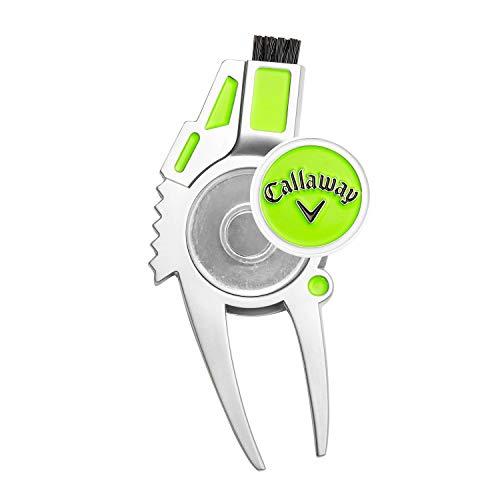
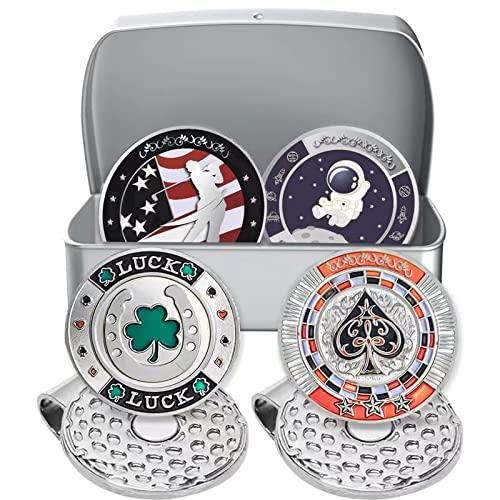
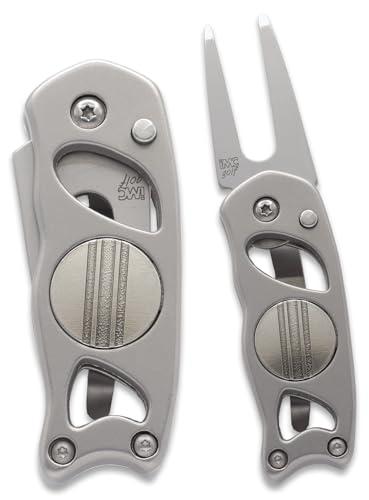
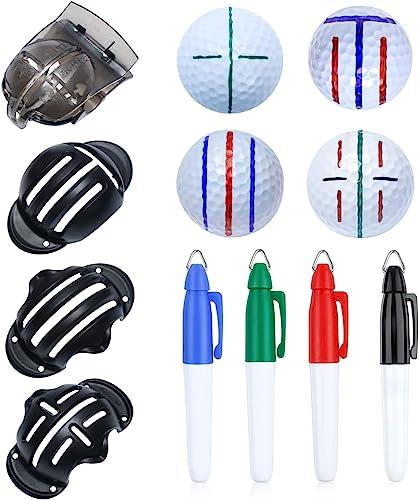
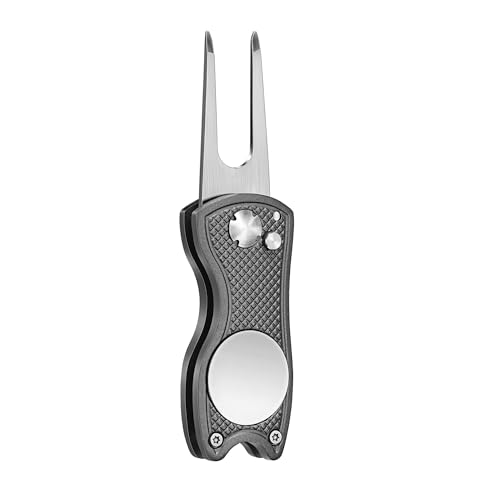
The Mile High Life foldable divot tool is the best buy in this category, and it is also the cheapest thing on the page — which is the honest answer in a category where the extra money buys finish, not function. It folds flat, it has a magnetic marker seat, and its pop-up button pushes the marker out instead of making you pick at it with a fingernail. The Callaway 4-in-1 is the pick if you want a brand behind it; the Jebor hat-clip set solves the real problem (a marker you cannot find is not a marker); the Switchblade steel tool is the one to give as a present; and the CUALFEC line marker is not a spot marker at all. Prices in the table above are live and date-stamped.
This category is confusing because three unrelated jobs are sold under overlapping search terms. Sort them out first and the shopping takes two minutes:
- Repairing the green. A fork or prong tool that pushes turf back together after a ball lands. This is the job with an actual technique attached to it.
- Marking the spot.A small disc that holds your ball's position while you lift it. The Rules have something specific to say here.
- Drawing an aim line.A stencil and a pen that put a line on the ball for alignment. Nothing to do with either of the above, despite being called a “ball marker” on half the listings.
Most products bundle one and two. Nothing bundles all three, and the listings will not tell you which you are getting, because “golf ball marker” is the search term for both a disc and a pen.
What the Rules actually require of a marker
Under Rule 14.1a, when a ball has to be replaced on its original spot, the player must mark that spot first — and the marker goes right behind or right next to the ball, close enough that the ball can be replaced accurately. The Rules define a ball-marker as an artificial object used to mark the spot of a ball to be lifted, and they give examples: a tee, a coin, an object made to be a ball-marker, or another small piece of equipment.
Two things follow from that wording, and they are the only two most golfers need:
- “Artificial” is the operative word.A coin, a tee or a plastic disc is fine. A pebble or a twig is a loose impediment, not an artificial object, and marking with one costs you a stroke — as National Club Golfer puts it, the term is loose but the object has to be artificial.
- Lift the marker before you putt. Making a stroke with your ball-marker still in place carries a penalty stroke. This is the commonest ball-marker penalty in amateur golf and it has nothing to do with which marker you bought.
Where markers do get complicated is alignment. The equipment rules cap the size of a ball-marker that carries an alignment aid, and National Club Golfer applies Rule 4.3a — the rule against equipment that artificially eliminates or reduces the need for skill or judgement — to rule out markers with a built-in spirit level for reading slope. Those are out. A plain line on a small disc is a different question, and Golf.com has noted that applying an alignment line to a ball is not specifically addressed in the Rules at all. If you only play social golf, none of this will ever come up. If you play competitions, read the marker rules before you buy a marker with a line on it — which is why the Switchblade's alignment markers are flagged on its card rather than sold as a feature.
The divot tool job, and the technique that matters more than the tool
Since 2019, Rule 13.1c has let you repair damage on the putting green without penalty, and the definition of damage is broad: ball marks, shoe damage such as spike marks, and scrapes or indentations from equipment or a flagstick. What is notcovered is damage from normal maintenance — aeration holes, grooves from vertical mowing — or natural wear of the hole. The standard is taking reasonable steps to restore the surface, not improving it.
The tool barely matters. The USGA's own ball-mark guidance is built around one instruction — push, do not pry — because lifting the center of a ball mark exposes bare soil and damages the turf you were trying to save. Work around the edge of the mark, move the turf toward the middle, and tap it flat. The USGA says a repair tool is recommended but other pointed objects can be used, which is as close as anyone official comes to telling you a six-dollar fork is enough.
That is why the ranking on this page looks the way it does. There is no performance ceiling to buy your way to. A folded steel fork and a stamped aluminum one restore turf identically; what separates them is whether the hinge survives a season in a pocket.
How we picked these
- Which of the three jobs it does. Stated plainly on every card, because the listings blur it. The CUALFEC set is ranked last and labeled as not a spot marker for exactly this reason.
- Findability over finish. The most expensive marker in the world is worthless at the bottom of a pocket on the sixteenth green. A magnetic seat with a pop-up button, or a clip on your cap, is worth more than engraving.
- A material the maker actually names.“All metal” is not an alloy. The Switchblade states stainless steel and scores for it; everything else here publishes nothing and is marked down accordingly.
- Multipacks count. Markers are the most-lost object in golf. A set of several beats one good one, which is the same logic our best golf tees page applies to tees.
- No rules claims from a listing.Every rules statement on this page is sourced to the Rules of Golf or to a rules writer, never to a seller's bullet point.
Published specs, side by side
| Pick | Job | Material stated? | How many |
|---|
| Mile High Life Foldable | Repair + mark | “All metal”, no alloy given | One tool, one marker |
| Callaway 4-in-1 | Repair + mark | Not published | One tool |
| Jebor Hat Clip Set | Mark only | Not published | Multipack, with box |
| Switchblade Steel | Repair + mark (alignment) | Stainless steel | One tool, two markers |
| CUALFEC Line Marker | Aim line only | Not published | 8-piece set |
The hat clip is the upgrade nobody considers
Ask a golfer why they do not mark their ball on a short putt and the honest answer is usually that the marker is in the pocket with the tees, the scorecard pencil and a glove. A magnetic clip on the cap brim puts it where your hand already travels, and the whole decision takes half a second instead of fifteen.
The caveat is magnet strength, and nobody publishes it. A weak clip magnet gives up the marker somewhere in the rough and you never see it again, which is the argument for buying a multipack rather than a single engraved disc. If you already carry a tool with a magnetic marker seat, you do not need a hat clip as well — pick the one that lives on the object you never forget.
Should you draw a line on your ball?
If you aim your putts with the ball's own line, a stencil is the cheapest alignment aid in golf: a few dollars, works on every ball you already own, takes four seconds. If you do not aim that way — and plenty of good putters look at the hole and roll it — it is clutter, and a line drawn crooked is actively worse than no line, because you will trust it.
Practice the stencil on a ball you do not care about before you line up a dozen. And if you want to spend the same money on something that measurably changes a putting average, the honest answer is not an accessory at all: it is reps on a putting mat under $100. This page is about doing the small jobs properly, not about buying strokes.
What a complete green kit actually costs
The whole set — a folding fork with a magnetic marker, a spare marker on a hat clip, and a line stencil if you aim with a line — comes to less than a single premium golf glove, and substantially less than a dozen tour balls. That is the real finding of this page. There is no performance tier in green accessories: there is the stuff that does the job, the stuff that does the job and looks nicer, and a gift aisle.
Spend the difference where the equipment genuinely moves the ball. Our best golf balls for the money page is the one place a value buyer saves real money every round, and a ball retriever pays for itself faster than anything in this category.