Polarized lenses cut reflected glare off water and wet surfaces better than any tint, and most golfers find them more comfortable for four hours in bright sun. The honest counter-argument is that polarization filters out reflected light, and some of that light is information — which is why plenty of good players prefer a non-polarized golf tint for reading greens. Neither side is wrong. Which one you are depends on what you struggle with: squinting, or reading a putt.
What polarization actually does
Light bouncing off a flat surface — water, a wet fairway, a car bonnet in the car park — comes back mostly aligned in one plane. A polarized lens is a filter oriented to block light in that plane. The result is that mirror-like glare drops away dramatically while the rest of the scene stays bright, which is why polarized lenses feel so much calmer on a lake hole and why anglers will not fish without them.
A plain dark tint cannot do this. It reduces all light equally, so it takes the glare down and takes everything else down with it. That is the whole mechanical difference, and it is the reason polarization is sold at a premium over tint depth.
The case for polarized on a golf course
- Less eye fatigue. Four to five hours of squinting is tiring in a way that shows up in your swing late in the round. Reducing glare rather than overall brightness is the more comfortable way to deal with it.
- Water and wet grass. If your course has carries over water or you play early on heavy dew, polarized lenses are a straightforward improvement.
- Ball tracking against a bright sky. Less veiling glare generally means better contrast on a ball in flight.
- They work everywhere else too. Driving to the course, sitting outside afterwards. A golf-only lens does one job; a polarized pair does several.
The case against, and it is a real case
Putting is a depth-and-texture problem. You are reading the direction grass lies, subtle sheen differences across a slope, and how light falls on a contour — and a good deal of that is reflected light arriving at your eye at a shallow angle. A polarized filter removes some of it by design. Golfers who say polarized lenses make greens look "flat" are not imagining it; they are describing the filter doing exactly what it is built to do.
There is a second, more concrete catch: LCD screens. Many rangefinder and GPS displays are themselves polarized, and viewing one through a polarized lens at the wrong angle can dim or black out the numbers. If you use a laser or a handheld GPS, test it with the glasses on before you commit — the usual workaround is tilting your head, which is exactly as irritating as it sounds.
Finally, the thing polarization does not do: it is not sun protection. UV blocking is a separate property of the lens. A lens can be polarized and poor at UV, or non-polarized and fully UV400. Do not read one as the other.
The two things that matter more than polarization
UV protection.UV400 or "blocks 100% UVA/UVB" is the non-negotiable specification, and it is the one that has consequences beyond comfort. Every pair we would recommend states it.
Whether they stay on your face. The pair you stop wearing is worth nothing. Sunglasses that slide down a sweaty nose, or pinch after two hours, come off at the fourth tee and live in the bag for the rest of the season. Hydrophilic or silicone nose pads, adjustable arms, and low weight are what decide this — and they decide it far more often than lens technology does.
Lens tint, which is the other half of the question
Tint depth and tint color are independent of polarization and matter at least as much. A deeper lens passing around 15% of the light suits the brightest part of the afternoon; a lighter lens passing around 40% suits cloud and flat light, where a dark lens just makes everything murky. Interchangeable-lens frames exist precisely because one tint cannot cover a whole day, and they are the cheapest way to own two or three good lenses.
Golf-specific tints are a separate product again — contrast-tuned lenses designed to lift the difference between grass tones. They are the main reason to spend above the value tier, and almost none of them are polarized, which tells you something about where lens designers who think about golf land on this question.
So which should you buy?
Buy polarized if your main complaint is glare and squinting, you play courses with water, and you want one pair for golf and everything else. Buy non-polarized if you putt well and care about reading greens, you use a laser rangefinder regularly, or you want a contrast-tuned golf tint. If you genuinely cannot decide, an interchangeable-lens frame sidesteps the argument for less than the price of two pairs.
The picks below cover all three answers. The full ranked field, with the premium options, is in our golf sunglasses roundup.
The three on the specs that decide this
| Pair | Polarized? | UV | Fit hardware |
|---|
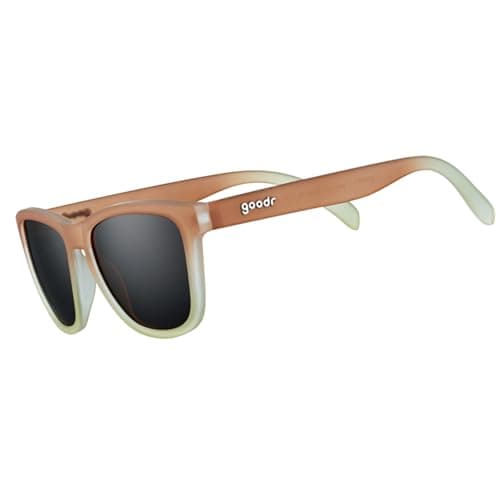
| goodr (golf series) | Yes | UV400 | Grip coating, silicone nose inserts; one size |
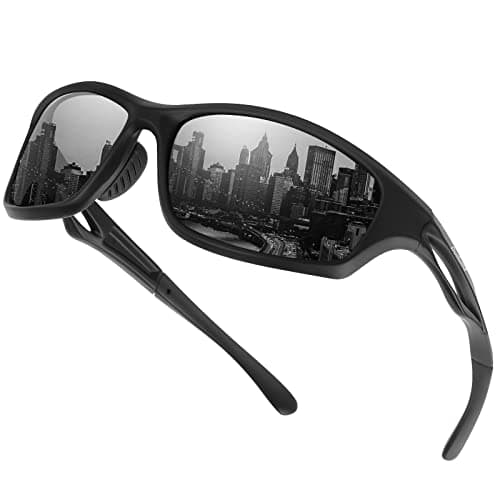
| Duduma Polarized Sports | Yes (TAC) | UV400, blocks 99% UVA-UVB | TR90 wrap frame, full rim |
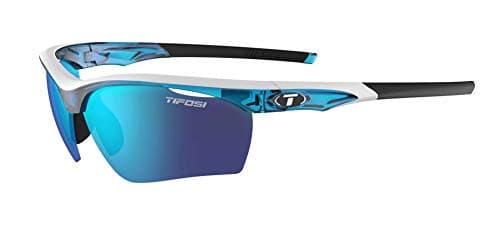
| Tifosi Vero | No — 3 interchangeable lenses | 100% UVA/UVB | Adjustable nose and ear pads, 26 g |
Those are published specifications from the listings, not optical measurements — we have not put a lens on a spectrometer and we are not going to imply we did. The scores are judgments from that documented research.
Why the goodr leads a polarization guide
Because it is the polarized pair most likely to still be on your face at the 18th. Grip coating and silicone nose inserts address the actual reason cheap sunglasses fail in heat — sliding — and the frame shape is normal enough to wear off the course, which is how a single pair ends up covering golf and driving both. The Duduma is the same answer at a lower price and lower edge clarity, cheap enough to keep a spare in the car. The Tifosi Vero is the non-polarized route: three lenses in the box for bright sun, flat light and dusk, with the only fully adjustable fit here.