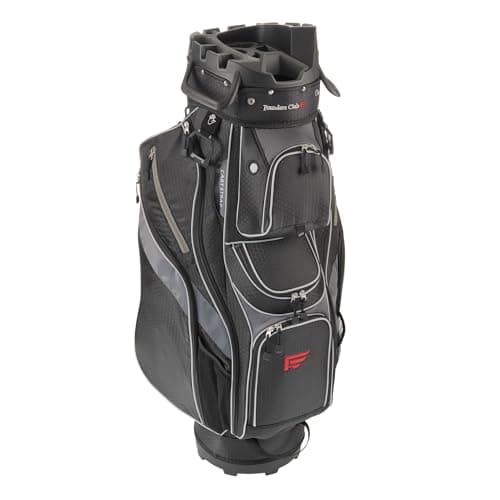
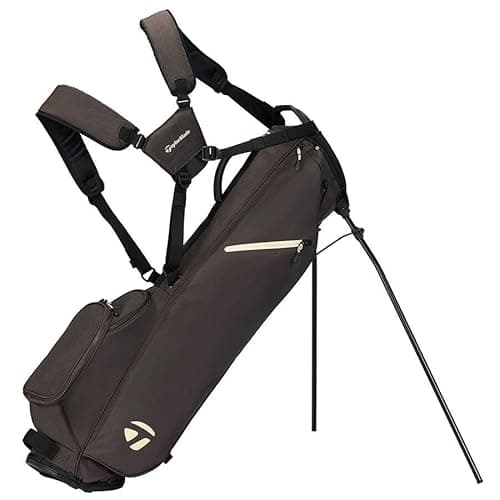
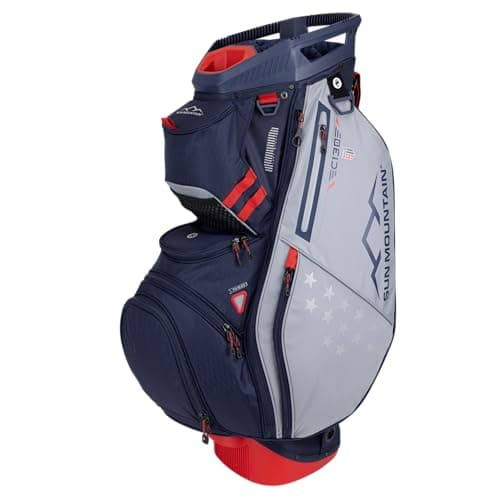
A value golf bag used weekly is good for roughly five seasons; a premium one lives in a trunk for about ten. But almost no bag reaches either number for the reason you expect — the fabric usually outlives the bag, and what actually ends it is a single failed zip, a strap seam that has pulled, or a base worn through from being dragged. Those are judgments from how these bags are built and what fails on them, not a measured lifespan: we do not run a durability lab, and our methodology says so plainly.
What fails, in order
- Zips. Nearly always first. A zip is the only part of a golf bag with moving components, it gets sand and grass seed in it every round, and it is the part you operate twenty times a day. Once the slider spreads, the pocket is done.
- Strap stitching. On carry bags, the anchor points at the top and bottom of the dual strap carry the whole load through tens of thousands of steps. Stitching pulls long before webbing tears.
- The base. On cart bags, the lower edge wears where the bag drags off a trolley or sits on a tee-box path. On stand bags, the leg pivots loosen and the legs stop springing clear.
- The divider top. This is the one that actually retires a bag. When the plastic cuff cracks or the full-length dividers collapse, clubs start crossing and rubbing, and there is no repair worth paying for.
- The fabric. Last, and mostly cosmetic. Sun fades a bag long before the material gives up.
The five habits that halve a bag's life
- Living in a hot car trunk. Heat and UV together are what crack plastic cuffs and bleach panels. A garage shelf is free and does none of that.
- Being put away wet. Damp bags grow mildew in the pockets and rot stitching from the inside. Empty it, open every pocket, stand it up to dry.
- Carrying everything.Overloaded pockets stress zips and strap seams, and there is no reason to haul a dozen balls and three jackets around — what to keep in your golf bag lists the kit that earns its weight.
- Dragging it. The base is the one part with no give. Lift the bag off the cart rather than pulling it over the lip.
- Storing clubs with the headcovers off and the dividers half-full.Clubs cross, grips rub, and the divider top takes the strain — how many dividers you need explains why depth matters more than count.
Repair or replace?
Repair is worth it for exactly two failures. A strap can be restitched by any shoe repairer or canvas shop for very little, and a single failed zip slider can often be replaced without touching the tape. Both are cheaper than a new bag by an order of magnitude.
Replace when the divider top has gone, when the base is worn through, or when more than one zip has failed — at that point you are maintaining a bag that is going to keep costing you. A full-feature 14-way cart bag starts around $160 on the live prices below, which is less than most golfers assume and less than a single premium driver headcover-and-shaft combination.
Does spending more buy more years?
Some, and not as much as the price gap suggests. What you buy above about $200 is better fabric, better zips and a better leg mechanism, which is genuinely where the extra seasons come from. What you do not buy is a different set of failure modes — premium bags lose zips too. Our best golf bags under $200 page works through what the money above that line does and does not get you, and best value golf bags ranks the whole field with no ceiling.
The sensible way to think about it: at five seasons a $160 cart bag costs about $32 a year. Buying the $400 bag only wins if it genuinely lasts more than twice as long, and the zip on the ball pocket does not care what you paid.