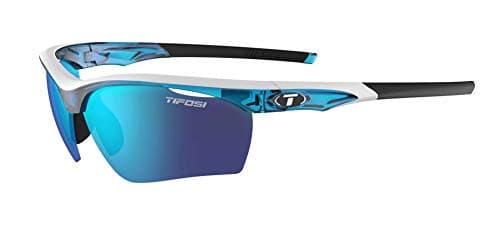
Buy a warm tint — brown, amber, copper or rose — not grey. On a golf course the job of a lens is contrast, because contrast is what lets you follow a ball against sky and trees and read the slope on a green. The specialist optical retailer SportRx puts brown and rose at the top for exactly that reason, and says grey is not recommended for golf except for genuinely light-sensitive eyes. The cleanest way to get the right tint in every light is an interchangeable set: the Tifosi Vero ships with three lenses, including a red contrast lens for flat light and a clear one for dusk.
Why contrast, not darkness
A ski lens is dark because snow is blinding. A golf lens does not have that problem; a golf course is green, which sits right in the middle of the visible spectrum and gives you almost no natural contrast to work with. A warm-based tint cuts the blue end of the light and lifts the separation between grass, ball and sky. As SportRx puts it, “the better your contrast is, the easier it will be to see your ball, read the green, and make your swing more accurate.”
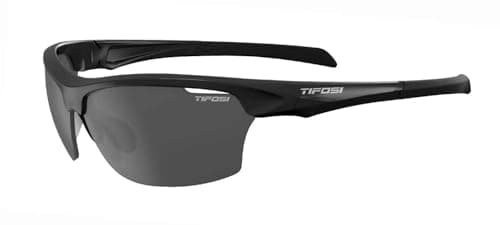
Grey does the opposite. It reduces all wavelengths roughly evenly, which is why it is the default for driving and for general sun protection — and why it flattens exactly the detail you want on a putting surface. It is also the tint a lot of value sports eyewear ships with — including the mirrored smoke lens on the Tifosi Intense below.
Tint by the light you play in
| Tint | Light it suits | What it does on a course |
|---|
| Brown / copper | Bright sun, any climate | The all-round pick: lower light transmission with high colour saturation |
| Rose / red | Overcast, partly cloudy, early and late | The most colour intensity, at the cost of less brightness protection |
| Amber | Cloudy, flat, variable | Pops the ball against the grass by lifting contrast |
| Grey / smoke | Bright sun, light-sensitive eyes | True colour and good glare control, but the flattest read on a green |
| Green mirror | Bright sun | Less contrast than brown or rose and a muted look |
Those are SportRx's published recommendations, not our measurements — we do not own a spectrophotometer, and our methodology is explicit about where a number comes from. The useful simplification: one warm lens covers almost all your golf, and a second lighter lens covers the rest.
Should the lens be polarized?
It depends on you, and this is the one place the easy answer is wrong. Polarization kills glare off water and wet grass, which is genuinely pleasant. It also removes some of the surface sheen that tells you which way a green runs, and it can interfere with the LCD on a laser rangefinder. If you putt by reading shine and you shoot yardages with a laser, an unpolarized warm lens may actually serve you better — are polarized sunglasses good for golf works through both sides, including the rangefinder catch.
What each pair here actually gives you
- Tifosi Vero.Three lenses in the box — Clarion Blue for bright sun, AC Red as the contrast lens for flat light, and clear for dusk — in a 26-gram frame with adjustable nose and ear pads. It is the only pick here that lets you match the tint to the day.
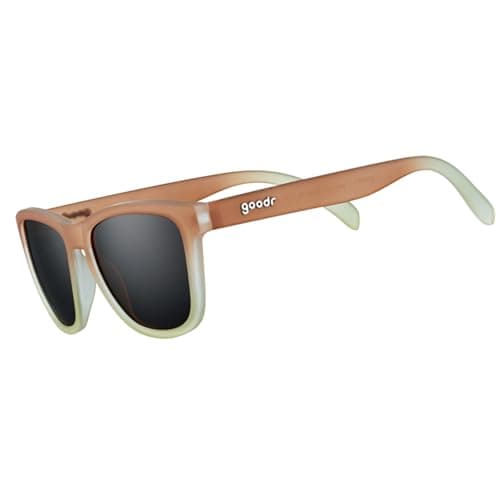
- goodr golf series. Polarized, UV400, grip coating and silicone nose inserts, in a frame that looks like normal sunglasses. Tints vary by colourway, so pick a warm one rather than the darkest one.
- Tifosi Intense. A silver-mirrored smoke lens: a grey base, so the bright-sun tint rather than the contrast tint, in the lightest frame on the page at 23 grams.
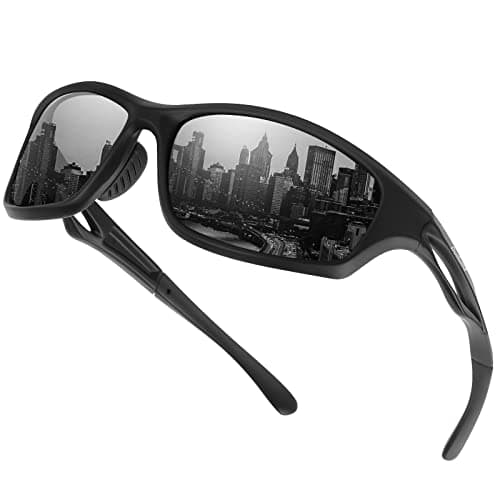
- Duduma. A TAC polarized lens with UV400 and a wrap frame, at a price where losing a pair in the rough is annoying rather than expensive. The listing publishes no tint or light-transmission figure at all, which is the honest example of what you give up at this price: protection you can verify, contrast you cannot.
What we would do
If you play in one climate and want one pair, buy a warm-tinted polarized pair you will actually wear — the goodr is that pair for most people. If you play in changeable light, or you want the contrast lens for overcast days without buying twice, the Vero's three-lens kit costs less than two decent single-lens pairs. If your eyes are light-sensitive and bright glare is the problem you are solving, a mirrored smoke lens like the Intense is the right answer and the contrast argument is secondary.
One thing no tint fixes: fit. Sunglasses that slide down your nose on the ninth tee come off and stay off, and then the lens colour is irrelevant. Our best golf sunglasses roundup ranks the same field on weight, grip and price, which is the other half of this decision.