Skip to content
Club&Carry

Hub 02 · Golf Clubs

What Loft Driver Should I Use?

Almost every amateur is better off with more loft than they think. Here is how to pick a number without a launch monitor, and why we refuse to publish a loft chart.

By Stephen V.Updated How we pick
#ad

We earn a commission when you buy through our Amazon links, at no extra cost to you. It never affects our rankings, and we say so when the cheaper product is the better buy. How this works.

If you do not know your numbers, buy 10.5 degrees. It is the stock loft for a reason: it suits the swing speed band most amateur men actually live in. Go up to 12 degrees if your drives fly low and fall out of the sky, or if your driver swing is under about 85 mph. Go down to 9 or 9.5 degrees only if you are genuinely fast and your ball balloons. And if you can buy a head with an adjustable hosel for the same money, buy that instead of guessing once.

Why we do not publish a loft chart

Search this question and you will find a dozen tidy tables matching a swing speed to a loft number. We are not going to add another one, because the honest version of that table has three inputs we cannot know: your angle of attack, your spin rate and where on the face you strike it. A golfer who hits up on the ball at 95 mph and one who hits down on it at 95 mph need lofts two or three degrees apart.

What published fitting guidance does support is the boundaries. GOLF.com quotes Tim Briand of True Spec Golf on exactly this: “If you swing over 100 mph, there's little to no chance you'll get fitted into a 12-degree driver, and if you swing less than 90 mph, you'll never want an 8.5-degree club in your hands.” That is the useful shape of the answer. Fast players are not fitted into the highest lofts, slower players are never fitted into the lowest ones, and the middle is wide.

Diagnose from your ball flight instead

You do not need a launch monitor to read the two symptoms that matter. Watch your next ten drives:

  • The ball climbs, hangs, and lands almost vertically. That is too much spin or too much loft for your speed. Less loft, or a lower-spinning head, will give you distance back.
  • The ball never gets above head height and dives. Too little loft for your speed, which is far and away the more common amateur problem. More loft will add carry, and carry is what adds distance for a moderate swing.
  • The ball flies a sensible height and the misses are left and right. Loft is not your issue. Go and read the best anti-slice drivers or get a lesson, because you are solving the wrong problem.

Loft is not the only lever — and it is rarely the first one

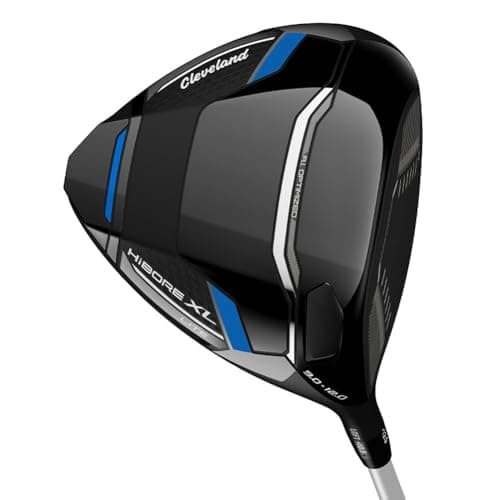
Three specifications change your launch more cheaply than loft does. Shaft flex comes first: a shaft too stiff for your speed holds the face open and lowers launch, which is why the shaft flex you actually need is the page to read before you pick a number off a box. Total weight comes second: Cleveland builds the HiBore XL Lite 32 grams lighter than its standard sibling, because a lighter club is the most reliable way to buy back clubhead speed. Face angle and heel weighting come third, and they are about direction rather than height.

Tee height is free and does more than most golfers expect. If the ball is teed so the equator sits level with the top of the driver crown, you will strike it higher on the face and launch it higher with the same loft. That is a genuine two-degree change in launch for no money at all.

Adjustable hosels: worth it, if it is free

DriverPublished loft optionsAdjustabilityFlexes
Cleveland HiBore XL LiteCommon lofts, senior build1.5 degrees of loft and lieSenior A available
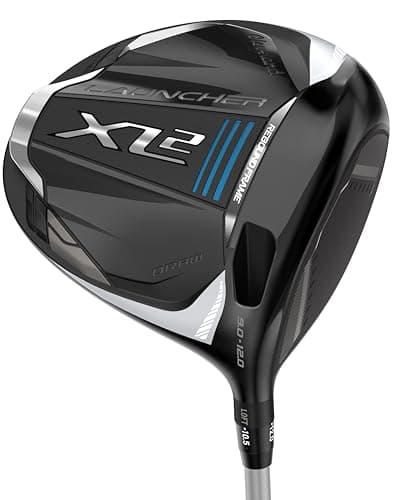
Cleveland Launcher XL 2Stock adjustable loftAdjustable hoselRegular, lightweight option
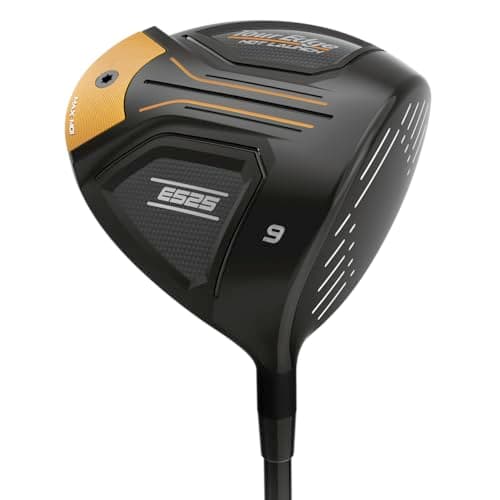
Tour Edge Hot Launch E52510.5 degreesNoneRegular and senior

An adjustable hosel does not make you a fitter, but it does mean one wrong guess is not permanent. A degree and a half in either direction covers most of the error an amateur makes buying blind. If the adjustable head costs noticeably more than the fixed one, skip it and spend the difference on an actual fitting — how much a club fitting helps works through what that session is worth and what it is not.

The short version

Under about 85 mph, buy 12 degrees, in a senior or light shaft. Between about 85 and 100 mph, buy 10.5 degrees in regular. Over 100 mph with a high, spinny flight, 9 to 9.5 degrees in stiff. Those are starting points for buying a club without data, not a fitting prescription — and if your current driver is the wrong loft, that is a far cheaper problem to fix than it feels, because last-generation heads in every loft sit on the best budget drivers list at a fraction of their launch price.
The short answer

Quick picks

#ProductBest forScorePrice
01
Cleveland Cleveland HiBore XL Lite Driver (Senior flex)
Cleveland HiBore XL Lite Driver (Senior flex)

A driver built deliberately light so a slower swing can move it faster — and sold in senior flex off the shelf, which almost nothing else is.

Slower swings that need free clubhead speed
8.6
$240.80Amazon
02
Cleveland Cleveland Launcher XL 2 Driver
Cleveland Launcher XL 2 Driver

A big, stable, forgiving head that gives up almost nothing to the flagships — last-gen value done right.

Maximum forgiveness off the tee
7.6
$299.99Amazon
03
Tour Edge Tour Edge Hot Launch E525 Driver
Tour Edge Hot Launch E525 Driver

A high-MOI, high-launch driver from a brand that has never charged brand-tax prices. The cheapest new driver here that is not a compromise.

The lowest price on a genuinely forgiving driver
8.4
$229.99Amazon

#ad · Live prices from the Amazon Product API, as of October 17, 2026. Where we have no verified live price, we show none — we would rather leave a gap than print a number that has rotted.

In detail

The picks, in full

01
Cleveland Cleveland HiBore XL Lite Driver (Senior flex)

Slower swings that need free clubhead speed

Cleveland HiBore XL Lite Driver (Senior flex)

32g lighter than standardSenior flex availableMainFrame XL variable face1.5° adjustable hosel
8.6/10

A driver built deliberately light so a slower swing can move it faster — and sold in senior flex off the shelf, which almost nothing else is.

Forgiveness
9
Launch
9
Speed help
9
Feel
8
Value
8

Pros

  • Cleveland builds this head 32g lighter than the standard HiBore XL, and lighter total weight is the most reliable way to buy back swing speed
  • Genuinely available in senior (A) flex in common lofts, instead of forcing a senior into a regular shaft
  • Adjustable hosel gives 1.5° of loft and lie change, so launch can be tuned without a refit

Cons

  • The light build feels whippy to anyone with a normal swing speed
  • Costs more than the Tour Edge value option doing a similar job

Don't buy this if…

…your driver swing is above roughly 95 mph. A lightweight senior-flex build will feel uncontrollable — the Cleveland Launcher XL 2 in regular is the same family in a normal weight.

$240.80View on Amazon

Price as of October 17, 2026. Prices change — Amazon's is the one that counts.

#ad · we may earn a commission from this link to Cleveland HiBore XL Lite Driver (Senior flex)

02
Cleveland Cleveland Launcher XL 2 Driver

Maximum forgiveness off the tee

Cleveland Launcher XL 2 Driver

Large 460cc headHigh MOIStock adjustable loftLightweight option
7.6/10

A big, stable, forgiving head that gives up almost nothing to the flagships — last-gen value done right.

Forgiveness
9
Distance
8
Adjustability
6
Feel
7
Value
8

Pros

  • A large, high-MOI head that is very stable on off-center hits
  • Real distance that holds up well against much pricier current drivers
  • Often available at a steep discount as newer models launch

Cons

  • Less low-spin tuning than a premium adjustable driver for a fast swing
  • Chasing the newest release costs far more for marginal gains

Don't buy this if…

…you're a low-spin, high-speed player chasing a specific launch window. A fully adjustable flagship gives you more knobs to turn — for a lot more money.

$299.99View on Amazon

Price as of October 17, 2026. Prices change — Amazon's is the one that counts.

#ad · we may earn a commission from this link to Cleveland Launcher XL 2 Driver

03
Tour Edge Tour Edge Hot Launch E525 Driver

The lowest price on a genuinely forgiving driver

Tour Edge Hot Launch E525 Driver

MOI above 5,000 g-cm²Diamond Face VFTRidgeback crown railSenior flex available
8.4/10

A high-MOI, high-launch driver from a brand that has never charged brand-tax prices. The cheapest new driver here that is not a compromise.

Forgiveness
9
Launch
9
Speed help
7
Feel
7
Value
10

Pros

  • Tour Edge publishes an MOI above 5,000 g-cm² — that stability is what keeps off-center hits online
  • Diamond Face variable-thickness construction is aimed squarely at ball speed on mishits
  • Offered in senior flex as well as regular, without a price jump

Cons

  • Tour Edge has almost no resale market compared with the big brands
  • Stock shaft options are basic

Don't buy this if…

…you intend to sell the club on in a year. Tour Edge holds value poorly — buy it to keep, or buy a used Callaway or Cleveland instead.

$229.99View on Amazon

Price as of October 17, 2026. Prices change — Amazon's is the one that counts.

#ad · we may earn a commission from this link to Tour Edge Hot Launch E525 Driver

How we picked

We do not run a testing lab

We compiled the published specifications, did the cost-per-round and value math, and read the independent robot and launch-monitor data — then scored each product against a published rubric. The scores are judgments from documented research — they are not measurements we took, because we do not have a lab and we are not going to pretend we do. Where a number came from someone else's lab, we name them and link them in Sources.

Questions

Frequently asked

What loft driver should a beginner use?
Start at 10.5 degrees, or 12 if your swing is slow and your drives stay low. More loft makes the ball easier to get airborne and reduces the sidespin that curves it, which are the two things a new golfer needs most.
Is a 10.5 degree driver better than a 9.5?
For most amateurs, yes. GOLF.com quotes True Spec's Tim Briand saying a golfer under 90 mph will never want an 8.5-degree club, and the same logic applies a degree up. Low lofts suit fast swings with high spin, which is a small minority of golfers.
Does more loft mean less distance?
Not at moderate swing speeds. Under about 95 mph, extra loft usually adds carry, and carry is most of the distance. Too much loft only costs distance when it pushes your spin high enough that the ball climbs and stalls.
What loft driver for a 95 mph swing speed?
10.5 degrees is the sensible starting point, with 9.5 worth testing if your flight is high and spinny. Angle of attack matters as much as speed, which is why we publish no speed-to-loft table.
Should I buy an adjustable driver?
If it costs the same as the fixed version, yes — 1.5 degrees of adjustment covers most of the error in buying blind. If it costs meaningfully more, buy the fixed head and put the difference toward a fitting.

Keep reading

Receipts

Sources

We do not run a testing lab, and we do not pretend to. Where a measured number came from someone else's lab or robot, we name them and link them. Where we could not verify something, we say so on the page rather than quietly leaving it out. Read our full method.