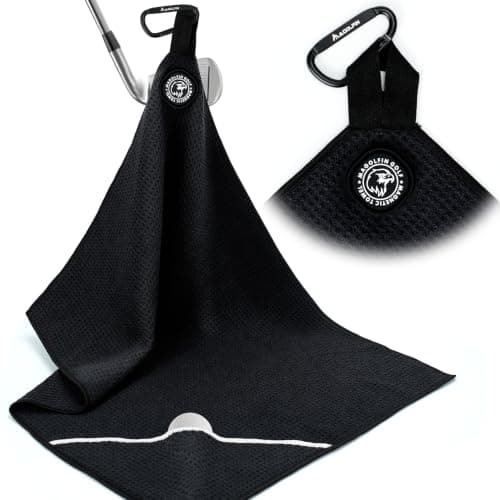
The MAGOLFIN magnetic waffle towel is the single accessory we would buy first: it is the thing you touch most often in a round, the magnet means it does not end up on the floor of a cart, and the zip pocket keeps the wet half away from your grips. Our budget pick is the Mile High Life foldable divot tool, the cheapest item on this page and the only one that repairs something. Everything below is ranked by how many times a round you actually reach for it — not by what looks good in a bag. Prices in the Quick Picks table are live from the price layer with their own “as of” date.
The ranking rule: reaches per round
Accessory lists usually rank by price or by novelty, which is how people end up with a rangefinder holster and no towel. A golf bag has four or five usable pockets and a weight you have to carry, so the only sane ranking is how often an item does its job between the first tee and the last green.
Counted that way, the order is not close:
- A towel: every hole, often twice. Wet grass on a face costs you spin, and a clubface wiped once between shots is the cheapest performance gain in the bag.
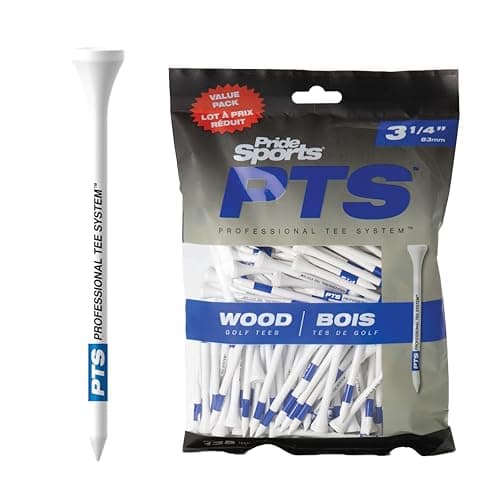
- Tees: every par 4 and par 5. Fourteen uses a round, and you lose them.
- A ball marker: every green you putt on. Eighteen uses, and the Rules require you to mark the spot before you lift the ball.
- A divot tool: every green, if you are doing it right. Same count as the marker, which is why the two are so often sold as one object.
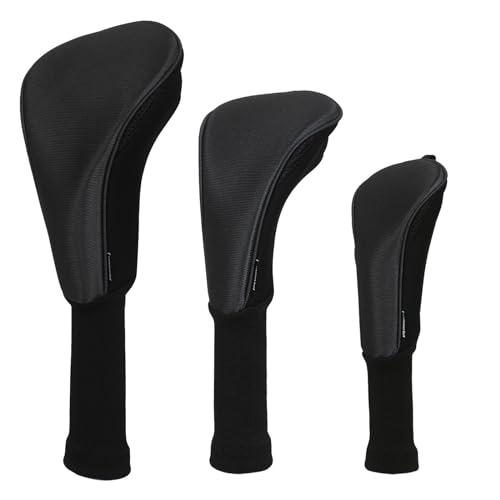
- Headcovers: twice per wood.Low count, high consequence — the covers are protecting the most expensive shafts in the bag rather than saving you a stroke.
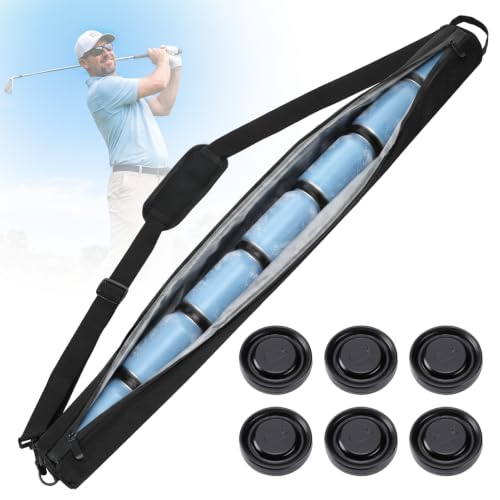
- A cooler sleeve: once or twice. It earns its pocket in summer and nothing in April.
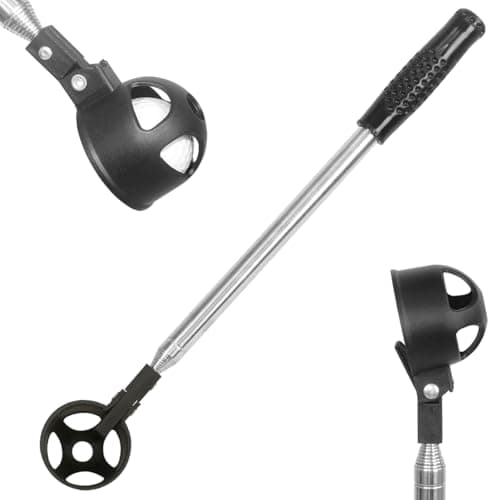
- A ball retriever: once a round if your course has water, never if it does not. The most situational thing here, and the easiest to leave at home.
The towel is the purchase, and the magnet is the feature
Every golfer already owns a towel, which is exactly why most of them own a bad one. The two failure modes are the same two every time: it falls off, and the wet part touches your grips.
A magnet fixes the first one in a way a clip never does — it sticks to a cart frame, a trolley strut or the shaft of a club rather than hanging off a ring that you have to thread. The waffle weave fixes part of the second, because a waffle texture holds grit in the pockets of the weave instead of dragging it across a clubface. The zip cleaning pocket on the MAGOLFIN is what separates it from the other five towels we track: the wet, dirty half lives inside the pocket rather than against the bag.
If you want the full field — the 17 x 40 in caddie towels, the two-layer wet/dry designs and the three-pack of 16 in squares — our best golf towels ranking is the deeper read. This page picks the one that earns the pocket.
Tees, markers and the tool: the three-dollar end of the bag
These three are so cheap that the only real mistake is buying the wrong version and then buying again.
On tees, buy a box rather than a sleeve. A 135-count box of 3-1/4 in wooden tees is a season of golf for the price of two coffees, and 3-1/4 in is the length that suits a modern 460 cc driver head. Our best golf tees page covers the castle-tee and low-friction alternatives, which are worth a look if you tee the ball at a wildly inconsistent height.
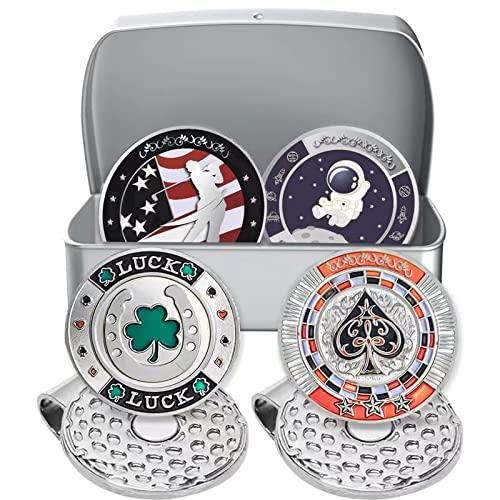
On markers, the only requirement is that one is in your pocket when you get to the green. A hat clip is the version that survives that test, because the marker lives on the hat you are already wearing rather than in a pocket you emptied in the car park. Rule 14.1a is specific that you mark the spot of the ball before lifting it, so this is equipment the Rules assume you have.
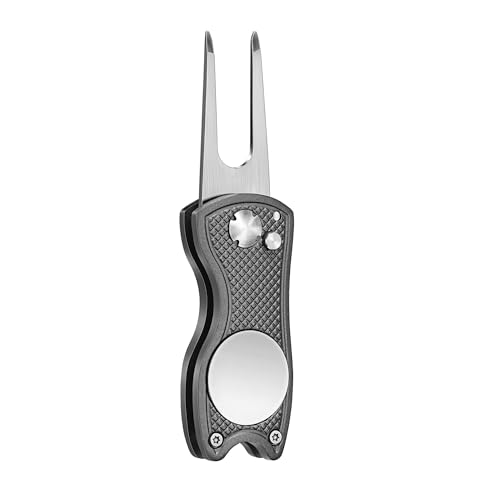
On the divot tool, a folding one is the pick for a simple reason: an unfolded two-prong fork in a trouser pocket is a hole in the trousers. The Mile High Life folds flat and is the cheapest thing on this page. If you would rather carry one object that marks and repairs, our ball markers and divot tools ranking covers the combination tools and the one stencil we rank last on purpose.
Headcovers: low use, high consequence
You take a headcover off and put it back on twice per wood per round, which by the reaches-per-round rule should put it near the bottom. It sits third because the downside is not a stroke, it is a shaft. A deep nick in a graphite shaft is a stress point in a composite under load, and the top few inches of shaft is the part that gets hit by other clubs.
That also makes headcovers and dividers the same purchase viewed from two angles: if your bag has genuinely full-length channels, the covers are mostly protecting the crown finish, which is a resale question. If it has a 14-way top over an open cavity — which, as our best golf bags with 14 dividerspage sets out, is what most “14-way” bags actually are — the covers are doing real work. The mesh neoprene set we rank here is the cheapest way to cover three woods; the full headcover ranking explains why a long-neck cover beats a short one.
The two seasonal pockets
The cooler sleeve is the one accessory where the cheap version is the right version. A tube sleeve supplied with six reusable hard ice pucks beats a soft bag with two flat gel packs, because hard pucks pack around cans and thaw slower than a gel blanket. It also fits the pocket a golf bag already has, which a cooler bag does not. The wider field is on our best golf cooler bags page, including the honest finding that nobody in the bracket publishes an insulation spec.
The ball retrieveris the item to buy on course knowledge rather than on specification. A 9 ft telescopic retriever reaches the near edge of a pond and the first few feet of a creek, which is where the recoverable balls are; an 18 ft one reaches further and is longer folded, so it sticks out of the bag. If your home course has no water, skip it and spend the money on balls — our best golf balls for the money page is a better use of it. The retriever ranking has the reach comparison.
Published specs, side by side
| Pick | Job | Uses per round | Published spec |
|---|
| MAGOLFIN magnetic waffle towel | Clean faces and grips | 18+ | Waffle microfiber, built-in magnet, zip pocket |
| Acostop cooler sleeve | Keep drinks cold | 1–2, summer only | Tube sleeve, 6 reusable hard ice pucks |
| Craftsman mesh neoprene set | Protect wood shafts and crowns | 2 per wood | 3-piece neoprene / mesh set |
| HOW TRUE 9 ft retriever | Recover balls from water | 0–2 | Telescopic, 9 ft reach stated |
| PrideSports PTS wood tees | Tee the ball | 14 | 135 count, 3-1/4 in |
| Jebor hat-clip markers | Mark the spot on the green | 18 | Markers with magnetic hat clips |
| Mile High Life divot tool | Repair ball marks | 18 | Foldable, pocket-safe |
Two honest gaps in that table. No towel in this category publishes a GSM weight, so “thick” is a photograph rather than a number. And no cooler sleeve at any price in this bracket publishes an insulation figure — the ice-puck count is the only hard spec available, which is why we rank on it.
What we would actually buy
Start with the towel, the tee box and the folding divot tool. That is three items, it costs less than a dozen premium balls, and it covers the three things you do on literally every hole. Add the hat-clip markers if you have ever reached a green without one. Add the headcover set if your bag has a 14-way top over an open cavity, and the cooler sleeve in May.
Leave the retriever until you know you need it. The deeper version of this list — including the things that live in a bag but are not accessories, like a spare glove and a rain hood — is our what to keep in your golf bag checklist, which this page is the shopping half of.