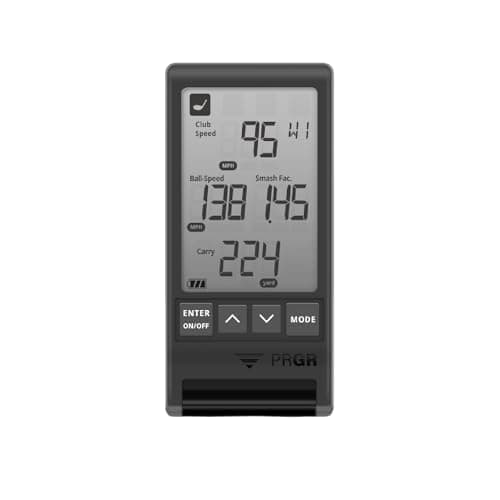
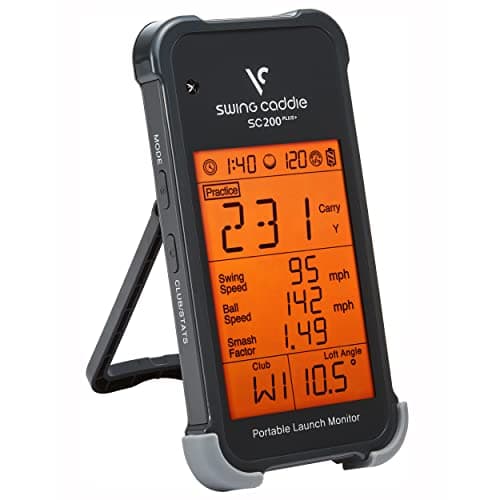
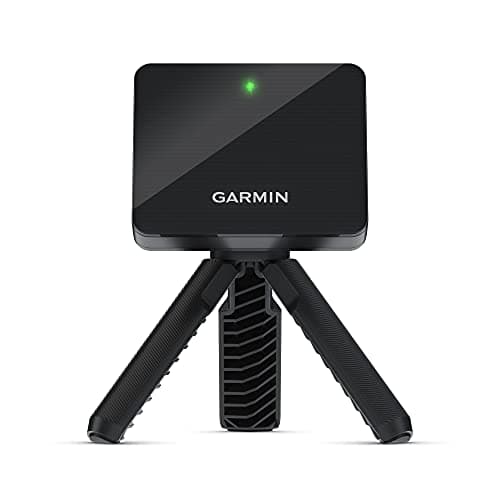
The Garmin Approach R10 is the launch monitor to buy under $500: it is the only unit that clears the band and still gives you spin and a dozen-plus parameters, with a published battery life of up to 10 hours and indoor or range use. Our budget pick is the Voice Caddie SC200Plus, the cheapest unit here that does the job most golfers actually need — carry, ball speed, swing speed and smash factor, on a 4-inch screen with voice output and no phone involved. The PRGR HS 130-A is the pick if you want the same thing in a pocket-sized box that stores 500 swings. Prices in the Quick Picks table above are live from the price layer and carry their own “as of” date; the $500 ceiling is applied to that feed, not to a list price.
What the $500 line actually buys and removes
This is the most useful thing to understand before you spend anything, because the bracket is not a gentle slope. There is a feature cliff and it sits almost exactly here.
Below the lineyou are buying Doppler radar that reports speed and the distances derived from it: ball speed, club speed, smash factor, carry and total. These are the numbers that fix the most common and most expensive gap in an amateur's game — not knowing how far each club actually carries. They are also the numbers you can trust most from cheap hardware, because speed is what radar measures directly.
At the linespin appears, and with it the launch-and-spin pairing that lets a device model a full ball flight rather than extrapolate one. Garmin's published specification for the R10 lists more than a dozen parameters including spin, alongside ball- and club-speed accuracy figures, 10 hours of battery and an IPX7 rating. That same published sheet is also clear that the simulator features — Home Tee Hero and virtual rounds in Garmin Golf — need a subscription, which is the part people discover after the box is open.
Above the line you are buying measurement method rather than metric count: photometric camera systems that photograph the ball instead of bouncing radar off it, and the indoor accuracy that comes with them. That is a different purchase and a different budget, and our best launch monitors ranking covers it without a ceiling.
Measured versus derived: the one question to ask
Every launch monitor publishes a metric list and every metric list looks impressive. The distinction that matters is whether a number was measured or calculated from something that was.
A radar unit measures speed. From speed plus assumptions it can derive carry. If it cannot see spin, it is assuming a spin rate for your shot — usually a sensible average — and any carry number it gives you inherits that assumption. For a golfer working out that their seven iron carries 145 and not the 160 they tell their friends, this is completely fine. For a golfer trying to diagnose why their drives balloon, it is not, because the thing they are chasing is precisely the number being assumed.
Rapsodo is unusually honest about this and labels measured versus derived metrics on its own product page, which is the standard we would like the whole category to adopt. Its MLM returned no buyable offer at our last price check, so it is not ranked here — but the labelling practice is the thing to look for when you compare any two of these devices.
How we ranked this field
- Spin or no spin. The single biggest capability difference under the cap. One unit here has it.
- Does it need a phone? A device with its own screen works on a windy range with cold hands. A device that needs a phone propped up behind the ball works beautifully until it does not. Two of these four are standalone.
- Published accuracy and battery. Where a maker publishes figures, we cite them and rank on them. Where it does not, we say so rather than inferring.
- Subscription exposure. A unit whose headline feature needs a paid tier is more expensive than its price. We name it on the card rather than in the footnotes.
- Is it actually a launch monitor? One product here is not, and we rank it last and say so.
The honest outlier: a swing sensor is not a launch monitor
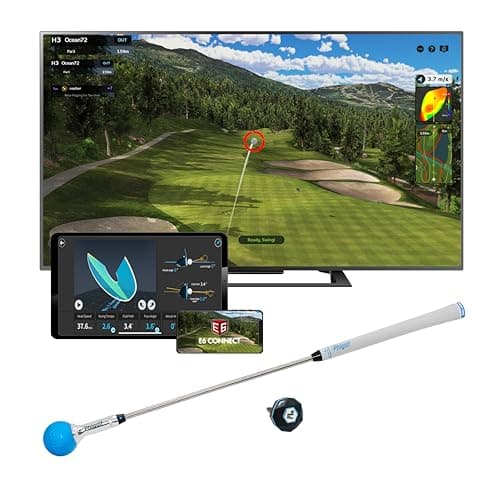
The PhiGolf is on this page because it is what people in this budget actually buy and compare, and leaving it off would be a dodge. It is also not a launch monitor, and the specification says so plainly: it is a 9-axis motion sensor on a swing stick, driving an app with a stated 38,000-plus courses on iOS and Android.
That means it measures your swing, not your ball. There is no radar and no camera, so there is no ball speed, no measured carry and no spin — the app infers a shot from the motion of the club. For playing simulated rounds in a room with a low ceiling and no net, that is a genuinely clever product and good fun. For finding out how far your eight iron goes, it is the wrong tool at any price, and we rank it fourth for that reason rather than because it is bad at what it does. Our are cheap golf simulators worth it page is the longer version of that argument.
Published specs, side by side
| Pick | Method | Spin? | Own screen? | Battery published | Subscription for headline feature? |
|---|
| Garmin Approach R10 | Radar | Yes | No — phone or tablet | Up to 10 hr | Yes — for virtual rounds |
| PRGR HS 130-A | Doppler radar | No | Yes | 4x AAA | No |
| Voice Caddie SC200Plus | Doppler radar | No | Yes — 4 in LCD + voice | Not published | No |
| PhiGolf | 9-axis swing sensor | No — no ball data at all | No — phone app | Not published | No |
Three units excluded by the ceiling or by the feed, named so you know what is missing: the Voice Caddie SC4 PRO sits just above $500 and adds spin plus a 5.3-inch display, the SkyTrak is a photometric camera system in a different budget entirely, and the Rapsodo MLM returned no buyable offer at the last price check. We do not rank a product the feed cannot price.
What we would actually buy
The R10 if spin is the reason you are shopping and you accept that the simulator half of it is a subscription. It is the only route to measured spin under this ceiling and it is a lot of capability for the money.
The SC200Plus if you are honest about what you will use. Most golfers buy a launch monitor to learn their carry distances and then use it twice a month on a range mat, and a standalone screen with voice output does that better than a phone balanced on a bucket. The PRGR if you want the same thing smaller, with 500 swings stored so you can review a session afterwards.
And if you want the numbers without the hardware, know what the cheaper route is: a GPS watch or a rangefinder plus a notebook will give you real yardages on real shots on a real course, which is data a range mat cannot produce. Our best value golf watches and best rangefinders under $100 pages are the honest alternative purchase, and both cost a fraction of anything on this page.