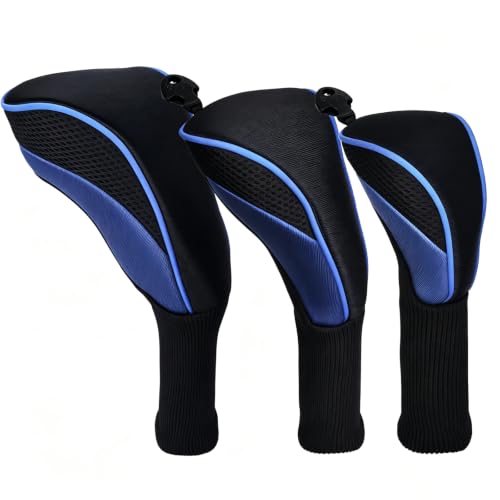
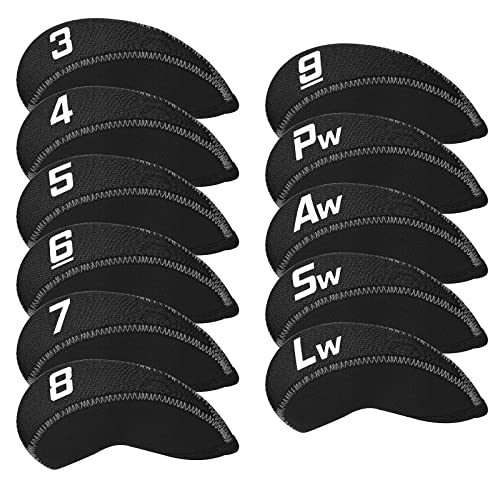
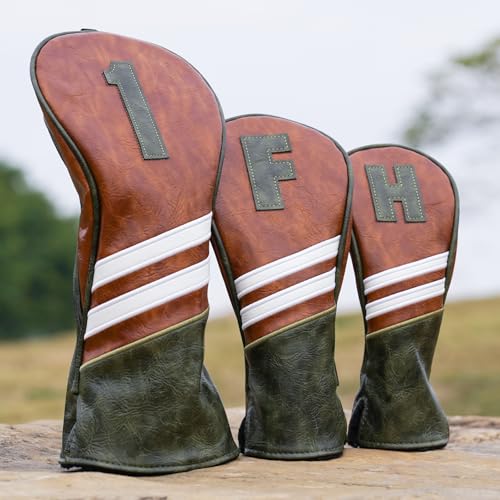
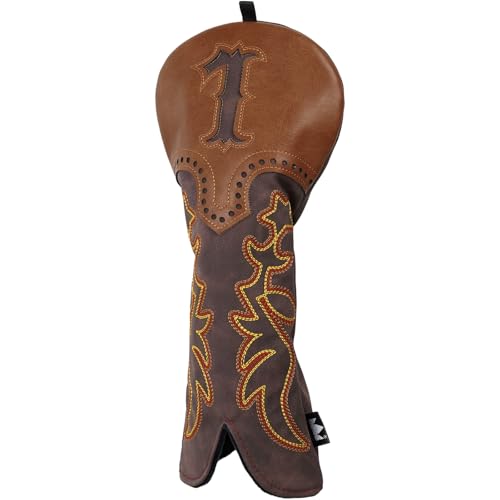
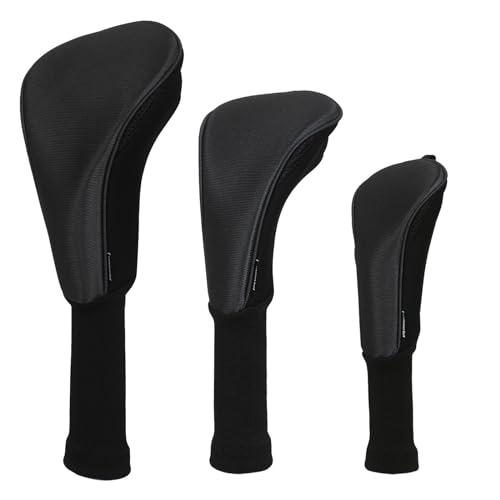
The Craftsman Golf meshy neoprene three-piece set is the best golf headcover buy for most golfers: it stretches onto a driver, a fairway and a hybrid regardless of whose heads they are, and the mesh dries out instead of sealing water against a clubhead. Our budget pick is the long-neck mesh set, which is cheaper and protects the one thing most covers do not — the few inches of shaft below the head. The eleven-piece iron set is the purchase nobody considers and the clubs that actually rattle together. The Craftsman classic brown set is the styling upgrade, and the western retro driver cover is the single-cover replacement with the only fit limit anyone in this category publishes. Prices in the table above are live and date-stamped.
Headcovers protect two different things
Almost every buyer thinks about the first and ignores the second, which is why most people buy the wrong shape.
One: the head.A driver crown is painted or clear-coated and it scratches. This is a cosmetic and resale problem rather than a performance one — a scuffed crown does not cost you a yard. It costs you money when you sell the club, which for a modern driver is real money.
Two: the shaft, just below the head.This is the one that matters, and almost nobody mentions it. When a bag moves, clubs pivot and knock against each other at the point where they stick out of the divider — the top few inches of shaft. On a steel shaft that is a cosmetic nick. On a graphite shaft, which is what every driver and fairway wood you own has, a deep nick is a stress point in a composite under load, and composite failures start at stress points. A cover that stops at the hosel does nothing about it; a long-neck cover sheathes it.
That is why the long-neck set is ranked second on a page where it is also the cheapest thing: the design addresses the failure mode with actual consequences. The trade is that a long neck is slower to pull off and put back on, which is a small tax on every tee shot and the reason plenty of golfers abandon them.
The only fit spec anyone publishes: 460cc
Headcover listings are a specification desert. Most of them give you a color, a piece count and an adjective. The one genuinely useful number that turns up — on the western retro driver cover here — is a stated fit limit of up to a 460cc head.
That matters more than it looks, because 460cc is not an arbitrary size. The USGA's equipment rules cap the volume of a conforming clubhead at 460 cubic centimeters, plus a measurement tolerance of 10 cubic centimeters. Every legal driver sold is at or under that ceiling, which most modern drivers sit right against. So a cover rated to 460cc fits any driver you can legally put in play, and a cover with no stated limit is a guess — usually a safe one with stretch neoprene, and a riskier one with a fitted synthetic-leather shape.
Practical version: if the cover stretches, fit is rarely a problem. If it is fitted and structured, check for a stated volume or buy from a seller with easy returns.
Neoprene, mesh or leather-look
Three materials, three different failure modes, and the choice is genuinely about how and where you play rather than about quality.
- Neoprene stretches, so one cover fits heads from different makers. It is also a sponge: a cover that went on wet stays wet, and a damp cover left on a clubhead in a trunk is how corrosion starts on a hosel. Take them off at home after a wet round.
- Mesh (or mesh-panelled neoprene)is the practical compromise — it still stretches, and it breathes, so the cover and the clubhead both dry. This is why the meshy set wins the page.
- Synthetic leather looks the way people want a bag to look and is usually fitted rather than stretchy. It is the styling choice, and we rank it as one: it does not protect better than a quarter-price neoprene cover.
A fourth material deserves a mention because it is the one case where the cover is not optional: a milled carbon-steel putter head will rust if it is left wet, which is why MacGregor ships its milled blade with a magnetic headcover. Our Scotty Cameron alternatives page covers which milled putters are carbon and which are stainless, and the difference changes how much you need to care.
The iron covers nobody buys
Here is the inversion on this page. Golfers buy covers for the three clubs that are already covered — the driver, the fairway and the hybrid all come with a cover in the box — and leave uncovered the eight clubs that bang into each other on every cart path and every trunk journey. Irons chew each other's topline and chrome, and they chew the grips of the clubs next to them.
An eleven-piece neoprene iron set costs less than one leather wood cover and has large printed numbers so you can pull the right club without reading an upside-down sole stamp. Two honest caveats, both on the card: it is eleven covers to remove and replace, which is real friction for a golfer who plays quickly, and neoprene against a chrome head holds moisture, so a wet set needs stripping at home. The reason to buy them is bag chatter and resale value, not strokes.
If bag chatter is your actual complaint, the divider top is the other half of the fix. Full-length dividers keep shafts apart in a way half-depth ones do not, which our how many dividers do you needguide gets into — and a bag with a proper 14-way top plus iron covers can feel tight, so you may be choosing between them rather than stacking them.
How we picked these
- What it actually protects. Head only, or head plus the shaft below it. The long neck is a real design feature and it is scored as one.
- Fit you can check. A stated volume limit beats an adjective. Where nothing is published, stretch material is the safer bet and we say which is which.
- Does it dry? Breathability is the difference between a cover that protects a clubhead and a cover that sits a damp sponge on it for a week.
- Completeness per dollar. A matched set covers the whole top of the bag and costs less per club than buying singles. Singles exist for replacement, and that is how the one single cover here is ranked.
- No invented specs. Almost nothing is published in this category. Where a listing states nothing about lining, weight or fit, we say so instead of filling the gap.
Published specs, side by side
| Pick | Covers | Material | Fit limit published? |
|---|
| Craftsman meshy neoprene set | Driver, fairway, hybrid | Mesh neoprene (stretch) | No — stretch fit |
| Long-neck mesh set | Driver, fairway, hybrid + shaft | Mesh, long neck | No |
| Craftsman iron set (11-piece) | Irons and wedges | Neoprene | Universal fit stated across major brands |
| Craftsman classic brown set | Driver, fairway, utility | Synthetic leather look (fitted) | No |
| Craftsman western retro cover | Driver only | Synthetic, brown | Yes — up to 460cc |
Four of the five publish no fit limit at all, and none of them publishes a lining material or a weight. That is the honest state of this category, and it is why fit-tolerant stretch materials rank above structured ones here.
Numbered tags, and why they are not a gimmick
Two picks here use interchangeable number tags — 3, 4, 5, 6, 7 and X. It looks like a novelty and it is not, for one reason: hybrid and fairway lofts have stopped matching their numbers in any consistent way between makers, so the only reliable label on a covered club is the one you put on it. If you carry a 3-wood, a 5-wood and a 4-hybrid, tag them and you stop pulling covers off to check.
The counter-case: if you only carry a driver and one fairway, tags are clutter and a plain set is fine. The place this genuinely bites is a bag with three or four covered clubs, which our what to keep in your golf bag page treats as the normal loadout.
Headcovers are not travel protection
One thing to be clear about, because it costs people clubs. A headcover protects against club-on-club contact in a bag that is being carried, pushed or driven. It does nothing about the failure mode that actually breaks clubs in transit, which is a crushing load from above snapping the longest shaft in the bag. That is a travel-cover problem and a support-rod problem, and our best golf travel bags page and how to pack golf clubs for a flight guide deal with it properly. Do not fly with headcovers as your plan.
What we would actually buy
The meshy neoprene set if you want one purchase that covers the woods and dries out, the long-neck set if you want the shaft protected and the lowest price, and the eleven-piece iron set if the noise from your bag on a cart path bothers you. Skip the leather-look set unless the look is the point — it is a styling purchase and it does not protect better.
And keep the scale in mind: the whole top of a bag can be covered for less than the cost of a dozen premium golf balls. This is housekeeping, not performance. If you want to spend the next twenty dollars on something that changes a scorecard, our best golf balls for the money page is the answer, and a decent golf towel does more for your clubfaces than any cover does for your crowns.