Skip to content
Club&Carry

Hub 02 · Golf Clubs

Scotty Cameron Alternatives

A Scotty Cameron is a milled blade with a tour pedigree and a resale market. Four of those five things are available for a fraction of the money.

By Stephen V.Updated How we pick
#ad

We earn a commission when you buy through our Amazon links, at no extra cost to you. It never affects our rankings, and we say so when the cheaper product is the better buy. How this works.

The TaylorMade TP Reserve blade is the best Scotty Cameron alternative, because it is the closest thing to a spec match: TaylorMade publishes soft 303 stainless steel and fine linear mill marks across the face, which is the same material and the same one-piece milled construction the original is built on. The Cleveland Huntington Beach Soft 2 is the brand-name milled face for less; the MacGregor MT Milled 001 is the soft carbon-steel wide blade and the only one here that publishes its head weight; and the two GoSports blades put a milled face and a tour shape in your hands for less than a dozen premium balls. Our budget pick is the GoSports Classic. Prices in the table above are live and date-stamped.

What a Scotty Cameron actually is

Start here, because you cannot replace something until you know what it does. Scotty Cameron's own archive for the Super Select Newport 2 lists a head milled in the USA from 303 stainless steel, with customizable tungsten sole weights, a tri-sole design and a tour-inspired I-beam plumbing neck. The published numbers are 3.5 degrees of loft, 70 degrees of lie, lengths of 33, 34 and 35 inches, head weights of 2 x 40 g, 2 x 35 g and 2 x 30 g by length, and a Pistolini Plus grip.

That is a real specification, and it is worth being clear that it is a good one. Nothing on this page is an argument that a Scotty is a bad putter — it is a precisely made, weight-matched milled blade with decades of tour use behind it, and the resale market treats it as an asset in a way it treats no other putter. What this page argues is narrower and more useful: of the five things you are buying, four are available much cheaper.

  • The material— 303 stainless steel. Available on a TaylorMade TP Reserve, which publishes the same alloy.
  • One-piece milled construction— machined from a billet rather than cast with an insert glued in. Available on every pick on this page that states a milled face.
  • The blade shape— an Anser-style head with a plumber's or flow neck. The cheapest putter here has it.
  • Head-weight matching by length— rarer. MacGregor publishes 384 g including screws; most makers at this price publish nothing.
  • Tour pedigree and resale value— not available at any other price. This is the part you genuinely cannot substitute, and if it matters to you, buy the original.

Milled versus insert: what you are actually choosing

A milled putter face is machined out of the same block of metal as the head. An insert face is a separate piece — usually a polymer — bonded into a cast head. Both roll a ball. What changes is the sound and the feedback, and the honest way to say it is that a milled face gives you more information about where on the face you struck the putt.

TaylorMade is unusually explicit about this. Its TP Reserve grooves are described as machined in at a specific depth to achieve optimal sound— the company is openly engineering the noise, because at this level of putter the noise is most of what players mean by feel. That is the premium you are paying for in a milled blade, and it is a real thing. It is not a forgiveness upgrade, a distance upgrade or an accuracy upgrade, and anyone telling you otherwise is selling.

Two materials turn up in milled putters, and they behave differently. Stainless steel (303 on both the Scotty and the TP Reserve) is firmer and does not corrode. Carbon steel(the MacGregor) is softer at impact and will rust if you leave it wet. Neither is better; the carbon head needs a headcover and a towel, which is the actual trade — MacGregor ships a magnetic cover with the 001 for that reason, and our best golf headcovers page covers what to do if yours did not come with one.

How we picked these

  1. Blade first. A Scotty shopper is shopping a shape. Every pick here is a blade or wide-blade, which is why the mallets on our best budget putters page are not on this one.
  2. A face construction the maker states.“Precision” is not a construction. “Milled face”, “303 stainless” and “single billet of carbon steel” are, and we rank on them.
  3. Published numbers score. MacGregor gives head weight, lie and loft; TaylorMade gives material and mill pattern; the budget blades give a shape and a length. The ranking reflects that difference.
  4. Length availability. The spec nobody can work around. A 34 inch-only listing is marked as such, because buying the wrong length to save money grooves a bad posture you will keep.
  5. Live and buyable. Every ASIN here was resolved against the retailer and in stock when we built the page, and the table re-checks the price.

Published specs, side by side

PutterMaterial statedFaceNumbers published
Scotty Cameron Super Select Newport 2 (the original)303 stainless, milled in USAMilled3.5° loft, 70° lie, 33/34/35 in, weights by length
TaylorMade TP Reserve BladeSoft 303 stainlessFine linear mill marks, grooves machined for soundMaterial and mill pattern
Cleveland Huntington Beach Soft 2Not stated on listingPrecision-milledBlade profile, tour-weight head
MacGregor MT Milled 001Single billet carbon steelMilled head; face pattern not published384 g, 71° lie, 3° loft
GoSports GS1 TourNot statedMilled face (per listing)34 in only
GoSports ClassicNot statedMilled face (per listing)35 in

The original is in that table for reference and is deliberately not a ranked pick: it is the thing you are replacing, and its specification is published by Scotty Cameron rather than judged by us.

The honest case for buying the original anyway

Two reasons, and both are legitimate.

Resale.A Scotty holds value like no other putter. Used Studio Select Newport 2 heads trade on the secondhand market for a meaningful share of what a new one costs, which means the real cost of ownership is the gap between what you pay and what you later recover — not the sticker. No putter on this page has a secondhand market worth the name. Factor that in before you decide the cheap blade is the thrifty choice.

Confidence. Putting is the most psychological act in golf. If standing over a putter you believe in is worth strokes to you, that is not vanity, it is a real effect and nobody can price it for you. What we can tell you is that it is the only argument left once the material and the milling are matched.

And one route this page does not rank but will happily recommend: buy a used one. A previous-generation Newport on the secondhand market is the same milled 303 stainless head as a current one, minus the latest sole-weight scheme. That is the same logic our buying used golf clubsguide applies to the rest of the bag, and putters are the club where it works best — there is no face to wear out and no shaft to fatigue.

Fitting matters more than the badge

Here is the thing that will cost you more strokes than your choice on this page: length. The standard 34 and 35 inch options exist because they fit the middle of the adult range, not because they fit you. Set up as you normally would, let your arms hang, and check whether the grip end points at your belt buckle with your eyes over or just inside the ball. If you are reaching for the handle, the putter is too long — and buying a shorter one beats cutting this one down, because shortening a shaft changes the head weight you feel through the stroke. Our club length for your height guide runs the numbers for the whole bag.

The second fitting variable is toe hang, and it follows the neck. A plumber's neck blade hangs the toe down and suits an arced stroke; a face-balanced head wants to move straight back and through. If your stroke arcs, a blade is genuinely the right family for you and this page is the right page. If it does not, you want a mallet, and our best mallet putters page is where that decision gets made properly.

What we would actually do

Buy the TP Reserve if you want the specification, the Cleveland if you want a milled face from a brand your playing partners recognize, and the GoSports Classic if you are not yet certain a blade suits your stroke — it costs less than a sleeve of premium balls to find out, and that is a cheap answer to an expensive question.

Then spend the difference where it changes a scorecard. Thirty minutes a week on a putting mat does more for a putting average than any head on this page, and our best golf balls for the money page is where a value buyer saves real money every single round. A milled blade is a lovely object. It is not a shortcut.
The short answer

Quick picks

#ProductBest forScorePrice
01
TaylorMade TaylorMade TP Reserve Putter Blade #11
TaylorMade TP Reserve Putter Blade #11

The same 303 stainless steel, machined from one piece, with mill marks you can see — for a fraction of what the putter it is modeled against costs.

The closest spec match to a tour-milled blade
8.0
$179.99Amazon
02
Cleveland Cleveland Huntington Beach Soft 2 (#1 Blade)
Cleveland Huntington Beach Soft 2 (#1 Blade)

A precision-milled face on a real tour blade, at the price where most brands are still selling you an insert. The upgrade worth paying for.

A milled face without tour pricing
7.6
$158.25Amazon
03
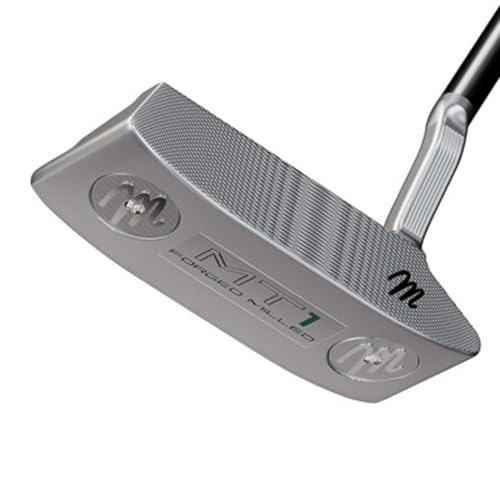
MacGregor MacGregor MT Milled 001 Wide-Blade
MacGregor MT Milled 001 Wide-Blade

Milled from a single billet of carbon steel, in the wide-body blade shape that adds forgiveness without going full mallet.

A softer-feeling milled blade
8.0
$129.99Amazon
04
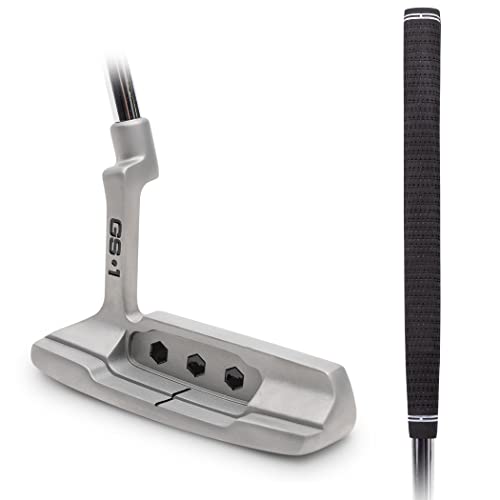
GoSports GoSports GS1 Tour Blade Putter
GoSports GS1 Tour Blade Putter

A milled-face blade at a price where most putters are a stamped insert, with a choice of grip thickness built into the listing.

A milled face on a budget
6.8
$69.99Amazon
05
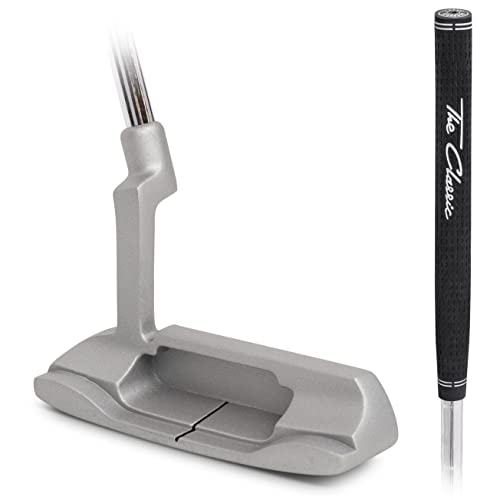
GoSports GoSports Classic Tour Blade Putter (35 in)
GoSports Classic Tour Blade Putter (35 in)

The cheapest way to find out whether you are actually a blade player, with a milled face and a 35 inch shaft.

The budget pick
6.4
$37.99Amazon

#ad · Live prices from the Amazon Product API, as of November 22, 2026. Where we have no verified live price, we show none — we would rather leave a gap than print a number that has rotted.

In detail

The picks, in full

01
TaylorMade TaylorMade TP Reserve Putter Blade #11

The closest spec match to a tour-milled blade

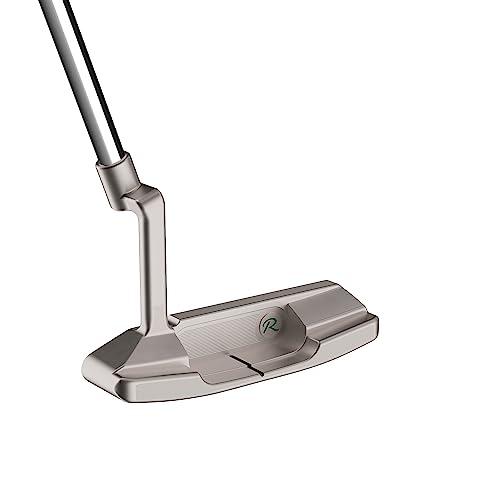
TaylorMade TP Reserve Putter Blade #11

Soft 303 stainless steelFine linear face mill marksMachined sound groovesGeometric blade profile
8.0/10

The same 303 stainless steel, machined from one piece, with mill marks you can see — for a fraction of what the putter it is modeled against costs.

Forgiveness
6
Feel
9
Alignment
8
Build quality
9
Value
8

Pros

  • TaylorMade specifies soft 303 stainless steel and fine linear mill marks across the face — the same material family and the same one-piece milled construction as putters costing two and a half times as much
  • The face grooves are machined to a stated depth to control the sound of impact, which is the part of a premium putter people describe as feel
  • A clean geometric blade with precise edges, so the top line frames the ball the way a traditional tour blade does

Cons

  • The most expensive pick here by a clear margin, and a blade is still a blade — a heel or toe miss loses more speed than it would on a mallet
  • TaylorMade publishes the material and the mill pattern but not head weight or lie on the listing, so confirm the length before you order
  • Stock on specific lengths and hands is thin, and the TP Reserve line runs to several blade and mallet models that are easy to confuse

Don't buy this if…

…you miss the center of the face often. Face milling changes feel, not forgiveness — a high-MOI mallet saves you more strokes than any milling pattern will.

$179.99View on Amazon

$299.9940% off

Price as of November 22, 2026. Prices change — Amazon's is the one that counts.

#ad · we may earn a commission from this link to TaylorMade TP Reserve Putter Blade #11

02
Cleveland Cleveland Huntington Beach Soft 2 (#1 Blade)

A milled face without tour pricing

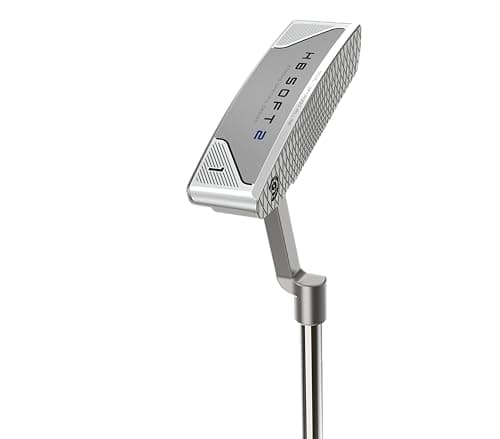
Cleveland Huntington Beach Soft 2 (#1 Blade)

Blade headPrecision-milled faceSpeed Optimized FaceTour-weight head
7.6/10

A precision-milled face on a real tour blade, at the price where most brands are still selling you an insert. The upgrade worth paying for.

Forgiveness
6
Feel
9
Alignment
7
Build quality
9
Value
7

Pros

  • The milled face pattern is the real thing, not a stamped insert — the roll off it is noticeably truer
  • Classic blade profile that a player with an arced stroke will find easy to release
  • Cleveland puts the same milling on putters costing twice as much

Cons

  • A blade is less forgiving than a mallet, full stop — off-center putts lose distance
  • Costs more than double the Pinemeadow, and the roll difference is smaller than the price gap

Don't buy this if…

…you are a high handicapper who misses the center of the putter face often. Forgiveness beats face milling for you, and the mallets here deliver it for less money.

$158.25View on Amazon

Price as of November 22, 2026. Prices change — Amazon's is the one that counts.

#ad · we may earn a commission from this link to Cleveland Huntington Beach Soft 2 (#1 Blade)

03
MacGregor MacGregor MT Milled 001 Wide-Blade

A softer-feeling milled blade

MacGregor MT Milled 001 Wide-Blade

Single billet carbon steelWide-body Anser-style blade384 g head (with screws)71 degree lie, 3 degree loft
8.0/10

Milled from a single billet of carbon steel, in the wide-body blade shape that adds forgiveness without going full mallet.

Forgiveness
7
Feel
9
Alignment
7
Build quality
8
Value
9

Pros

  • MacGregor states the MT Milled heads start as a single billet of carbon steel and are precision milled — carbon steel is the softer-feeling material of the two used in milled putters
  • The 001 is a wide-body blade, which MyGolfSpy describes as a double-wide: more perimeter mass and a higher MOI than a standard blade, without the mallet footprint
  • MacGregor publishes real numbers — 384 g head weight including screws, 71 degree lie, 3 degree loft — which almost nothing at this price does, and it ships with a magnetic headcover

Cons

  • Carbon steel rusts. A milled carbon head left wet in a bag will spot, and the headcover stops being optional
  • MacGregor publishes nothing about the face pattern on this model, so treat "milled" as describing the head rather than a specific face texture
  • No loft or lie adjustment is offered on the MT Milled series, so the published numbers are the numbers you get

Don't buy this if…

…you will not dry and cover it. Stainless does not care how you treat it; carbon steel does, and a rusty face is a cosmetic problem you created.

$129.99View on Amazon

$159.9919% off

Price as of November 22, 2026. Prices change — Amazon's is the one that counts.

#ad · we may earn a commission from this link to MacGregor MT Milled 001 Wide-Blade

04
GoSports GoSports GS1 Tour Blade Putter

A milled face on a budget

GoSports GS1 Tour Blade Putter

Milled face34 inch bladeRight-handedOversized or traditional grip
6.8/10

A milled-face blade at a price where most putters are a stamped insert, with a choice of grip thickness built into the listing.

Forgiveness
6
Feel
7
Alignment
6
Build quality
6
Value
9

Pros

  • The listing states a milled face, which is the construction the expensive blades are sold on and the one thing that changes how the ball comes off
  • You choose the grip — oversized fat or traditional — at the point of purchase, and a thicker grip quietens the hands more cheaply than any putter upgrade
  • Costs less than a dozen premium golf balls, which is the right frame for a club you are buying to try a shape rather than to keep forever

Cons

  • Only 34 inches is listed, so if you are tall or short the length is not adjustable without a re-shaft
  • No head weight, loft or lie published at all — the listing gives you the shape and the words "milled face" and nothing else
  • Right-handed only on this listing; left-handers have no equivalent here

Don't buy this if…

…you need a 35 inch putter or you play left-handed. The length is the spec nobody can work around, and buying short to save money grooves a bad posture.

$69.99View on Amazon

Price as of November 22, 2026. Prices change — Amazon's is the one that counts.

#ad · we may earn a commission from this link to GoSports GS1 Tour Blade Putter

05
GoSports GoSports Classic Tour Blade Putter (35 in)

The budget pick

GoSports Classic Tour Blade Putter (35 in)

Tour blade designMilled face35 inchPremium grip (per listing)
6.4/10

The cheapest way to find out whether you are actually a blade player, with a milled face and a 35 inch shaft.

Forgiveness
5
Feel
6
Alignment
6
Build quality
5
Value
10

Pros

  • The lowest price in the category by a wide margin, and the listing still states a milled face and a tour blade profile
  • 35 inches, which is the length the taller half of the adult range actually needs and the length most cheap putters do not offer
  • A sensible way to test a blade shape before spending real money — if the arced stroke does not suit you, you have lost very little

Cons

  • Nothing is published beyond the shape, the face description and the length — no head weight, no loft, no lie
  • At this price the finish is the first thing to go; expect bag chatter marks early
  • "Premium grip" is a marketing phrase, not a model, so do not buy it for the grip

Don't buy this if…

…you already know a blade suits you and you intend to keep the putter for years. Spend once on a milled head from a maker that publishes its material.

$37.99View on Amazon

Price as of November 22, 2026. Prices change — Amazon's is the one that counts.

#ad · we may earn a commission from this link to GoSports Classic Tour Blade Putter (35 in)

How we picked

We do not run a testing lab

We compiled the published specifications, did the cost-per-round and value math, and read the independent robot and launch-monitor data — then scored each product against a published rubric. The scores are judgments from documented research — they are not measurements we took, because we do not have a lab and we are not going to pretend we do. Where a number came from someone else's lab, we name them and link them in Sources.

Questions

Frequently asked

What is the best Scotty Cameron alternative?
The TaylorMade TP Reserve blade, because it is the closest specification match: TaylorMade publishes soft 303 stainless steel and fine linear mill marks across the face, which is the same alloy and the same one-piece milled construction Scotty Cameron publishes for the Newport 2. If you want the milled face for less, the Cleveland Huntington Beach Soft 2 is the pick.
What is a Scotty Cameron putter made of?
Scotty Cameron's own archive for the Super Select Newport 2 lists a head milled in the USA from 303 stainless steel, with customizable tungsten sole weights, a tri-sole design and an I-beam plumbing neck. The published numbers are 3.5 degrees of loft, 70 degrees of lie and lengths of 33, 34 and 35 inches, with head weights matched to length.
Does a milled putter face actually roll the ball better?
It gives you better feedback rather than a better roll. A milled face is machined from the same block as the head, so the sound and the feel tell you where on the face you struck the putt — TaylorMade is explicit that its TP Reserve grooves are machined to a specific depth to achieve optimal sound. It is not a forgiveness or accuracy upgrade, and nobody should sell it to you as one.
Carbon steel or stainless steel for a putter?
Carbon steel feels softer at impact and rusts if you leave it wet; stainless is firmer and does not corrode. The MacGregor MT Milled 001 is the carbon-steel option here and ships with a magnetic headcover for exactly that reason. Neither material is better — the carbon head simply needs drying and covering, which is a habit rather than a cost.
Is a Scotty Cameron worth the money?
For two specific reasons, yes. Resale value is real — used Newport 2 heads trade for a meaningful share of new, so the cost of ownership is the gap rather than the sticker — and confidence over a putter is a genuine effect that nobody can price for you. What is not a reason is performance you cannot get elsewhere: the material and the milling are both available for far less.
Should I buy a used Scotty Cameron instead?
It is the route we would take if the badge matters to you. A previous-generation Newport is the same milled 303 stainless head as the current one minus the newest sole-weight scheme, and a putter is the best club in the bag to buy used — no face to wear out, no shaft to fatigue. Check the shaft is not bent and that the length matches the length you need.

Keep reading

Receipts

Sources

We do not run a testing lab, and we do not pretend to. Where a measured number came from someone else's lab or robot, we name them and link them. Where we could not verify something, we say so on the page rather than quietly leaving it out. Read our full method.