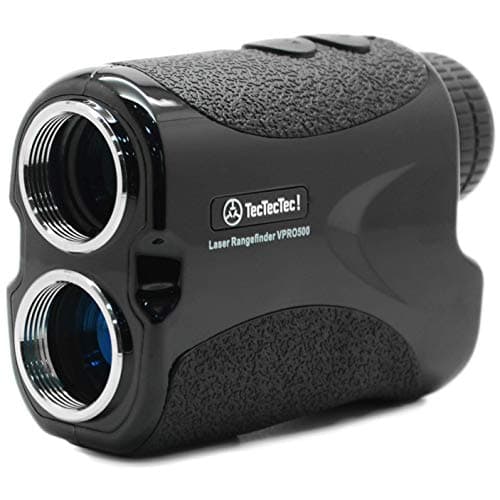
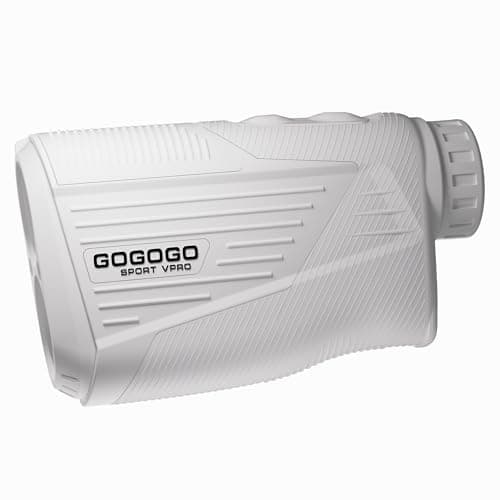
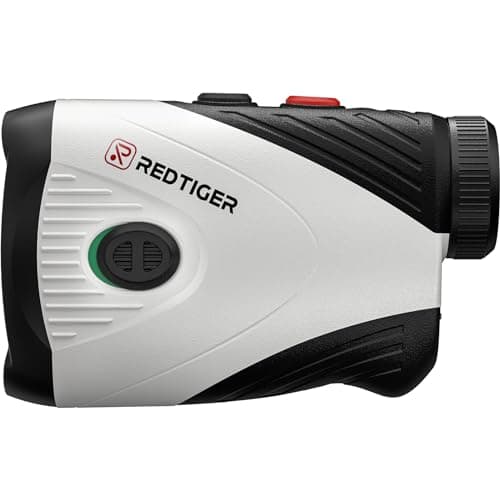
The REDTIGER slope rangefinder is the pick under $100: it is the only unit in the bracket whose listing publishes both a magnification (7x) and a maximum range (up to 1,200 yd), and it charges over USB-C rather than taking a battery you have to keep spares of. Our budget pick is the Gogogo Sport Vpro, the cheapest unit on this page, which gives you a slope switch, pin-lock vibration, a magnetic strip and a rechargeable battery and publishes neither a magnification nor a range. The TecTecTec VPRO500 sits between them with the most established name and the shortest stated range. This is a three-unit bracket and we are not going to pad it. Prices in the Quick Picks table are live from the price layer with their own “as of” date, and the $100 ceiling is applied to that feed.
Three things every one of these does, so stop shopping on them
The cheap end of this category has converged. All three units here give you the same three headline features, which means none of them is a reason to pick one over another.
- Slope, with a switch.Slope adjusts the number for elevation change — it tells you the distance to play rather than the distance to walk. A device that measures slope is not conforming for tournament play unless the feature can be switched off, which is why every unit here has a physical switch rather than a menu toggle. Turn it off for a competition and the number is legal again.
- Pin acquisition with feedback. Different brands call it pin-lock, flag-seeking or first-target priority. It is the same idea: prefer the near, small object over the large background, and buzz when you have it. Without the buzz you never know whether you ranged the flag or the trees behind it.
- A magnetic strip. It sticks to a cart frame. Trivial, universal, and the one feature you will use on literally every shot.
What you are actually giving up under $100
Three things, and only one of them is likely to annoy you.
Published optics. Glass is where the money goes in this category and it is also the spec most cheap listings omit. A 6x or 7x magnification with multilayer coating gives you a bright, high-contrast image that makes a flag easier to find against trees in flat evening light. Under $100 you get one unit that states 7x and two that state nothing. That is the single clearest argument for the top pick here, and the single clearest argument for spending more: the Nikon COOLSHOT 20 GIII we rank on our best rangefinders under $200 page publishes 6x multilayer-coated optics, an 800 yd range and a 4.3 oz weight, and in dull light that is a genuinely different experience.
Speed and stability of lock. Premium units acquire faster and hold steadier, which matters when you are shaking slightly after a walk up a hill. Cheap units get there; they just take an extra beat and need a steadier hand.
Service and warranty.This is the real gap, and it is worth naming. Established brands at higher prices offer things like lifetime battery service; a no-name unit offers a return window. If a rangefinder is going to live in your bag for five seasons, that difference compounds — and it is the main reason we would not tell everybody to buy the cheapest option.
What you are not giving up is accuracy to the flag at golf distances. All of these are laser devices measuring time of flight, and 150 yards is an easy measurement for a laser. The cheap end of this market works.
Maximum range is the most useless number on the box
It is also, awkwardly, the number we rank on — so here is why.
A stated maximum range of 1,200 yards is irrelevant to golf. The longest shot you will ever range is a tee shot on a long par 5 to a flag you cannot see, and that is under 600 yards. These figures are measured against large reflective targets in ideal conditions, which is why a hunting-oriented listing can claim four figures and a golf-first listing claims 540.
The number is still worth something, for two reasons. First, a longer stated range usually means more laser power and a more sensitive receiver, which shows up as a faster lock on a flag in poor light — the thing you actually care about. Second, and more importantly on a page like this: a seller who publishes a maximum range and a magnification is a seller making checkable claims. In a bracket where two of three listings publish neither, we will rank the one that does above the ones that do not, and say that is what we are doing.
If you want the whole argument about measuring distance versus knowing distance, our rangefinder vs GPS comparison is the read, and do I need slope on a rangefinder covers the feature everyone over-buys.
Published specs, side by side
| Pick | Magnification published | Max range published | Slope switch | Power |
|---|
| REDTIGER slope rangefinder | Yes — 7x | Yes — up to 1,200 yd | Yes | Rechargeable, USB-C |
| TecTecTec VPRO500 | No | Yes — about 540 yd | Slope version offered | Battery |
| Gogogo Sport Vpro | No | No | Yes | Rechargeable |
None of the three publishes an accuracy tolerance, a weight or a field of view, and none publishes a warranty term beyond the marketplace return window. Four units we rank elsewhere are excluded by the ceiling: the Nikon COOLSHOT 20 GIII, the Callaway 300 Pro, the Precision Pro NX10 and the Bushnell Tour V6 Shift. Every one of them publishes more than everything on this page combined, which is most of what the extra money buys.
What we would actually buy
The REDTIGER if you want the most checkable specification under the ceiling and USB-C charging, so there is no battery to find on a Saturday morning. The Gogogo if the price is the point — it is the cheapest laser on the page, it has the slope switch and the vibration feedback, and thousands of golfers play with one happily. The TecTecTec if the brand name matters to you; it is the oldest name in cheap rangefinders and its stated range is the most honest number in the table.
Spend more only for glass or for service. If you play in low light, buy up to the Nikon for the published multilayer-coated optics. If you want a brand that will replace a battery for life, that is the Precision Pro, and it is on our best rangefinders with slope page. Spending more for extra maximum range, a nicer case or a tournament-legal mode you could get from a switch is money that would be better spent on anything in our best golf balls for the money ranking.