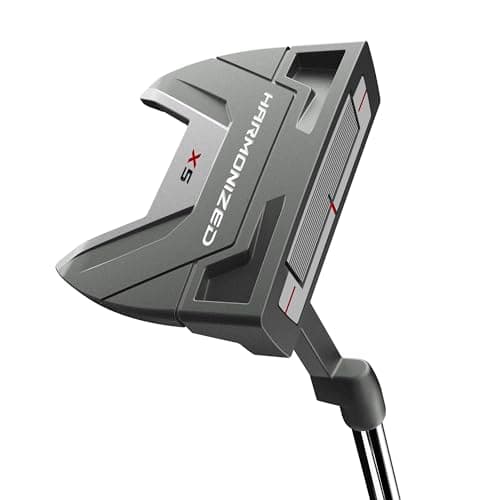
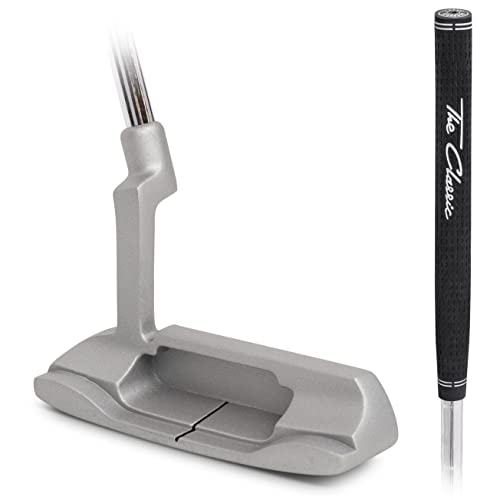
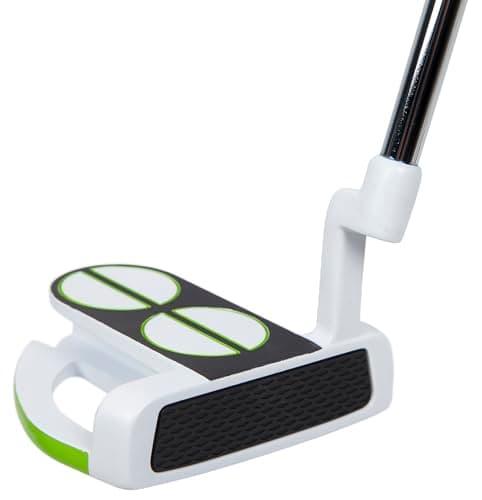
The Pinemeadow PGX SL is the best putter under $100 for most golfers: a full mallet head, so the forgiveness is in the shape rather than in a marketing claim, with alignment lines and a headcover included. Our budget pick is the GoSports Classic Tour Blade, the cheapest putter on this page and the one to buy if you putt better looking at a thin top line. Left-handers get the Wilson Harmonized X5 in a genuine left-hand build rather than a mirrored photo. The $100 ceiling is applied to the live price feed in the Quick Picks table above, which carries its own “as of” date — four of the ten putters we track do not clear it.
What the ceiling actually removes
A hundred dollars is a real line in this category rather than an arbitrary one, and it is worth knowing what sits on the other side of it. The four putters we rank elsewhere and exclude here are a milled carbon-steel wide blade, a precision-milled blade from a major brand, a premium milled tour blade and a branded mallet with a well-known face insert. Every one of them is a better object. None of them will hole a four-footer you would otherwise miss.
Putting is the one place in the bag where that is genuinely true. There is no ball speed to gain and no distance to buy; the head is travelling at walking pace. What a putter can do for you is narrow: start the ball on the line you aimed, roll it rather than hop it, and look right enough over the ball that you commit to the stroke. All three of those are available under $100.
How we ranked this field
- Head shape before anything else. A mallet moves mass to the perimeter and back, which raises moment of inertia and reduces how far a heel or toe strike twists the face. A blade does less of that and gives you a cleaner look at the line. This is the real decision and it is about your stroke, not your budget.
- Published length. Length is the one fitting spec that changes your posture and therefore your eye line, and it is the spec most often left off a listing in this bracket. Four of these six publish one.
- Is the left-hand build real? Left-handed putters are routinely listed as a variant and shipped as a right-hand club. We rank one putter here that is specified as a left-hand build at a stated length.
- What is in the box. A headcover is not performance, but a putter face knocking around a bag is a putter face with a nick in it. Two of these include one.
- No invented insert claims.Where a listing says “milled face” or “micro-injection face” we repeat it as a listing claim. We have not measured a roll and we do not own a putting robot.
Mallet or blade: the only question that matters here
Everything else in this bracket is cosmetic. This is not.
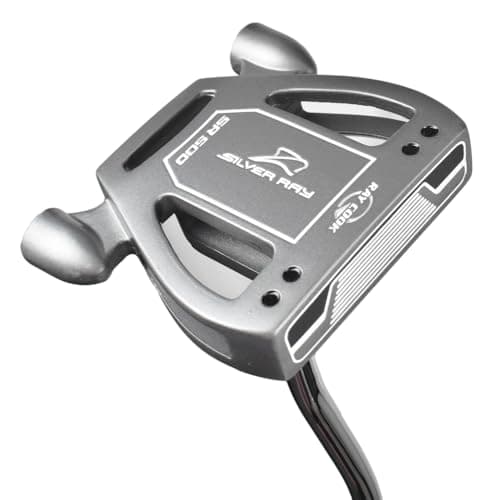
A malletis the right buy if your misses are off-centre or if you struggle to aim. The extra mass behind and around the face resists twisting on a heel or toe strike, so a slightly mishit putt loses less speed and stays closer to the start line. Mallets also carry much larger alignment features, because there is a body to put them on — and for a lot of golfers that sightline is worth more than any mechanical property of the head. Three of our six are mallets or mid-mallets, and the two highest-ranked putters on this page are among them.
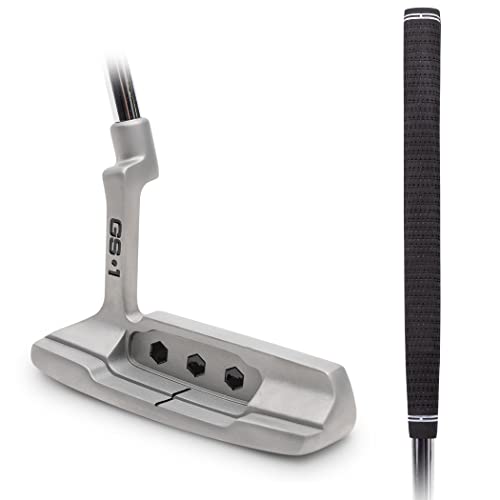
A blade is the right buy if you aim well, strike the centre reasonably often, and find a big mallet head distracting over the ball. A blade also gives more feedback: a toe strike feels like a toe strike, which is information. The GoSports GS1 adds a milled face at this price, which is unusual and is why it outranks the cheaper Classic despite being otherwise similar.
If you already know you want the forgiving shape, our best mallet putters ranking goes deeper on head geometry across the whole price range. If you want the blade look specifically and are willing to spend more for a milled head, our Scotty Cameron alternatives page is the page for that, and it explains what the milling actually buys.
Length: the fitting spec you can get right for free
Most putters are sold in 33, 34 and 35 inch lengths, and 34 is the default for a reason rather than a compromise — it suits a wide band of heights with a conventional posture. Two things are worth knowing before you click.
First, a putter that is too long forces your hands in and your eyes inside the ball, which tends to push putts right for a right-hander. Too short does the reverse. Second, length is the one spec you cannot change easily after the fact: a putter can be cut down by any club shop for very little money, but it cannot be lengthened without replacing the shaft. So when two listings are otherwise identical, buy the one whose length is published — and if you are shorter than average, prefer the 34 inch over the 35.
Two of the six listings here do not state a length at all. We rank them below the ones that do, which is not a judgment about the putters but a judgment about buying blind.
Published specs, side by side
| Pick | Head | Length published? | Face claim | Hand |
|---|
| Pinemeadow PGX SL | Mallet | No | Face insert | Right |
| Wilson Harmonized X5 | Mid-mallet | Yes — 34 in | Micro-injection face | Right |
| Ray Cook Silver Ray SR500 | Mallet | Yes — 35 in | Soft face insert | Right |
| GoSports GS1 Tour Blade | Blade | Yes — 34 in | Milled face | Right |
| Wilson Harmonized X5 (LH) | Mid-mallet | Yes — 34 in | Micro-injection face | Left (stated build) |
| GoSports Classic Tour Blade | Blade | Yes — 35 in | Milled face | Right |
Not one of the six publishes a head weight, and none publishes a loft or lie angle. Those are the specs a fitting would use, and in this bracket they simply are not available — which is worth knowing before you read a review that quotes them.
What we would actually buy
The Pinemeadow PGX SL if you want the most forgiveness per dollar and you like a mallet over the ball. The Wilson Harmonized X5 if you want a published 34 inch length from a brand you have heard of, and the left-hand version if you play the other way round — it is a real left-hand build at a stated length, which is rarer in this bracket than it should be. The GoSports Classic if the price is the point: it is the cheapest putter here and it is a blade with a milled face, which twenty years ago was a premium specification.
Then spend the money you saved on a putting surface rather than a better putter. That is not a throwaway line: the gap between a $40 putter and a $400 one is smaller than the gap between a golfer who putts on carpet twice a week and one who does not. Our best putting mats under $100 ranking is the cheaper half of the same purchase, and our best budget putters page is the read if you are willing to go above this ceiling for a milled face.