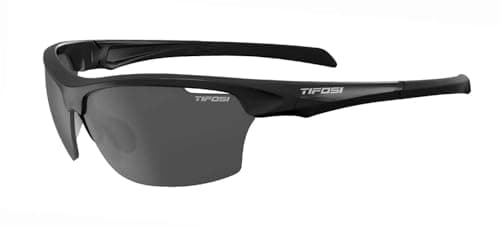
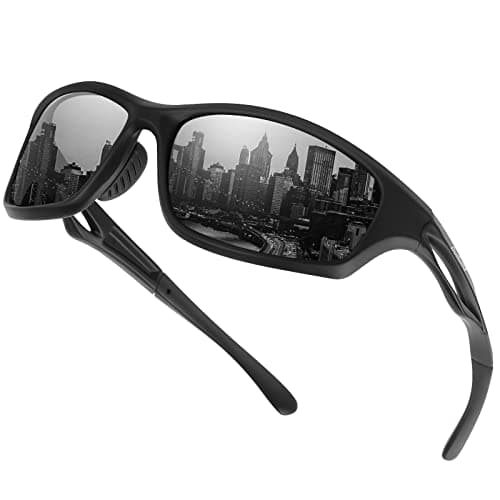
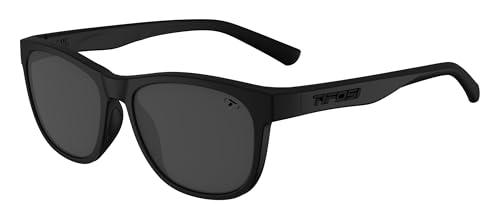
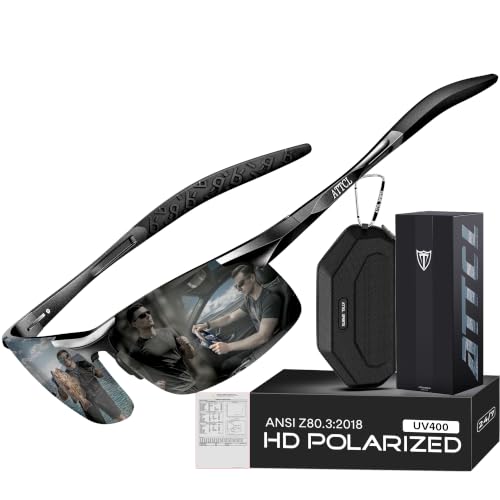
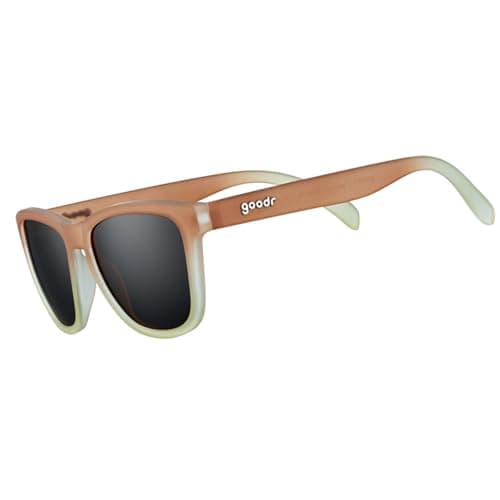
The goodr golf-series pair is the best golf sunglasses under $50, because it publishes both specifications that matter — polarized and UV400 — and then adds the grip coating and silicone nose inserts that stop sunglasses sliding down a sweating nose at the eleventh. The Tifosi Intense is the lightest frame here at a published 23 grams; the Duduma is the pair to own if you lose or sit on sunglasses; the Tifosi Swank is the full UV claim in a shape that does not look like sports eyewear; and our budget pick is the ATTCL, which publishes polarized, UV400 and a weight under an ounce for the least money on the page. Prices in the table above are live and date-stamped, and the $50 ceiling is applied to that feed.
Polarization is not UV protection. They are separate features
This is the single most expensive misunderstanding in cheap sunglasses, and it is worth getting straight before you spend anything.
- UV protectionis what stops ultraviolet radiation reaching your eyes. The marker is on the label: UV400 is the highest rating offered and blocks wavelengths up to 400 nanometers, which is what the American Academy of Ophthalmology's recommendation to block 99 to 100 percent of UVA and UVB rays is actually describing.
- Polarizationis a filter that cuts light reflected in one plane — glare off water, off wet grass, off a cart windshield. It is a comfort and contrast feature.
The two are independent, and that is not a technicality. As AllAboutVision puts it, polarized lenses reduce glare but “don't always offer the recommended protection from damaging UV rays”, and some less expensive polarized sunglasses do not provide adequate UV protection at all. A lens can be polarized and leave your eyes unprotected. A lens can be very dark and leave your eyes unprotected, because darkness filters visible light, not ultraviolet.
So the rule for this entire price band is: read the label, and if there is no UV rating on it, assume there is no UV protection. Every pick on this page states a UV level, which is most of why these five are the five.
The good news about this price band
Here is the part the eyewear industry would rather you did not know: UV protection does not get better as you spend more. A UV400 lens on a twenty-dollar frame blocks the same ultraviolet wavelengths as a UV400 lens on a two-hundred-dollar frame. What the extra money buys is optical clarity at the lens edges, frame materials that flex instead of snapping, interchangeable lenses for different light, and a brand.
For a value buyer that makes sunglasses one of the best deals in golf. The thing you cannot replace — your retinas — is fully protected at the bottom of the market, as long as the label says so. Our best golf sunglasses page removes the price cap and ranks the field on lens tint and adjustability, which is where the money above $50 actually goes.
What the $50 ceiling costs you
Two things, and we name them rather than pretending the cap is free.
Interchangeable lenses.The single most useful feature in golf eyewear is a frame with two or three lenses, because the right tint depth for a bright afternoon is the wrong one for flat cloud. That is a feature of the Tifosi Vero, which sits above this ceiling and is therefore deliberately excluded from this page — it is ranked on the no-cap roundup instead.
Golf-specific contrast tints. None of the five pairs here has a lens tuned to lift the separation between ball, grass and sky. They are general-purpose sports and lifestyle tints. If you want the contrast argument settled properly, our best lens color for golf guide covers which tints the optical specialists actually recommend and which common one they do not. The Oakley Holbrook on the no-cap page is also absent here: our price feed returned no buyable offer for the listing we track at the last check, so it cannot be ranked against a ceiling.
How we picked these
- A stated UV level, every time.UV400 or 100% UVA/UVB printed on the listing. No label, no entry — this is the one hard gate on the page.
- Polarized scores, but is not required.It is a glare feature, so a pair without it can still be the right buy — the Tifosi Intense and Swank are both ranked with that trade stated on their cards rather than buried.
- Fit hardware over frame styling. Hydrophilic pads, silicone inserts and grip coatings are the difference between sunglasses you wear for eighteen holes and sunglasses you push up onto your hat at the sixth. Published weight counts for the same reason.
- Under the ceiling on the live feed.The $50 cap is applied to the price table above, which carries its own “as of” date. We do not print prices in prose, so a price move cannot turn a sentence here into a false claim.
- Live and buyable. Every ASIN was resolved against the retailer and in stock when we built the page.
Published specs, side by side
| Pair | UV claim | Polarized? | Fit hardware / weight |
|---|
| goodr (golf series) | UV400 | Yes | Grip coating, silicone nose inserts |
| Tifosi Intense | 100% UVA/UVB | No | 23 g frame, hydrophilic nose and ear pads |
| Duduma | UV400 / blocks 99% UVA-UVB | Yes | TR90 wrap frame |
| Tifosi Swank | 100% UVA/UVB | No | Hydrophilic nose pads, tangle-free hinge |
| ATTCL | UV400 | Yes | 0.9 oz published, Al-Mg frame |
No lens-transmission percentages appear in that table because only one of these five publishes one. Any site giving you a light-transmission column for products like these is estimating.
The fit problem nobody warns you about
A round of golf is four to five hours of walking in heat, and sunglasses fail for one reason far more often than any other: they slide. Once a pair starts migrating down your nose you push it up on every hole, then onto your cap, and then it spends the back nine on the brim doing nothing at all.
Three published features fight it, and all three appear on this page. Hydrophilic nose and ear pads (both Tifosis) grip harder as they get damp, which is the exact opposite of how plain plastic behaves. A grip coating with silicone nose inserts (the goodr) does the same job differently. And low mass— the Intense at a published 23 grams, the ATTCL at a published 0.9 oz — simply gives gravity less to work with.
Frame shape matters too, and it is a genuine trade rather than a ranking. A wrap frame (Duduma, ATTCL) gives you side coverage in low afternoon sun and looks like sports eyewear. A flat lifestyle shape (goodr, Swank) looks normal off the course, which is most of why people keep wearing them. Neither is better; buy the one you will not take off.
One pair or two?
At this price the honest answer is two, and it is not an upsell — it is how you solve the interchangeable-lens problem the ceiling takes away from you. A polarized wrap for bright afternoons plus a lighter non-polarized pair for flat light and early tee times costs less than a single mid-price frame, and you can leave the cheap wrap in the car permanently so you never play without eye protection because you forgot.
The second argument for two pairs is loss. Sunglasses get sat on, left on cart dashboards and dropped in bunkers. That is the entire case for the Duduma on this page: it is cheap enough that losing it is annoying rather than expensive, which is the same logic our best golf tees page applies to tees and our ball markers and divot tools page applies to markers. For the gear you lose, quantity is a feature.
What we would actually buy
The goodr, and then stop thinking about it: both specs published, fit hardware that works, and a shape you will wear off the course. If you want the lightest thing on your face, the Tifosi Intense. If you want polarized protection for the least possible money, the ATTCL. And if you are the person who loses a pair every season, buy the Duduma twice and keep one in the car.